All species › Passerines › Tyrant flycatchers and allies › Buff-breasted Flycatcher
Buff-breasted Flycatcher | Empidonax fulvifrons
Blonde feetiran | Mosquero Pechicanelo
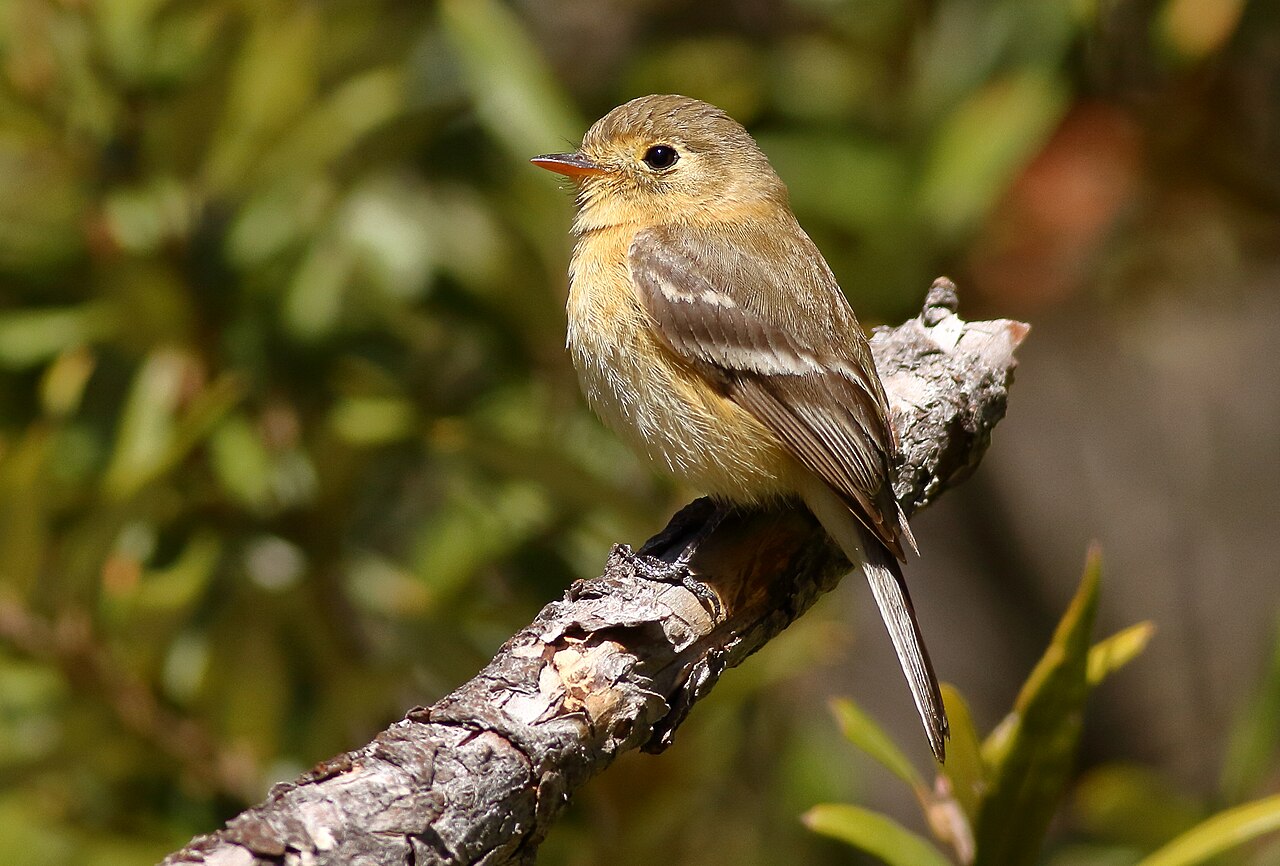
Buff-breasted Flycatcher is the smallest empid of North America and the only member of the genus that plumage alone already pins down: a warm buff breast on sandy brown upperparts. In the United States it breeds only in the mountains of southeastern Arizona and southwestern New Mexico; most of the range lies in the mountains of Mexico and Central America.
Voice
Northern birds sing a short, two-parted chee-lick, sometimes extended to chee-lick-chou, repeated in the early morning from April to July from a branch in open pine woodland. The call is a single, sharp pit. Southern populations sing a faster ti'beuu or pi'dew and call a soft, liquid wit. In this species too the song is the only character that works in all conditions: late in summer, when the plumage is worn and bleached, the buff fades out and only the voice is left.
Recording: Richard E. Webster — CC BY-NC-SA 4.0 · Pinery Canyon, Chiricahua Mountains, Cochise County, Arizona, United States · xeno-canto
Identification
Small and short-winged, with sandy to olive-brown upperparts, a browner crown and a grey-brown tail. The throat is pale yellow, the breast warm buff to tawny — the one clear plumage character within the genus. The white eyering is narrow, the two wingbars pale buff. The lower mandible is orange-yellow, the upper black, the iris deep chestnut. In fresh plumage it can be identified on sight; in July and August, with worn feathers, the breast colour pales and the song decides the identification, as it does for the other empids.
Confusion species
As long as the buff breast is there, confusion with the grey empids is limited. Once that colour has worn off, the voice separates them: a short chee-lick with a single pit call here; a three-parted song ending in a high pseet with a dry whit in Dusky Flycatcher; three hoarse parts with a low ending and a sharp, high peek in Hammond's Flycatcher; a two-parted chu-wip … cheep with the tail lowered in Gray Flycatcher; and the rapidly repeated che-BEK in Least Flycatcher. Habitat and elevation help: in the United States Buff-breasted lives between roughly 1950 and 2850 metres in open pine and pine-oak forest with a grassy understorey, while Hammond's holds closed fir forest and Dusky the brushy slopes; Gray Flycatcher does not occur in that forest type at that elevation.
Habitat
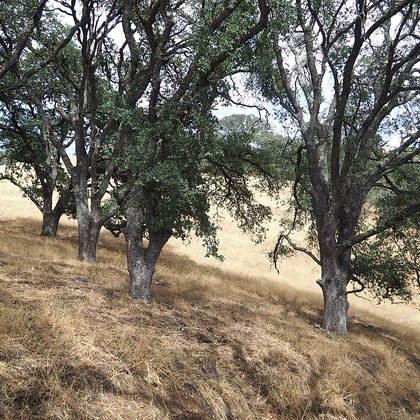
Dry pine and pine-oak forest in broad mountain canyons, with an understorey of grasses, herbs and scattered shrubs and saplings. Ponderosa pine, pinyon (a low-growing pine of the dry south-western foothills), Arizona white oak and Douglas-fir are the usual trees. Recently burned forest is often occupied: light fires keep the shrub layer open, which suits hunting from a low branch. In the United States it breeds between about 1950 and 2850 metres; in the south of the range it descends to around 600 metres.
Where the bird is most often found, arranged by the USNVC — the vegetation classification of the United States and Canada — and CMECS for sea and coast.



Range and movements
In the United States it is restricted to the sky islands of southeastern Arizona — the Huachuca, Santa Rita, Santa Catalina, Chiricahua and Pinaleño Mountains — and to a few mountains in southwestern New Mexico; the northern subspecies pygmaeus is present from April to September and then moves to northwestern Mexico. Farther south the species is resident: through the Sierra Madre Occidental and Oriental from Sonora, Chihuahua and Nuevo León south to Oaxaca and Chiapas, and on into Guatemala, El Salvador and Honduras.
- Resident
- Breeding (summer)
- Winter
- Passage
- dark = core range, pale = thinly spread
Where and when to look
Between mid-May and late June, walk a broad canyon in the Huachuca or Chiricahua Mountains early in the morning — Sawmill, Carr or Cave Creek — and listen for the short chee-lick from a low branch in open pine woodland with grass underneath. Only then look at the breast: in fresh plumage the buff settles it at once, later in the season it no longer does.
Conservation
The world population is put at more than two million mature birds, with a declining trend; Partners in Flight gives the species 12 out of 20 on the Continental Concern Score. In Arizona numbers fell and the northern edge of the range moved south between the late nineteenth century and the 1970s; fire suppression, overgrazing and logging are named as causes. Light, low-intensity fires that clear the shrub layer but spare the larger trees go together with higher numbers.
Scientific name
Empidonax fulvifrons | (Giraud, 1841)
Giraud described the species in 1841 as Muscicapa fulvifrons; because it was later moved to another genus, author and year stand in parentheses. The stated type locality of Texas rests almost certainly on an error: Ridgway pointed to the mountains of northeastern Mexico as early as 1884, and Lowery and Dalquest restricted the locality in 1951 to Miquihuana in Tamaulipas. Fulvifrons is Latin for 'tawny-fronted', from fulvus 'tawny' and frons 'forehead'. The genus Empidonax was introduced in 1855 by Cabanis, from Greek empis, empidos 'gnat' and anax 'ruler'.