All species › Passerines › Waxwings › Cedar Waxwing
Cedar Waxwing | Bombycilla cedrorum
Cederpestvogel | Ampelis americano
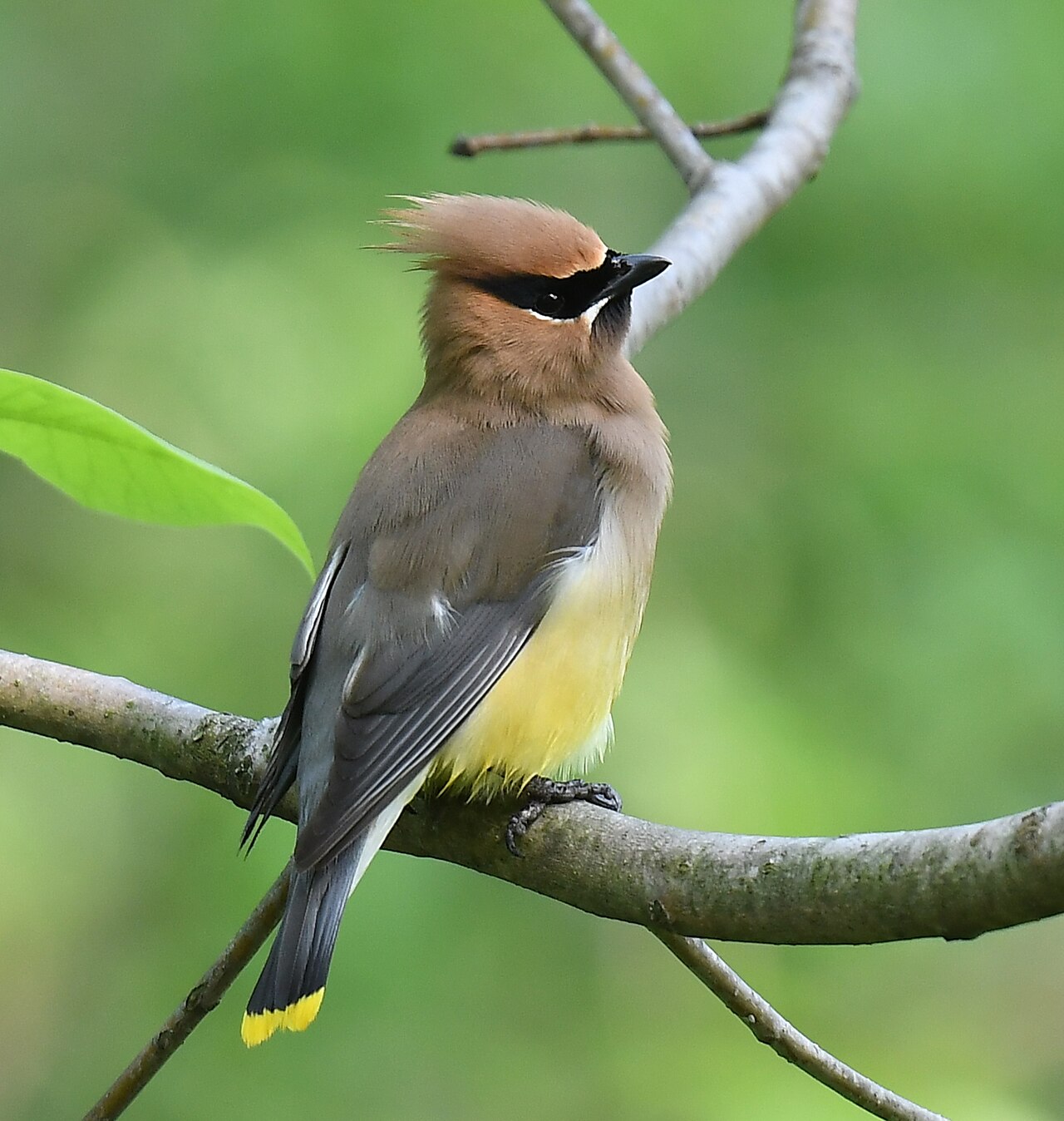
A silky, smooth bird in shades of brown, grey and yellow, with a black mask, a pointed crest and a crisp yellow band at the tip of the tail. It comes and goes with the fruit: wherever a crabapple hangs full, a flock of eighty birds can appear overnight and be gone two days later. Anyone hoping to find it should above all learn to listen.
Voice
There is no song in the proper sense; what it gives is a very high, thin, slightly hissing sreee passing back and forth through a flock, and a full tree of them makes a continuous rustling. Alongside it comes a fine, rapid trill alternating with that contact note. The pitch is so high that older ears lose it first, and many a flock passes overhead unnoticed. In flight all the birds call more or less together, so that the sound seems to fall out of the sky without a visible source.
Recording: Jonathon Jongsma — CC BY-SA 3.0 · Union Bay Campground, Porcupine Mountains SP, Ontonagon, Michigan, United States · xeno-canto
Identification
Warm grey-brown, greyer towards the rump, with a yellow belly, white undertail coverts and a bright yellow band across the tip of the tail. The black mask runs over the forehead and eye with a thin white edge; the crest usually lies half flattened. Adults carry the red waxy tips on the inner wing feathers; juveniles lack them and are greyer, duller and clearly streaked on breast and flanks. The sexes cannot be told apart in the field. The flight is fast and direct, with pointed wings and a short tail, and flocks hold tightly together.
Confusion species
Bohemian Waxwing (Bombycilla garrulus) of the far north is larger and greyer, has rusty rather than white undertail coverts, white and yellow in the wing, and a dull grey belly; in northern winters the two sometimes feed in the same bush. Voice settles it: Bohemian Waxwing gives a lower, rattling trill rather than a thin whistle. A flock passing overhead is taken at a distance for starlings, but waxwings are smaller and paler, with more pointed wings and a pale tail tip.
Habitat
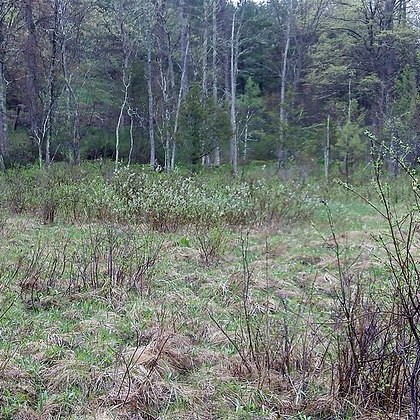
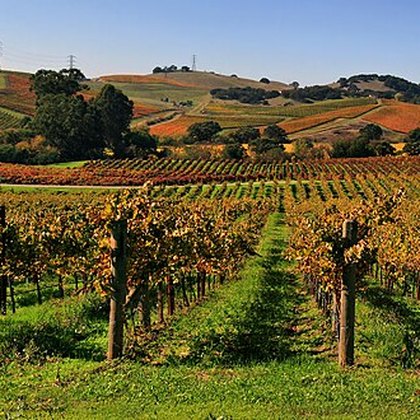
Open woodland, woodland edges, hedgerows, willow and alder along water, neglected orchards, and the berry and ornamental shrubs of gardens and parks. Where it sits depends on what there is to eat: in summer beside running water, where it takes insects on the wing, and in winter at anything bearing fruit. Closed high forest and bare arable land offer nothing. It has adapted well to towns, because many of the shrubs it lives on were planted there in the first place.
Where the bird is most often found, arranged by the USNVC — the vegetation classification of the United States and Canada — and CMECS for sea and coast.



Range and movements
Breeds from southeastern Alaska and across Canada south to northern California, Kansas and northern Georgia; winters from southern Canada through the United States and Mexico into Central America, the southernmost birds reaching Costa Rica and Panama, beyond this map. In most of the United States it is both a summer and a winter bird, but rarely in the same place in both seasons. Its migration is not fixed: where the flocks end up depends on the berry crop, and a district can be full one year and empty the next. The Bahamas, the Greater Antilles and the Cayman Islands are reached only in irregular years.
- Resident
- Breeding (summer)
- Winter
- Passage
- dark = core range, pale = thinly spread
Where and when to look
Do not look for the bird, look for the fruit: a crabapple, rowan or holly still hanging full in January will sooner or later be black with waxwings for an hour. If a flock sits motionless in a bare treetop, count through it — there are often forty or more, and the yellow tail tips all flare at once as they leave. In spring, note that it breeds late, when most other nests are already empty.
Conservation
Abundant and stable to increasing, with a population of some sixty-four million birds. Planting fruit-bearing shrubs in gardens and along roads has clearly helped the species. The main unnatural causes of death are collisions with windows and with cars, because flocks feeding on roadside verges cross low.
Scientific name
Bombycilla cedrorum | Vieillot, 1808
Vieillot described the species in 1808 as Bombycilla cedrorum, in the genus he introduced in the same work; author and year therefore stand without parentheses. Bombycilla is a translation of the German Seidenschwanz, 'silktail', made from Greek bombux 'silk' and a cilla taken to mean 'tail' — a word that does not exist in Latin and rests on a misreading of motacilla. cedrorum means 'of the cedars', after the berries of the eastern red cedar, a juniper known in North America as cedar. Vieillot gave the locality as the whole of 'America from Canada to Mexico'; it was later restricted to eastern North America.