All species › Passerines › New World warblers › Common Yellowthroat
Common Yellowthroat | Geothlypis trichas
Gewone maskerzanger | Mascarita común
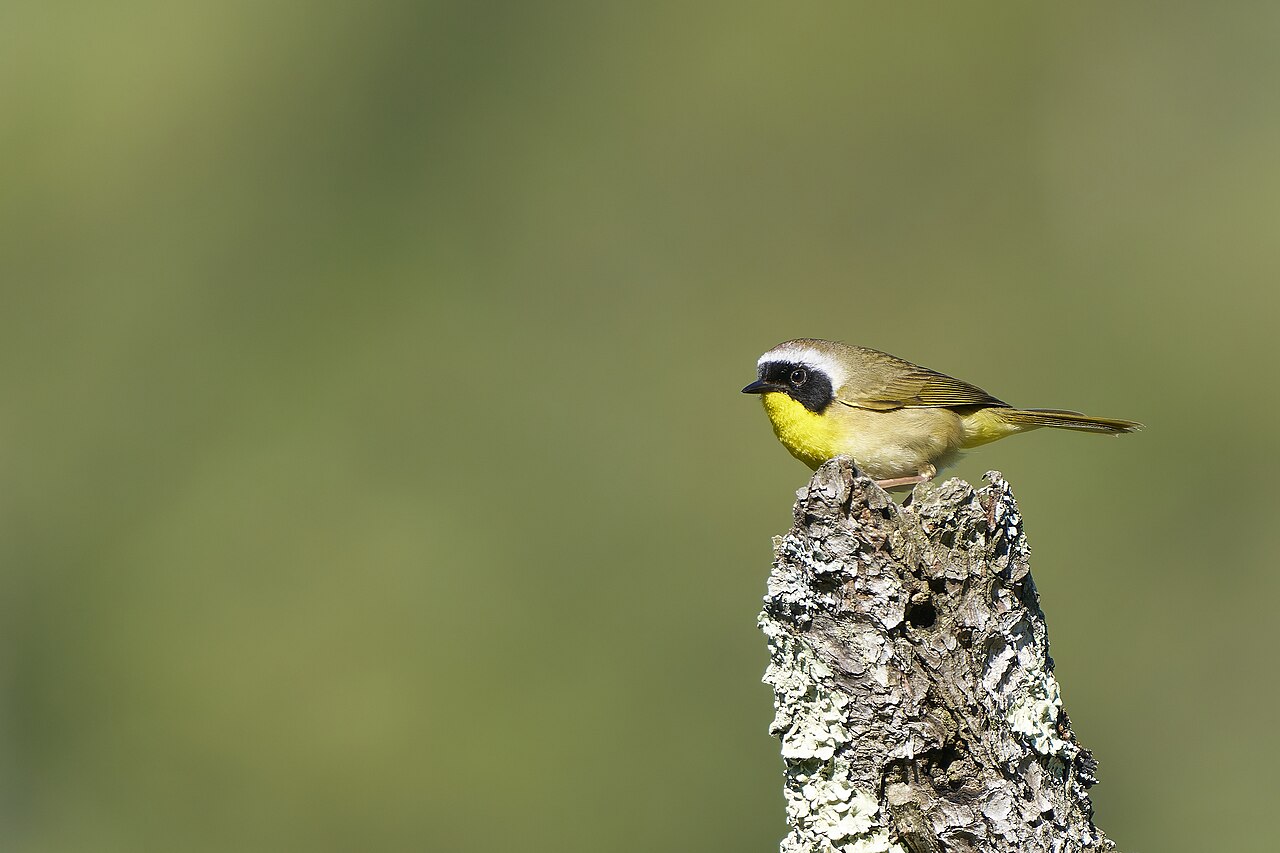
The Common Yellowthroat is the warbler of reeds, sedge marsh and wet scrub, and one of the most numerous breeding birds in North America. The male wears a broad black mask edged above in whitish grey; the breeding range runs from Alaska and Newfoundland to central Mexico.
Voice
The song is a clear, insistent witchety-witchety-witchety, usually repeated two to four times, with a fixed stress on the first syllable of each group; the number of repetitions and the exact tone vary by region. The call is a dry, hard chek, and a rasping chrrr when agitated. At dusk the male sometimes gives a flight song: he climbs a few metres above the reeds and mixes loose song elements with fast, rattling notes.
Recording: Jeff Stewart — CC BY-NC-SA 4.0 · Cavan-Monaghan (near Millbrook), Peterborough County, Ontario, Canada · xeno-canto
Identification
A small, rounded bird that often holds the tail slightly cocked. Upperparts olive-brown without wingbars, throat and breast yellow, belly white, undertail coverts yellow. The male has a broad black mask running from the forehead across the eye to behind the cheek, bounded above by a white to ash-grey band. The female has no mask: olive head, pale eye ring, yellow throat and brownish flanks. First-year males show a dull shadow of the mask in autumn. The subspecies differ in the width of the mask and in how far the yellow extends.
Confusion species
In females and young birds the differences are smallest. Even so, the combination of a yellow throat, a white belly, plain olive-brown upperparts without wingbars and flesh-coloured legs is unambiguous. Nashville Warbler has a grey head, a complete white eye ring and yellow running right through to the undertail coverts without a white belly. Mourning and MacGillivray's Warblers have a grey hood and yellow over the whole underside. Northern Yellow Warbler has yellow wing and tail edges and lacks the contrast between yellow throat and white belly.
Habitat
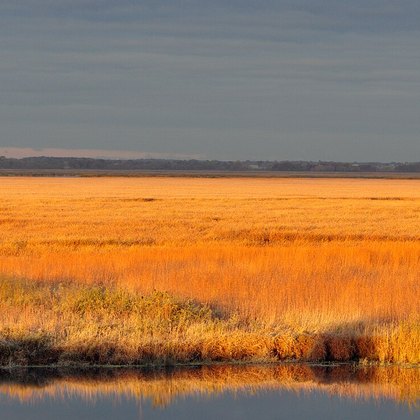
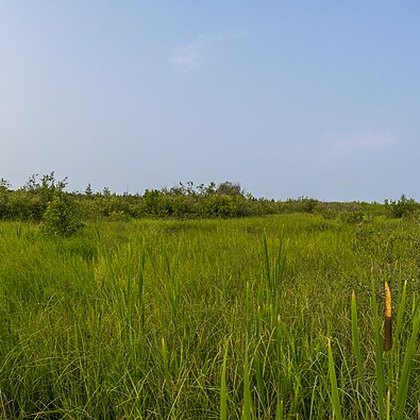
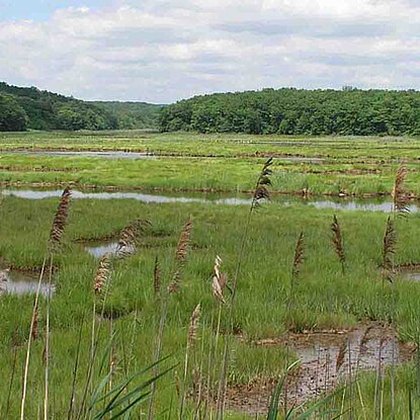
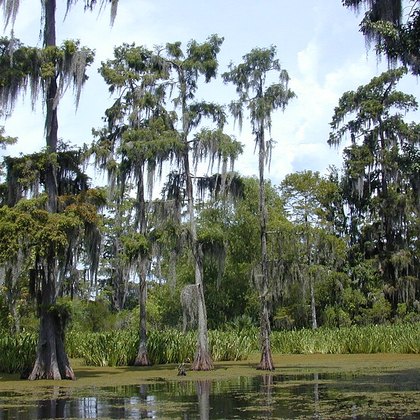
Dense low vegetation on wet ground: reed and cattail marsh, sedge marsh and wet meadow, silting ditches and banks, willow scrub, and coastal saltmarsh with cordgrass. Outside the breeding season also in drier scrub, field edges and overgrown fallow, and on the wintering grounds in mangrove and sugarcane. Where the vegetation grows above about two metres and closes over, it disappears.
Where the bird is most often found, arranged by the USNVC — the vegetation classification of the United States and Canada — and CMECS for sea and coast.


Range and movements
Breeds from Alaska, Yukon and the Northwest Territories across southern Canada to Newfoundland and south into northern Mexico. Northern populations move out and winter in the southern United States, Mexico, Central America and the Greater and Lesser Antilles. In the south and on the Mexican plateau it is resident. Thirteen subspecies are recognised, some of them with a small, local range.
- Resident
- Breeding (summer)
- Winter
- Passage
- dark = core range, pale = thinly spread
Where and when to look
Stand beside a reedbed or ditch and give a sustained pssht-pssht: this is usually the first species to come up out of the vegetation for a look, often within seconds and at close range. From April to July singing males use the same song perch on a reed stem or a bush top day after day.
Conservation
The IUCN rates the species as Least Concern (LC). Partners in Flight puts the breeding population at about 77 million birds and the species scores 9 out of 20 on the Continental Concern Score. The Breeding Bird Survey gives a decline of about 0.6 per cent a year between 1966 and 2019, some 26 per cent in all. Two forms stand worse: the population around San Francisco Bay fell by 80 to 95 per cent over a century, and the form near Brownsville in southern Texas was for a time thought gone. Drainage and conversion of marsh to farmland and urban ground, water quality and pesticides are the main pressures.
Scientific name
Geothlypis trichas | (Linnaeus, 1766)
Linnaeus described the species in 1766 as Turdus Trichas, placing it at first among the thrushes; because of the later change of genus, author and year stand in parentheses. The epithet trichas goes back to Greek trikhas, the name of a thrush. The type locality was given as 'northern America' and was later fixed on Maryland. Geothlypis is from geo 'earth, ground' and thlypis, a small bird. The Dutch name refers to the male's black mask.