All species › Passerines › New World warblers › Kentucky Warbler
Kentucky Warbler | Geothlypis formosa
Kentuckyzanger | Reinita de Kentucky
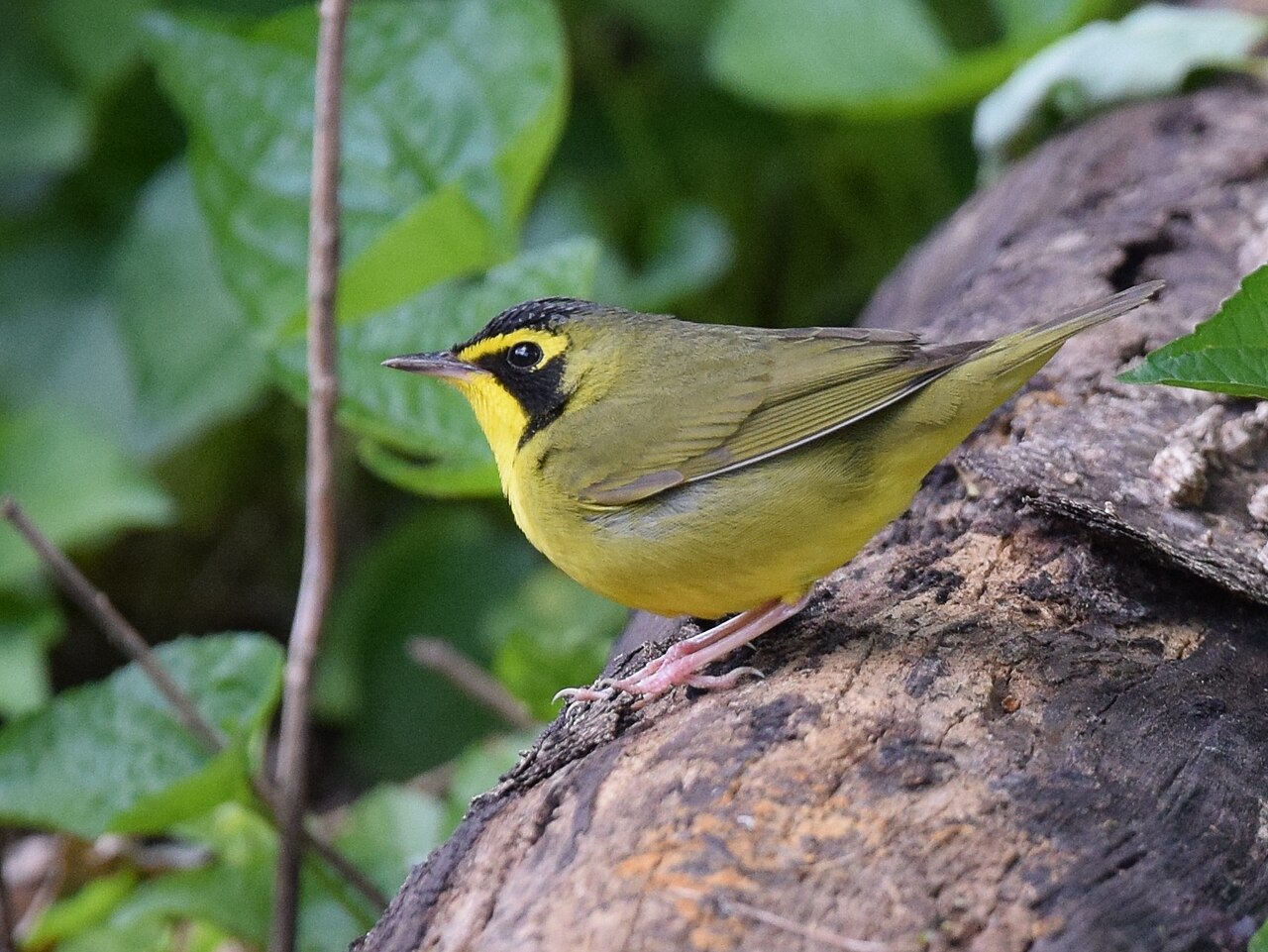
The Kentucky Warbler lives on and just above the floor of moist deciduous forest in the eastern United States. It is olive-green above and entirely yellow below, with a black stripe running from the bill down across the cheek and a yellow ring that sits around the eye like a pair of spectacles.
Voice
The song is a loud, rolling series of five to eight uniform two-syllable units: churry-churry-churry-churry, with a full, whistled tone that carries far through the wood. It resembles the song of Carolina Wren, but the units are more alike and the series ends abruptly rather than with a flourish. The call is a low, dull chuck. The male sings from a branch roughly one to four metres up and repeats the same phrase hundreds of times over a morning.
Recording: David A. Brinkman — CC BY-NC-SA 4.0 · Reily Township (near Oxford), Butler County, Ohio, United States · xeno-canto
Identification
Unstreaked olive-green above and yellow over the whole underside, undertail coverts included. The male has a black crown with grey feather tips, a broad black stripe running from the base of the bill below the eye to the side of the neck, and between them a yellow patch that continues in front of and above the eye, forming yellow spectacles. In the female that black is less extensive and more olive-grey. The legs are flesh-coloured, the tail is short and often slightly cocked. It walks over the ground rather than hopping and stays in the herb layer.
Confusion species
Common Yellowthroat has a black mask that continues across the forehead, no yellow eye-ring, and a white belly instead of continuous yellow. Hooded Warbler has a full black hood around a yellow face and white tail spots. Canada Warbler is grey above and has a necklace of black streaks on the yellow breast. The combination of plain olive-green upperparts, wholly unstreaked yellow underparts and yellow spectacles is unambiguous within the family.
Habitat
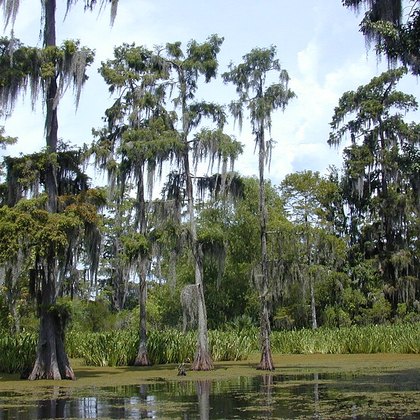
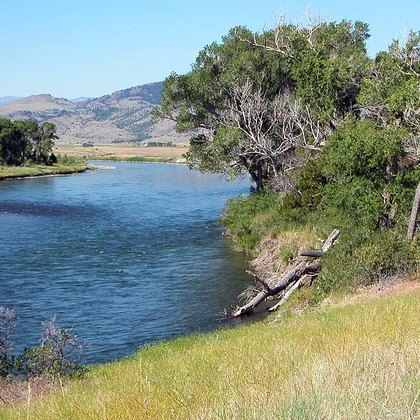
Moist deciduous forest with a dense herb and shrub layer: stream valleys, ravines, slope forest with sapling growth, edges of swamp forest, and storm-damaged patches where the understorey regenerates. It requires large unbroken forest tracts, in parts of the range over five hundred hectares. Forest in which the understorey has gone — through heavy deer browsing or even-aged management — is left empty, even where the canopy trees still stand.
Where the bird is most often found, arranged by the USNVC — the vegetation classification of the United States and Canada — and CMECS for sea and coast.



Range and movements
Breeds from eastern Texas, Oklahoma and Iowa east to New Jersey, and from the Gulf Coast north to southern Wisconsin, southern Michigan and southern Pennsylvania, with the core in the Ohio and Mississippi valleys. In August and September it crosses the Gulf of Mexico in a single flight. It winters from southern Veracruz and the Yucatán Peninsula through the Caribbean slope of Central America to northern South America, in lowland and foothill forest with dense understorey.
- Breeding (summer)
- Winter
- Passage
- dark = core range, pale = thinly spread
Where and when to look
The best chance is late April and May, in the first hour after sunrise, in a ravine or stream valley with dense understorey. Pick up the rolling phrase first and then look low rather than into the canopy: the bird is almost always below four metres and keeps behind leaves. On passage along the Gulf Coast it turns up in April in the coastal woodlots, often with other warblers that have just come in off the water.
Conservation
The species is listed worldwide as Least Concern (LC), but Partners in Flight puts the breeding population at about 2.6 million birds; the Breeding Bird Survey gives a decline of 0.69 per cent a year between 1966 and 2019, placing the species on the Yellow Watch List with 14 out of 20 on the Continental Concern Score. The pressures are deforestation on the wintering grounds in Mexico and Central America, loss of the understorey in breeding forest through high deer densities and even-aged management, collisions with buildings during nocturnal migration, and predation by cats where it forages.
Scientific name
Geothlypis formosa | (Wilson, 1811)
Alexander Wilson described the species in 1811 as Sylvia formosa; because of the later change of genus, author and year stand in parentheses. The epithet formosa is Latin for 'well formed'. The type locality is Kentucky, and both the English and the Dutch name go back to it, although the breeding range is far larger than that one state. Geothlypis is from Greek geo 'earth, ground' and thlypis, a small bird, after its life just above the forest floor.