All species › Passerines › Wagtails and pipits › Eastern Yellow Wagtail
Eastern Yellow Wagtail | Motacilla tschutschensis
Oostelijke gele kwikstaart | Lavandera boyera oriental
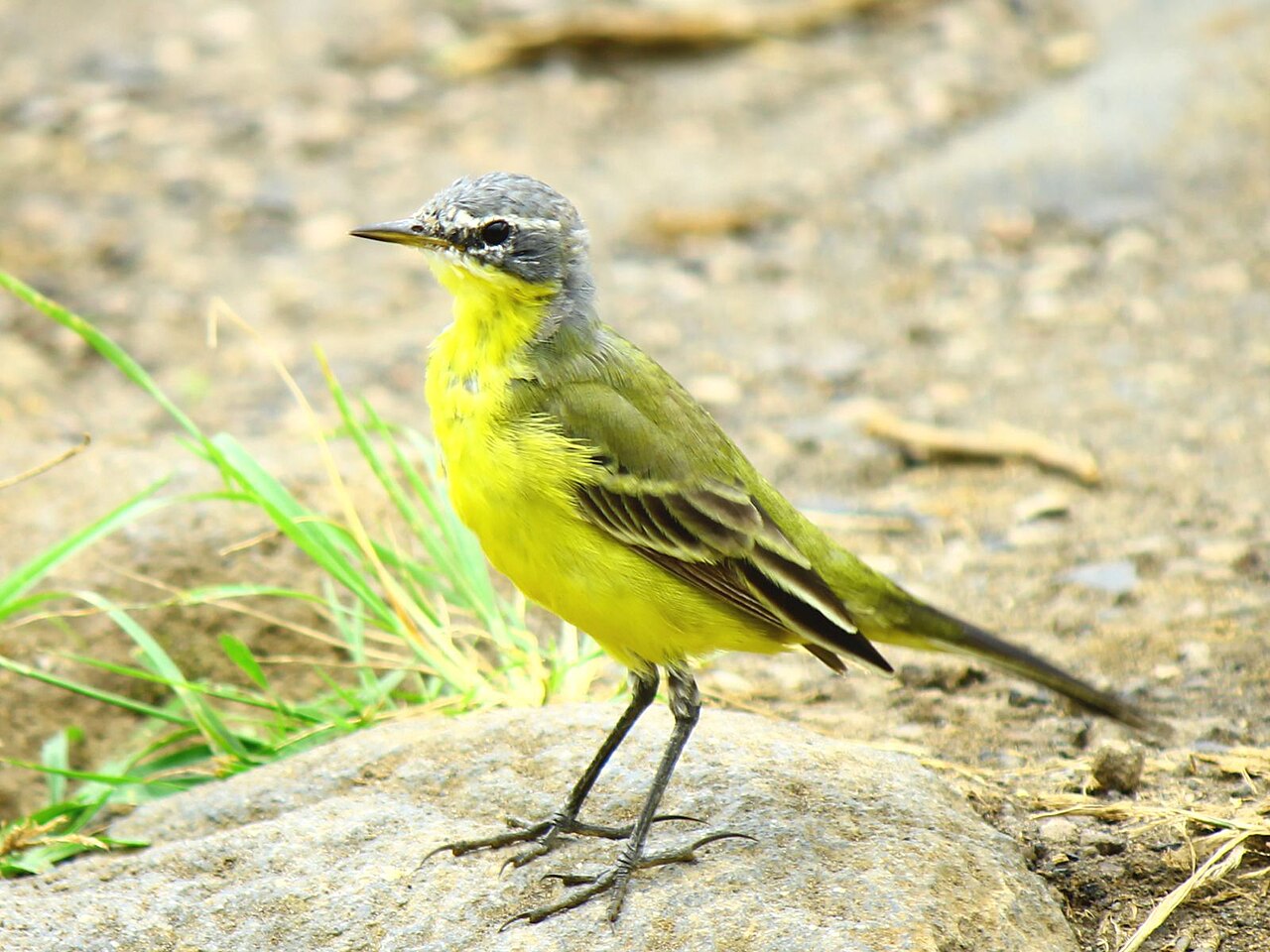
The Eastern Yellow Wagtail is the only wagtail breeding regularly in North America. It occupies the willow tundra of western and northern Alaska and then leaves the continent altogether: the winter quarters lie in Southeast Asia, on the far side of the Bering Sea.
Voice
The call is a sharp, high tsreep or dzeet, shriller than in the Western Yellow Wagtail, and is given at almost every flight. The male's song is a short, thin series of fine trills and twittering notes, delivered from a willow top, a post or in a brief song flight over the tundra. Near a nest the pair repeats a hard, insistent cheep.
Recording: Jochem Verweij — CC BY-SA 4.0 · Ögiy, O'giinuur, Arkhangai, Mongolia · xeno-canto
Identification
A slim, short-legged songbird with a long tail pumped continuously up and down, and a walking, never hopping, gait. The breeding male is olive-grey above and bright yellow below, with a grey crown, a dark ear patch and a white supercilium; the legs are black. The female is duller, with pale yellow to dingy white underparts and sometimes fine streaking across the breast. Juveniles in late summer are brown-grey with whitish underparts, a blackish necklace of spots across the breast and hardly any yellow, and show two pale wingbars.
Confusion species
Gray Wagtail, a vagrant in Alaska, has a longer tail, a slate-grey back, pale legs and yellow confined to the vent. White Wagtail shows no yellow at all and a black-and-white head pattern. Juvenile Eastern Yellow Wagtails are regularly taken for pipits: a pipit has a streaked back, a finer bill and a shorter tail and stands less upright, while the wagtail has a plain back and a far longer, pumping tail.
Habitat
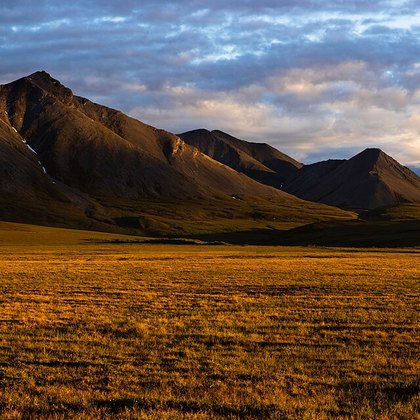
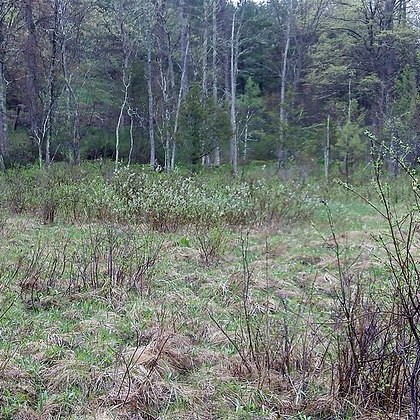
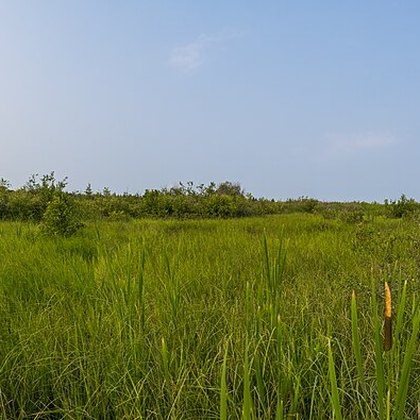
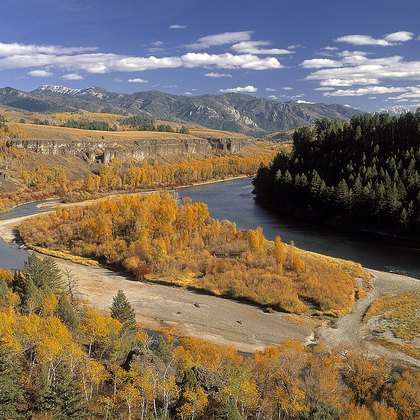
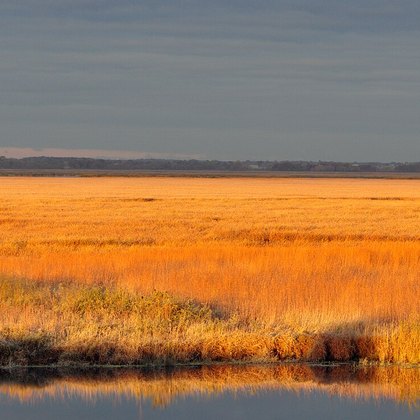
Moist tundra with low willow and dwarf birch, sedge flats, river terraces and the margins of tundra ponds, mostly below 300 metres. The nest is on the ground under a tussock or in a hollow among the vegetation. It forages walking over open, short vegetation and on mud edges, and often on gravel roads, airstrips and around buildings in the coastal villages. Outside the breeding season it uses rice fields, wet grassland and shorelines in the Asian tropics.
Where the bird is most often found, arranged by the USNVC — the vegetation classification of the United States and Canada — and CMECS for sea and coast.

Range and movements
The range covers eastern Siberia from the Yenisei to Chukotka and Kamchatka and continues across the Bering Strait into Alaska. There it breeds on the Seward Peninsula, in the Yukon-Kuskokwim Delta, on the North Slope and in the western Brooks Range, and locally in the Aleutians. In August and September the Alaskan birds move west across the Bering Sea and on through East Asia; the winter is spent from southern China and Indochina to the Philippines, Indonesia and Australia. In the rest of North America it is a rare bird, with autumn records along the coast of British Columbia and California.
- Breeding (summer)
- Passage
- dark = core range, pale = thinly spread
Where and when to look
The best chance is early June to mid-July in the tundra around Nome or in the village of Gambell on St. Lawrence Island, where singing males use willow tops and roof edges. Go by sound above all: the sharp tsreep over the tundra usually comes before the sighting. By August most birds are brown-grey juveniles, so rely on the walking gait, the long pumping tail and the plain back.
Conservation
The species is listed as Least Concern; the Siberian range is enormous and the world population large. The Alaskan share is a small edge of that range and is barely surveyed, so no North American trend exists; warming of the tundra and the advance of shrub vegetation are changing the breeding habitat. Along the flyway and in the winter quarters the conversion of rice fields and the loss of wet grassland are the main changes.
Scientific name
Motacilla tschutschensis | Gmelin, 1789
Johann Friedrich Gmelin described the species in 1789 as Motacilla tschutschensis; because it still stands in that genus, author and year take no parentheses. Motacilla is the Latin word for a wagtail, a diminutive of motare 'to move about', later misread as 'tail-mover'. The species name refers to the Chukchi people and their Chukotka Peninsula in the far northeast of Siberia, where the specimen described came from; it was collected on James Cook's third voyage. The species was long treated as part of the Western Yellow Wagtail and has only recently been split from it.