All species › Falcons › Falcons and caracaras › Eurasian Hobby
Eurasian Hobby | Falco subbuteo
Boomvalk | Alcotán europeo
The Eurasian Hobby is a slim, scythe-winged falcon of open country across Europe and Asia, recorded as a vagrant in North America only a handful of times, almost always in Alaska. It has a fast, swift-like flight and catches dragonflies and insects on the wing.
Voice
At the nest the Eurasian Hobby gives a series of sharp, high kew-kew-kew cries, and swallows and swifts respond to its approach with their own recognisable alarm call. In North America, far from its breeding range, the species is generally silent.
Recording: Lars Edenius — CC BY-NC-SA 4.0 · Bådahällan, Umeå Municipality, Västerbotten County, Sweden · xeno-canto
Identification
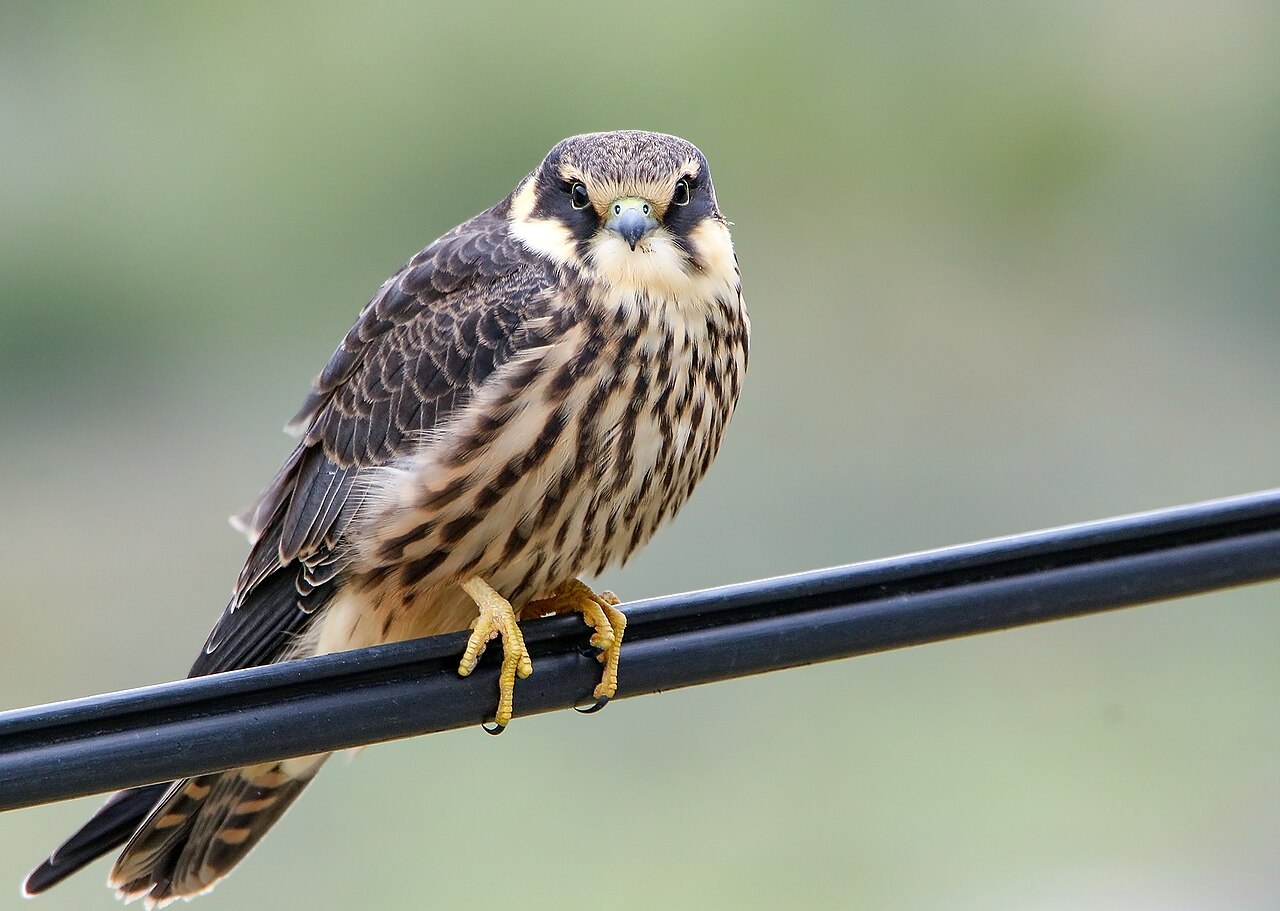
A slim falcon with long, pointed, scythe-shaped wings and a short, square-cut tail, slate-grey above with a dark crown and two narrow black moustache stripes. The throat is white, the underparts creamy with dense dark streaking, and the thighs and undertail coverts are rufous. Juveniles are browner and lack the rufous thighs.
Confusion species
American Kestrel is smaller with a double black facial stripe and hunts by hovering, whereas the Eurasian Hobby plucks insects and birds from the air in fast, direct flight. Merlin lacks the hobby's rufous thighs and sharply defined moustache. At height the silhouette can suggest a large swift, but the Eurasian Hobby is distinctly larger with a broader wing base.
Habitat
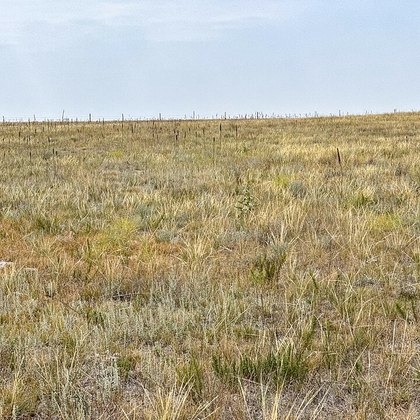
In its Eurasian breeding range the Eurasian Hobby occupies open country with scattered trees: farmland, bog, heath and the edge of coniferous forest, always near water over which it hunts dragonflies. The few North American records come from open terrain and marsh edge in the far west of Alaska.
Where the bird is most often found, arranged by the USNVC — the vegetation classification of the United States and Canada — and CMECS for sea and coast.




Range and movements
The Eurasian Hobby breeds from Western Europe to Japan and winters in southern Africa and South Asia; North America lies outside this range. The handful of confirmed records, nearly all in autumn on the western Aleutians and Attu Island in Alaska, involve birds that strayed eastward during migration between East Asia and Southeast Asia.
Where and when to look
A Eurasian Hobby in North America is a first-order rarity: the best chance is in September on Attu or the other western Aleutians, where Asian vagrants regularly turn up during autumn migration.
Conservation
Across its Eurasian range the species is common and not threatened. In North America it involves only a handful of individual vagrants with no established population, so conservation status has no bearing here.
Scientific name
Falco subbuteo | Linnaeus, 1758
Linnaeus described the species in 1758 as Falco Subbuteo; the genus has remained unchanged since, hence no parentheses around author and year. Falco is Latin for 'falcon'; subbuteo combines the prefix 'sub-' ('almost, below') with buteo, 'buzzard', a name comparing the smaller hobby to the larger buzzards.