All species › Passerines › New World warblers › Fan-tailed Warbler
Fan-tailed Warbler | Basileuterus lachrymosus
Waaierzanger | Reinita roquera
The Fan-tailed Warbler is a large, long-tailed warbler of rocky ravines and steep forest edges in Mexico and Central America. It walks and hops low over boulders, fanning its tail open again and again. In the United States it is a vagrant, found almost only in the canyons of southeastern Arizona and West Texas.
Voice
The song is a series of clear, downslurred whistles falling away in pace and pitch, roughly cheew-cheew-cheew-chew; it carries far along a narrow ravine and so sounds louder than you would expect from a warbler. The call is a thin, high tsip, often repeated as the bird works over the rocks. Singing birds usually sit on a low branch or a boulder in shade rather than in the canopy.
Recording: Dario Cantu — CC BY-NC-SA 4.0 · Volcán de Jaurez (near Las Crucitas), Linares, Nuevo León, Mexico · xeno-canto
Identification
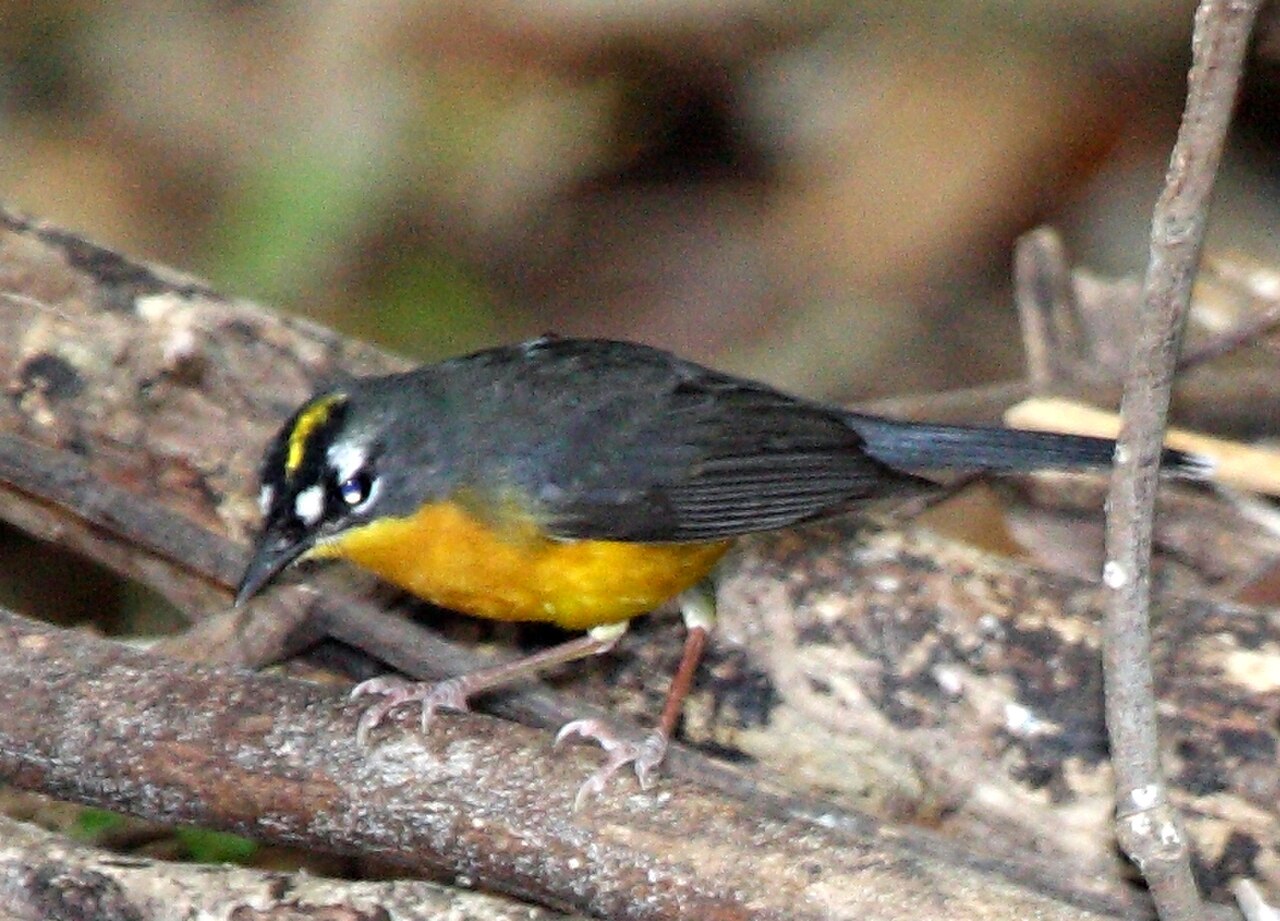
The head is dark grey with a black forecrown, a yellow patch in the centre of the crown, and white teardrop-shaped marks above and below the eye. The upperparts are olive-grey, the throat and breast yellow, and that yellow continues onto the belly. The tail is long, graduated and dark, with broad white tips to the outer feathers. The behaviour is the most telling feature: the bird holds the tail half cocked and spreads it repeatedly like a fan as it moves among the rocks.
Confusion species
Rufous-capped Warbler has a rufous crown, a white eyebrow and no yellow crown patch, is smaller, and has a shorter tail without white tips. Slate-throated Redstart and Louisiana Waterthrush lack the white teardrops around the eye. Within the guide area the tail-fanning combined with the yellow crown patch and the white tail tips settles the identification.
Habitat
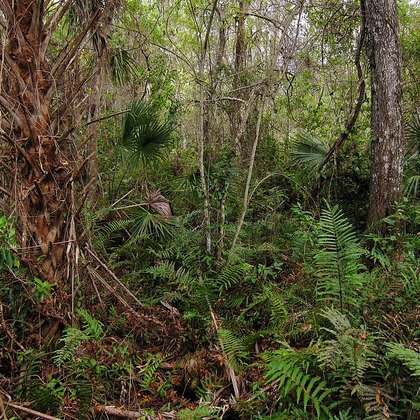
Rugged, rocky terrain in semi-deciduous and evergreen forest of foothills and lower mountain slopes, roughly between 50 and 1800 metres: ravine floors, forest-covered lava flows, steep canyon walls and dry boulder-strewn beds. It forages on the ground and over boulders for insects and spiders and rarely rises more than a couple of metres. Dense ground cover and shade are constants at its sites.
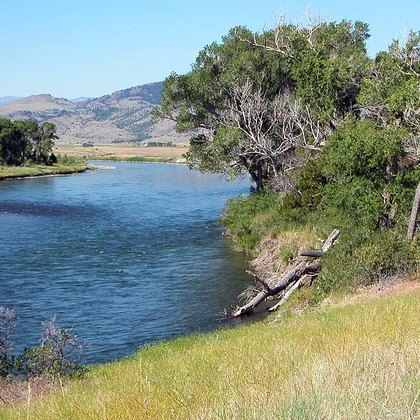
Where the bird is most often found, arranged by the USNVC — the vegetation classification of the United States and Canada — and CMECS for sea and coast.



Range and movements
The range runs along the Pacific slope of Mexico from southern Sonora and southwestern Chihuahua south to Guatemala, El Salvador and Honduras, and on the Gulf side from southern Tamaulipas and San Luis Potosí southward; the southern limit lies in north-central Nicaragua. The species is resident and at most shifts along altitudinal gradients. In the United States there are a few dozen accepted records, almost all in southeastern Arizona, with further sightings in New Mexico and West Texas.
- Resident
- Breeding (summer)
- Winter
- Passage
- dark = core range, pale = thinly spread
Where and when to look
In Mexico, look for it early in the morning in a shaded ravine with boulders and a stream, and go by the clear descending whistles. In the United States records almost always become known through observer networks, and the birds then stay for days or weeks on the same canyon wall. Watch low down: the movement and spreading of the long tail gives the bird away sooner than the face pattern does.
Conservation
The IUCN places the species in the Least Concern (LC) category, with a population estimated at more than 50,000 mature birds and a trend assessed as declining. The pressure comes mainly from conversion of low montane forest to farmland and pasture and from logging in the semi-deciduous forests of the Pacific slope. The rugged terrain the species occupies is less suited to agriculture, so parts of the range remain largely untouched.
Scientific name
Basileuterus lachrymosus | Bonaparte, 1850
Charles Lucien Bonaparte described the species in 1850 as Basileuterus lachrymosa; the ending was later adjusted to the genus, but author and year stand without parentheses because the genus itself did not change. The species name lachrymosus is Latin for 'full of tears', after the white teardrop-shaped marks around the eye. The genus Basileuterus is from Greek basileuteros 'more kingly', after the coloured crown patch many species of the genus carry. The English and Dutch names refer to the fanning of the tail; the type specimen came from Veracruz.