All species › Passerines › Cardinals and allies › Flame-colored Tanager
Flame-colored Tanager | Piranga bidentata
Bloedtangare | Piranga estriada
The Flame-colored Tanager is a tanager of the mountain forests of Mexico and Central America, and the only Piranga with a clearly black-streaked back. Within this guide's window it reaches the United States only in the border mountains of southeastern Arizona, where it has bred repeatedly since 1985, and far more rarely in West Texas.
Voice
The song consists of short, hoarse phrases separated by pauses and resembles that of Western Tanager, but is burrier and more hesitant, with longer gaps between phrases; some observers compare it to a vireo. The call is a low rattling prrrlek or chi-dick, two-syllabled and drier than the Western Tanager's. The male sings from the canopy, often at length from the same branch.
No freely licensed recording has been found for this species yet; what to listen for is described below.
Identification
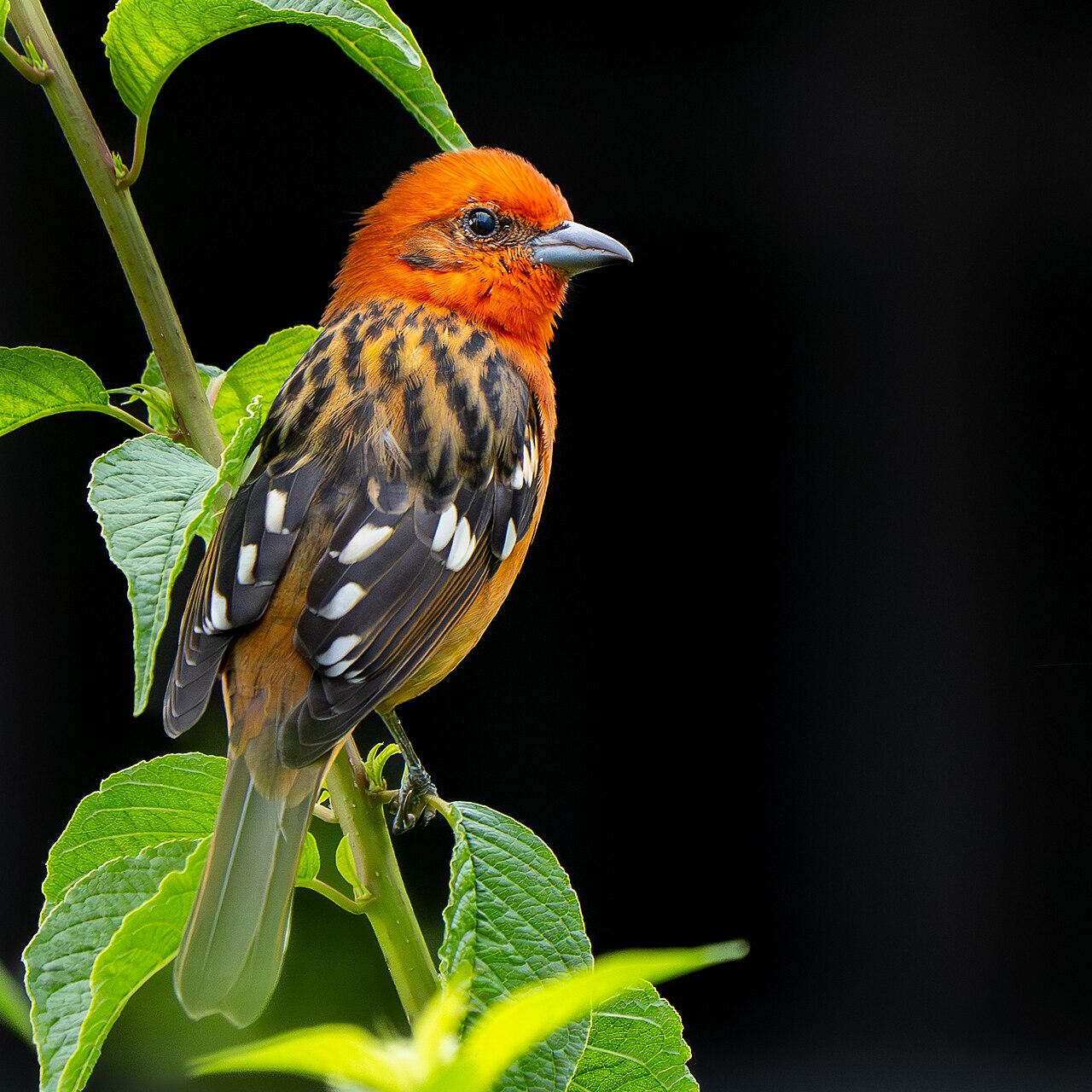
The male is orange-red on head, breast and rump, with a dark-streaked back, black wings with two white wingbars and white tips to the primary coverts, and a black tail with white corners. A dark brownish patch sits behind and below the eye. The female has the same pattern in olive-yellow instead of red, with the same back streaking and the same white wing markings. The bill is thick and conical with a distinct notch in the cutting edge of the upper mandible — the 'tooth' that gives the species its scientific name.
Confusion species
Western Tanager has a plain back — black in the male, grey-green in the female — and a yellow rather than white upper wingbar; for females that is the most usable difference, together with the absence of back streaking and of white tips to the primary coverts. Summer Tanager and Hepatic Tanager lack wingbars altogether. In southeastern Arizona Flame-colored Tanagers sometimes pair with a Western Tanager; the offspring show intermediate back streaking and wingbar colour and cannot be assigned with certainty.
Habitat
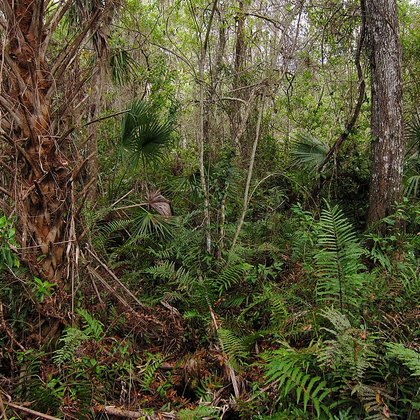
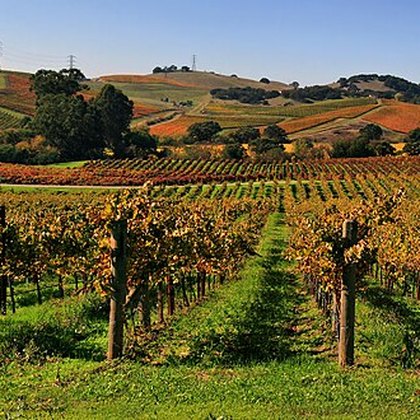
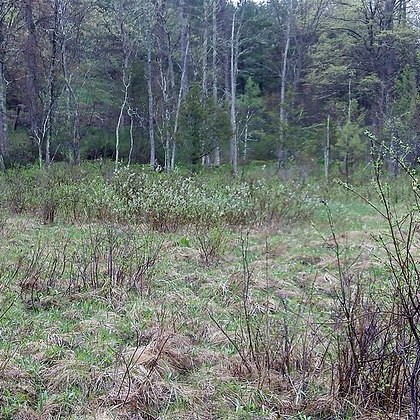
Humid montane forest of pine, oak and broadleaved trees, in Mexico from about 800 metres up to the treeline. It keeps to the upper canopy and also uses trees in pasture, coffee plantations and gardens at the forest edge. In southeastern Arizona it breeds in the high pine-oak canyons of the Huachuca and Chiricahua Mountains, in the same woodland as Western Tanager. Pure conifer stands without a broadleaved understorey and dry lowland are avoided.
Where the bird is most often found, arranged by the USNVC — the vegetation classification of the United States and Canada — and CMECS for sea and coast.



Range and movements
The range runs through the mountain chains of Mexico — the Sierra Madre Occidental from Sonora and Chihuahua southward, the Sierra Madre Oriental of Nuevo León and Tamaulipas, and the highlands of central and southern Mexico — and on through Guatemala, El Salvador, Honduras and Nicaragua to Costa Rica and western Panama, outside this guide's window. The species is not a long-distance migrant but moves to lower elevations outside the breeding season. The first record for North America north of Mexico dates from 1985, when a male spent the breeding season in the Chiricahua Mountains paired with a female Western Tanager.
- Resident
- Breeding (summer)
- Winter
- Passage
- dark = core range, pale = thinly spread
Where and when to look
Look for it in southeastern Arizona from April to July in the higher canyons with pine and oak; go by the song, which is burrier and slower than a Western Tanager's. Check the back of every female tanager in that area: streaking means Flame-colored, a plain back means Western.
Conservation
The species is listed as of Least Concern and is common across its large montane range. The population has not been counted and the trend is unknown; most sources assume a slow decline through clearance of montane forest in Mexico and Central America. In Arizona it is a matter of a few pairs and scattered birds each year, too few to speak of an established population. Numbers are set by the fate of mid-elevation pine-oak forest in Mexico, not by what happens in the border mountains.
Scientific name
Piranga bidentata | Swainson, 1827
William Swainson described the species in 1827 as Pyranga bidentata, from a specimen from Temascaltepec in Mexico; because Pyranga is only a spelling variant of Piranga, author and year stand without parentheses. The genus name Piranga goes back to tijepiranga, a Tupi name for a small bird in Brazil. The species name bidentata is Latin for 'two-toothed' and refers to the two notches in the upper mandible. The English name refers to the orange-red colour of the male.