All species › Passerines › Tanagers and allies › Red-legged Honeycreeper
Red-legged Honeycreeper | Cyanerpes cyaneus
Blauwe Suikervogel | Mielerito patirrojo
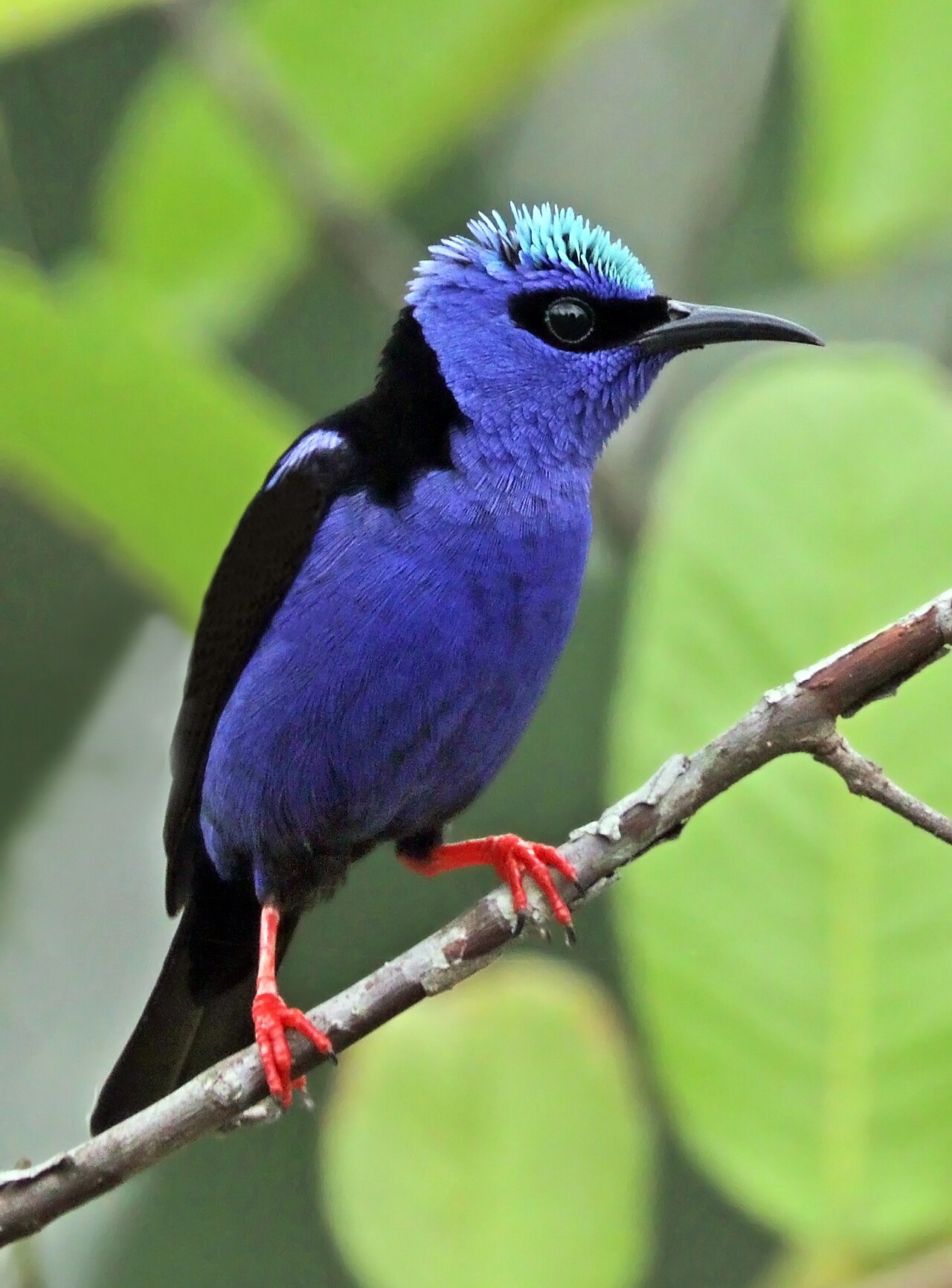
The Red-legged Honeycreeper is a small tropical fruit- and nectar-eater with a slender curved bill and bright red legs. It is common in the lowlands of southern Mexico and Central America; north of that it counts as a vagrant, and every bird in Texas or Florida raises the question whether it is an escaped cage bird.
Voice
The voice is high, thin and nasal, and sounds almost continuously as long as a party is feeding in a fruiting tree: a wispy tsee or a whiny chee-chee, too weak to carry far. The species has little song in the ordinary sense; what is described as dawn song is a soft, irregular stringing together of the same thin notes and is rarely heard.
No freely licensed recording has been found for this species yet; what to listen for is described below.
Identification
The breeding male is purple-blue with a pale turquoise crown, black wings, black back and black lores and eye-stripe; the legs are bright red and the underwing is yellow, which shows only in flight. After breeding the male moults into a green plumage resembling the female's, but keeps the black wings and the red legs. The female is dull olive-green above, yellow-green and faintly streaked below, with brownish-red legs. In both sexes the bill is thin, pointed and slightly decurved.
Confusion species
Within its range the species has few confusion risks. Male Purple Honeycreeper is deeper purple without a pale crown and has yellow instead of red legs. Green moulting males and females resemble Bananaquit, but that has a white supercilium and a white wing patch. In the United States the first question about any record is not the identification but the origin: the species is widely kept in captivity.
Habitat
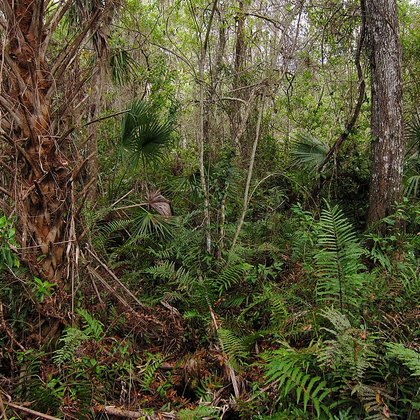
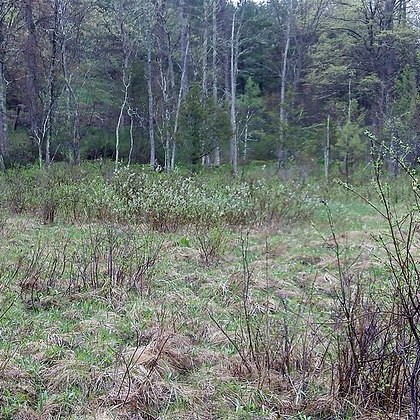
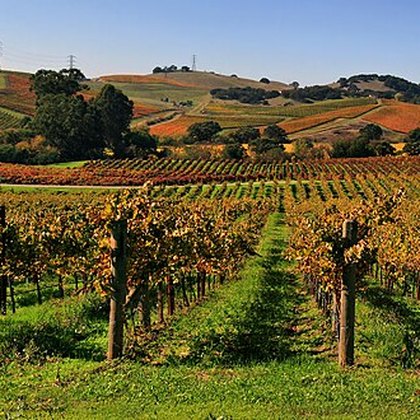
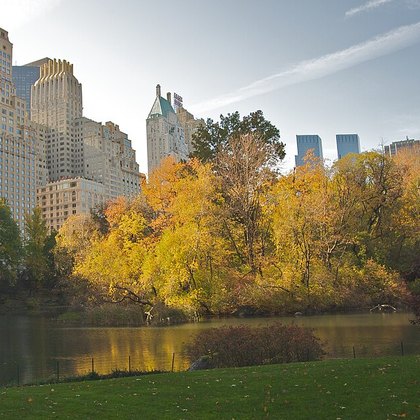
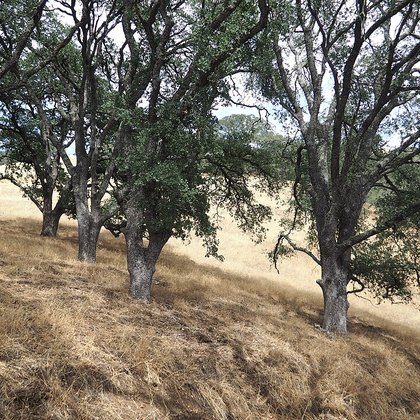
Forest edge, secondary growth, open woodland with scattered trees, plantations and gardens in the warm lowlands, locally up to about 2000 metres. Fruiting trees and flowering Erythrina and Inga determine where the birds are; parties wander from tree to tree. It avoids the closed interior of tall rainforest and keeps instead to places where the canopy opens up, along roads, river banks and savanna with groups of trees.
Where the bird is most often found, arranged by the USNVC — the vegetation classification of the United States and Canada — and CMECS for sea and coast.
Range and movements
The range runs from southern Mexico — the Gulf slope from southern Tamaulipas and Veracruz, Oaxaca, Chiapas and the Yucatán Peninsula — through the whole of Central America and on through northern South America to Bolivia and Brazil, and on Trinidad and Tobago. In Cuba there is an established population derived from escaped cage birds. In the United States there are scattered records from South Texas, Louisiana and Florida; these are usually not accepted as wild birds.
- Resident
- Breeding (summer)
- Winter
- Passage
- dark = core range, pale = thinly spread
Where and when to look
Look for moving parties in a fruiting tree or in flowering Erythrina at the forest edge, in the first hours after sunrise. Watch the legs: the bright red shows all year and works on green moulting birds and females too, when the male's blue has gone entirely.
Conservation
The species is listed as of Least Concern, is spread over a very large range and benefits from open, disturbed landscapes, so the population is assessed as stable to increasing. At a regional scale the cage-bird trade is a factor: birds are trapped and traded, which removes numbers locally and at the same time explains the established population in Cuba and the scattered records in the United States.
Scientific name
Cyanerpes cyaneus | (Linnaeus, 1766)
Linnaeus described the species in 1766 as Certhia cyanea, from a specimen from Surinam; because it was later moved to Cyanerpes, author and year stand in parentheses. The genus name Cyanerpes comes from Greek kuanos 'dark blue' and herpēs 'creeper', after the way the birds clamber along branches and flowers. The species name cyaneus likewise means 'dark blue'. The English name points to the red legs, the Dutch and Spanish names to the male's blue colour.