All species › Gamebirds › Partridges, pheasants, grouse and allies › Gray Francolin
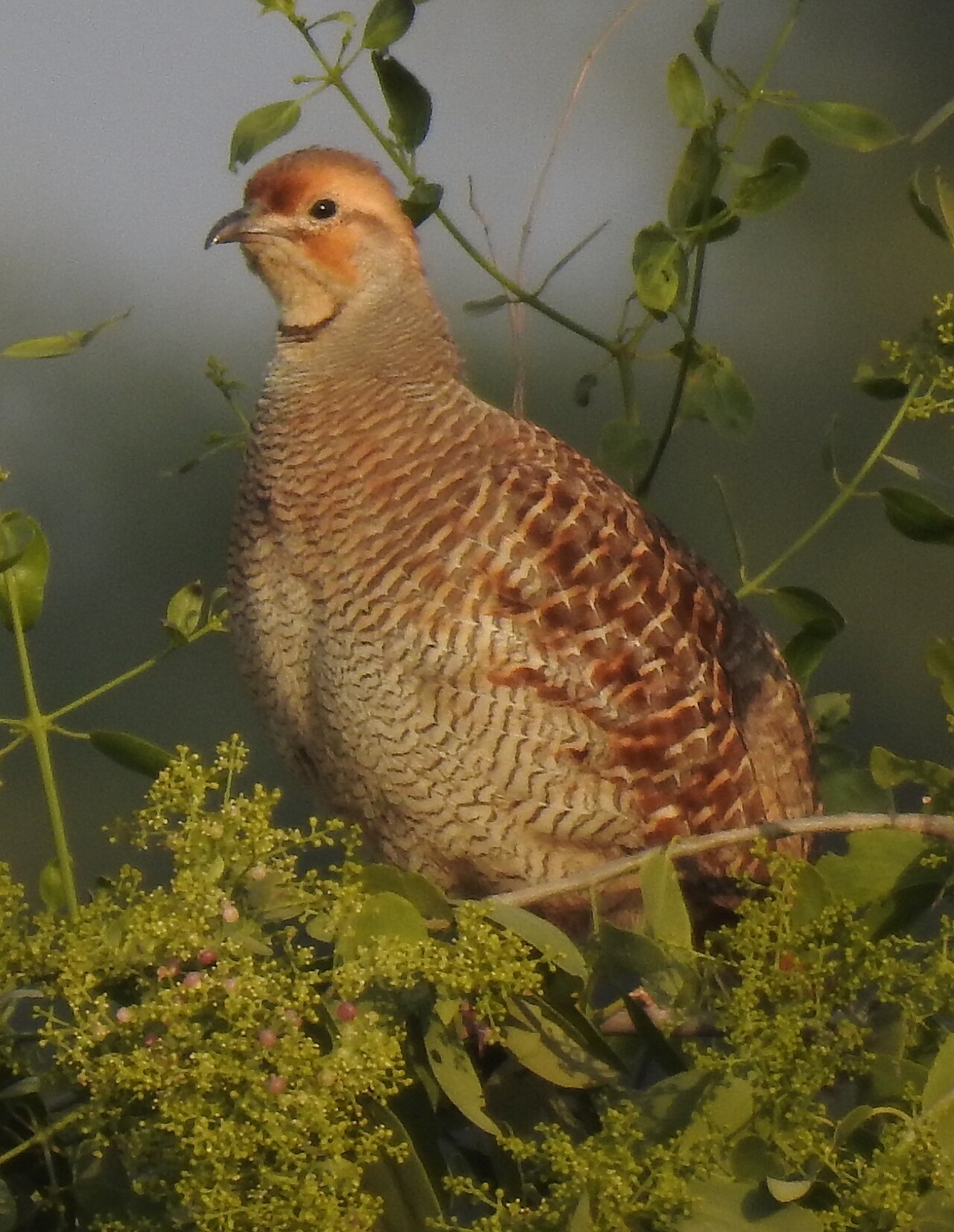
Gray Francolin | Ortygornis pondicerianus
Grijze Frankolijn | Francolín Gris
The Gray Francolin is a stocky, short-tailed gamebird from South Asia, released in Hawaii as a game species around 1959. From those first introductions the species is now established on most of the main islands, where it favours dry lowland country. Elsewhere in North America it does not occur.
Voice
The territorial song is a loud, sustained series of a few introductory notes followed by a rapid, alternating chek-chek and a descending, two-part whistled note, usually delivered in early morning and late afternoon from a raised perch. The female often joins in with higher, thinner notes, producing a duet. In alarm a single low, gruff note is given, and on flushing a loud whir of the wings.
Recording: David Darrell-Lambert — CC BY-NC-SA 4.0 · Al Marmoom DCR--Long Expo Lakes, Dubai, United Arab Emirates · xeno-canto
Identification
A small, rounded gamebird with finely streaked and spotted grey-brown plumage over the whole body, a chestnut patch on throat and face in the male, and a short tail usually held cocked up. The female is duller with less pronounced chestnut on the head. The male's legs carry spurs. On the ground it moves in short, quick steps with the body held low and horizontal, unlike a pheasant's upright stance.
Confusion species
California Quail (Callipepla californica), which shares the same islands, has a forward-curving black plume and scaled belly markings that Gray Francolin lacks entirely. Erckel's Francolin, also released in Hawaii, is considerably larger and barred black and white over the whole body, with a chestnut crown. Young pheasants without a long tail are, by contrast, much larger and longer-legged than Gray Francolin.
Habitat
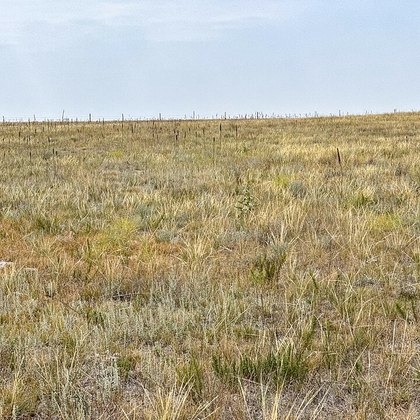
Dry lowland below five hundred metres: thickets of kiawe (an introduced thorn shrub), short grassland, field edges and the margins of watered golf courses and lawns. It avoids humid rainforest and high ground entirely. Across its native range, from Iran to Bangladesh, it occupies the same kind of dry grassland, thorn scrub and dry-season cropland.
Where the bird is most often found, arranged by the USNVC — the vegetation classification of the United States and Canada — and CMECS for sea and coast.



Range and movements
Around 1959 the Gray Francolin was released in Hawaii as a gamebird; the species has since become established and common on most of the main islands, in the dry, low-lying leeward country. Elsewhere in North America it has not been successfully established. It does not migrate; birds stay year-round in the same dry terrain.
- Resident
Where and when to look
Drive an early-morning coastal road or a leeward golf course on one of the islands, for instance near Kona on the Big Island: the loud duet carries a long way, and the birds usually walk in small groups along the road edge, ready to run rather than fly at the first sign of danger.
Conservation
Least Concern (LC) worldwide. In Hawaii the population is stable to common, with no targeted management in either direction.
Scientific name
Ortygornis pondicerianus | (Gmelin, 1789)
Gmelin described the species in 1789 as Tetrao pondicerianus, among the grouse; it has since been moved between genera twice, so author and year stand in parentheses. This species now stands in the genus Ortygornis, introduced by Reichenbach in 1852 from Greek ortyx 'quail' and ornis 'bird', but for a long time it was placed in the broader genus Francolinus. pondicerianus refers to Pondicherry in southeastern India, the type locality.