All species › Passerines › Finches, euphonias and allies › House Finch
House Finch | Haemorhous mexicanus
Mexicaanse roodmus | Pinzón mexicano
The House Finch is the finch heard singing in almost every North American suburb. Originally a bird of the dry country of Mexico and the western United States, it has spread across the whole east of the continent since a release in New York in 1940, and is established in Hawaii.
Voice
The song is a long, rapid run of scratchy clear notes, two to three seconds, with a rising or falling ending that often sounds like a hoarse wheer. The male sings through the year from a roofline, aerial or high branch; females give a shorter version. The call is a single bright cheep, passed back and forth continuously within flocks.
Recording: Jonathon Jongsma — CC BY-SA 3.0 · Dordt College Prairie, Sioux, Iowa, United States · xeno-canto
Identification
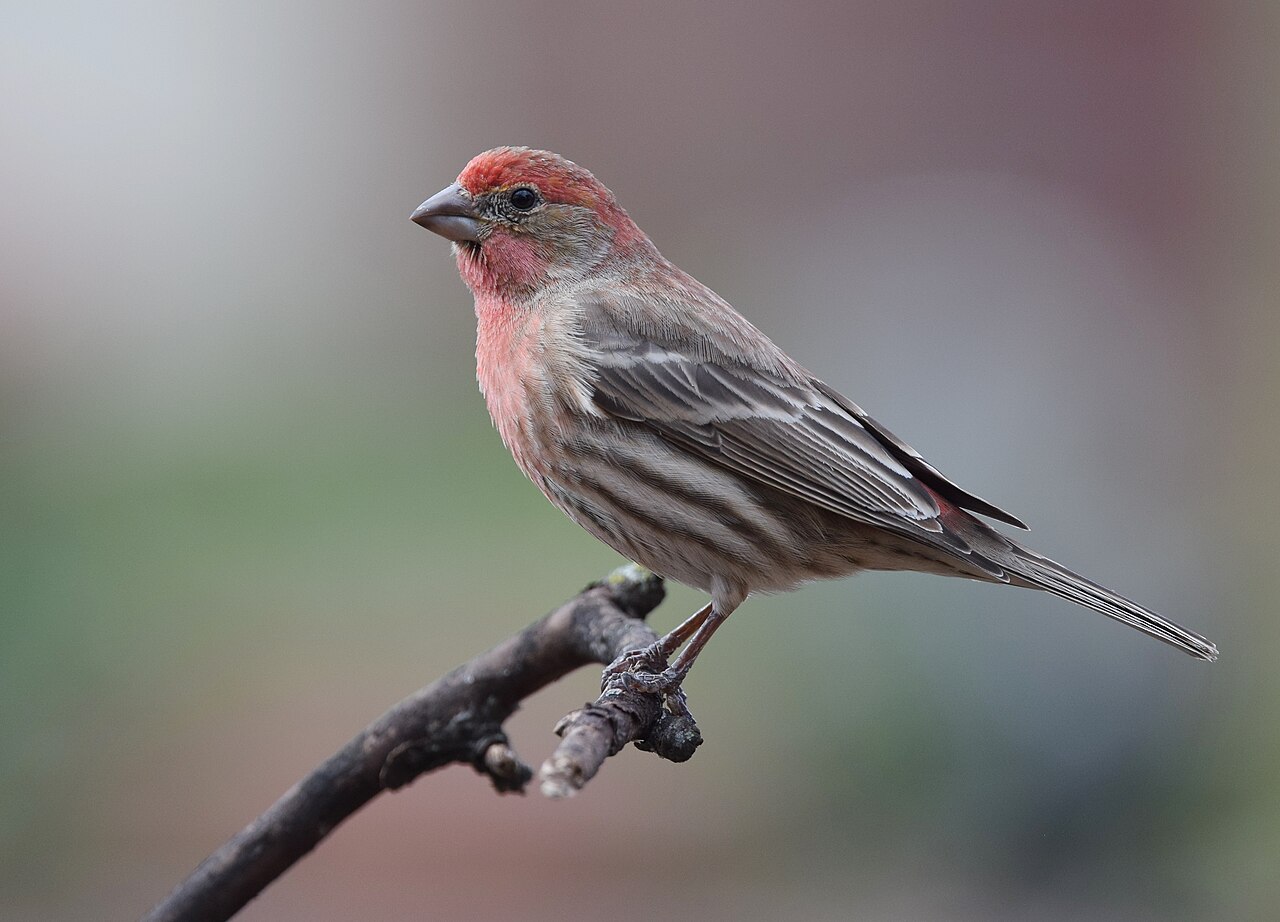
A small, stocky finch with a short, strongly curved upper mandible and a shallowly notched tail. The male has red to rosy red on forehead, eyebrow, throat and breast, with a brown-streaked back, belly and flanks; the red comes from carotenoids in the food and shifts to orange or yellow on a different diet. The female is plain grey-brown with blurred, indistinct streaking below and no clear head pattern.
Confusion species
Purple Finch has a straighter, more pointed bill, a clear pale eyebrow and a dark jaw stripe on the female, and on the male the raspberry red runs onto the back and flanks, where House Finch keeps brown streaking. Cassin's Finch has a longer bill with straight cutting edges, a peaked crown and streaked undertail coverts. House Sparrow has a much heavier conical bill and no flank streaking.
Habitat
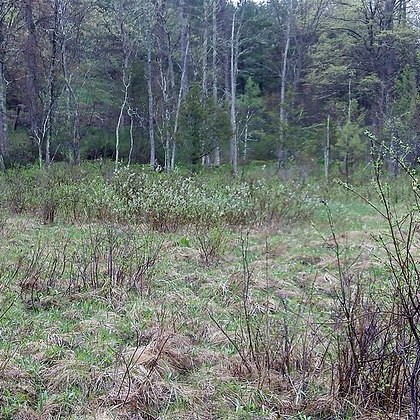
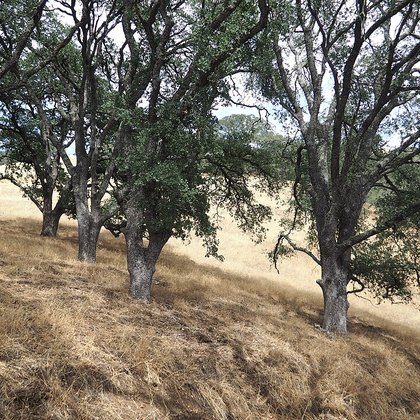
In the original western range, desert and semi-desert with cactus and yucca, chaparral, open oak woodland and canyon rims. Alongside that, and in the east almost exclusively, built-up land: street trees, gardens, yards, car parks, farms and woodland edges. It nests in climbing plants, hanging baskets, porch lamps, awnings and cavities in buildings. Closed forest and high mountains it avoids.
Where the bird is most often found, arranged by the USNVC — the vegetation classification of the United States and Canada — and CMECS for sea and coast.





Range and movements
Resident across most of the range, with only a limited winter movement in the north. The native range runs from southern British Columbia and the Great Basin through the southwestern United States to southern Mexico and Baja California. In 1940 illegally traded birds were released in New York; from these grew an eastern population that met the western one by the 1990s. In Hawaii it has been established on all the main islands since the late nineteenth century.
- Resident
- Breeding (summer)
- Winter
- Passage
- dark = core range, pale = thinly spread
Where and when to look
Check the bill before going by colour: the upper mandible of this species is clearly curved, while that of the other two rosefinches is nearly straight. Red tending to orange or yellow is normal here and does not mean you are looking at another bird. At a feeder with sunflower seed they are present year-round in most suburbs.
Conservation
With an estimated forty million birds in North America it is one of the most numerous songbirds on the continent, and the trend over the past half century is upward. In 1994 the bacterium Mycoplasma gallisepticum appeared in the eastern population, causing an eye infection; within a few years a large part of the eastern birds was lost, after which numbers partly recovered. Feeders speed up transmission, so regular cleaning lowers the risk of infection.
Scientific name
Haemorhous mexicanus | (Müller, 1776)
Philipp Ludwig Statius Müller described the species in 1776 as Fringilla mexicana; because it later moved to another genus, author and year stand in parentheses. The genus Haemorhous was introduced in 1837 by William Swainson, from Greek haima 'blood' and orrhos 'rump', hence 'with the blood-red rump'. The species name mexicanus refers to the type locality, later restricted to the Valley of Mexico. The Dutch and Spanish names follow that type locality; the English name House Finch refers to its nesting around buildings.