All species › Waterfowl › Ducks, swans and geese › Laysan Duck
Laysan Duck | Anas laysanensis
Laysaneend | Ánade de Laysán
Laysan Duck is the rarest duck in North America: a small, stocky, dark brown duck with a white eye-ring that spends almost its entire life without leaving its island. It survived the early twentieth century on no more than a handful of birds, after introduced rabbits had stripped its habitat bare, and even now, after a century of protection, numbers only a few hundred, spread across three small islands in the far northwest of Hawaii.
Voice
Laysan Duck's voice is barely studied, partly because the bird is largely active at night and hides in dense cover by day. The female quacks, as in most ducks of this genus, in a series of descending notes; the male's voice is softer and hoarser. Outside the breeding season the species is quiet, and even on its small island its voice is rarely picked out among the surrounding seabird colonies.
Recording: Percy Ulsamer — CC BY-NC-SA 4.0 · Catchment Seep, Sand Island, Midway Atoll, United States · xeno-canto
Identification
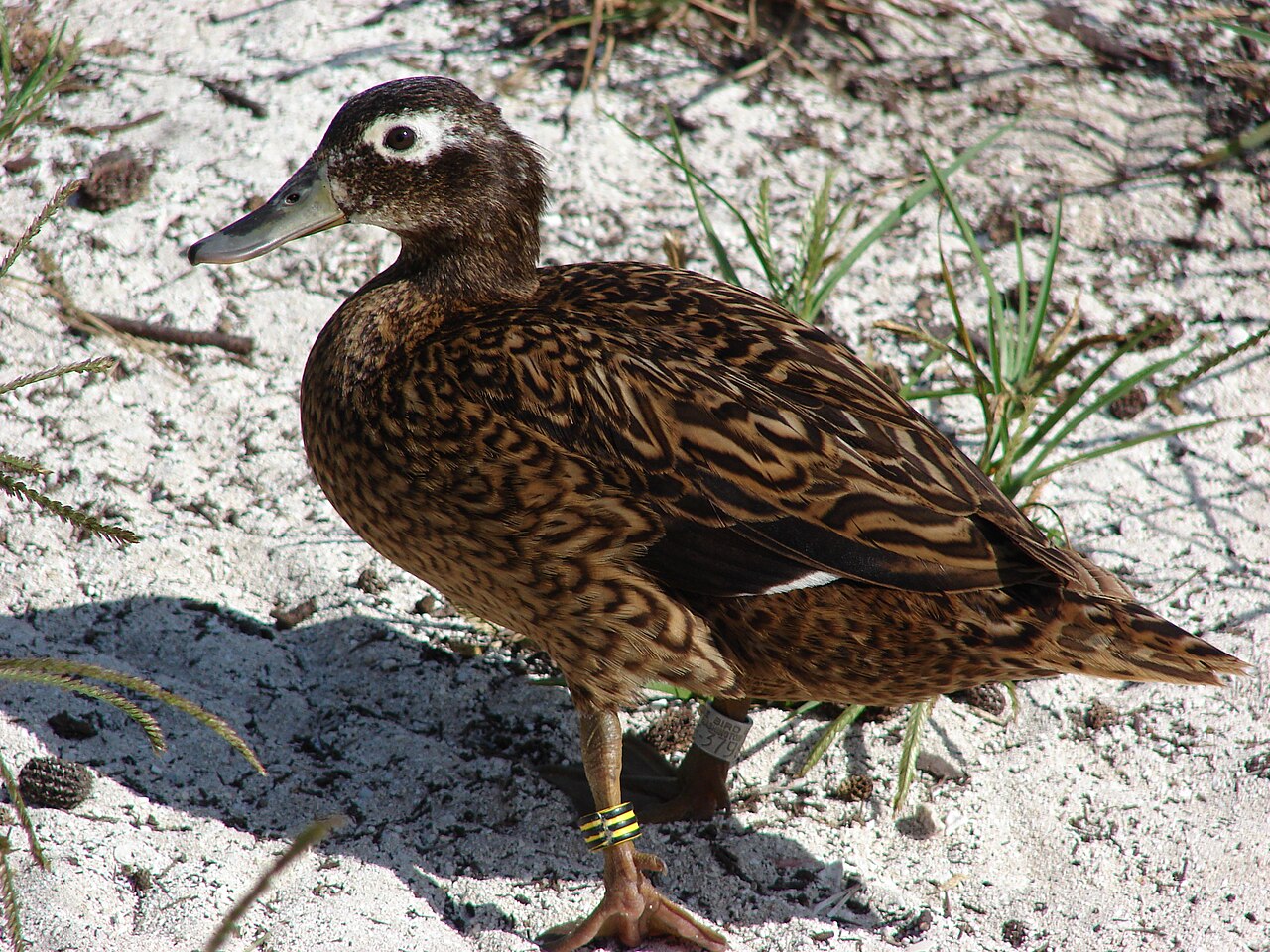
Both male and female are dark brown, with a broad, sharply defined white eye-ring as the clearest field mark. The male has a dark green bill with a variable pattern of black blotching and, in older birds, a faint greenish sheen on the head and a few slightly upturned tail feathers; his legs are brighter orange than the female's. The female has a dull orange bill, also irregularly blotched black, and is duller overall. Both sexes show a glossy purplish-green speculum. With age many birds gain more and more white in the plumage of the head and neck, until some old individuals look largely masked in white. The wings are short and the flight muscles weakly developed, giving the bird a noticeably heavier, more hesitant flight than other ducks of its size.
Confusion species
On its own island confusion is barely possible: Laysan Duck is the only duck species that breeds there, and the abundant seabirds around it — terns, albatrosses, boobies — bear no resemblance at all. Its closest relative is Hawaiian Duck (Anas wyvilliana) of the larger Hawaiian islands, likewise dark brown with a blotched bill, but with a less sharply defined eye-ring and without the pronounced white that older Laysan Ducks acquire on head and neck; the ranges of the two species lie hundreds of kilometres apart and do not overlap. Feral or released ducks of any kind are absent from Laysan Duck's uninhabited islets, unlike almost every other duck in this guide.
Habitat
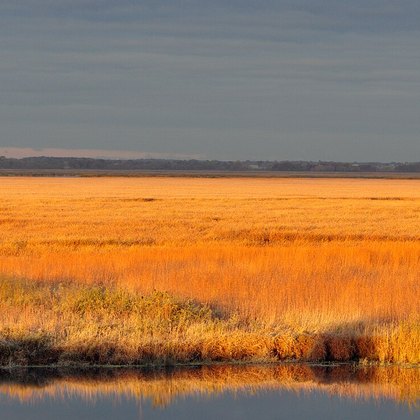
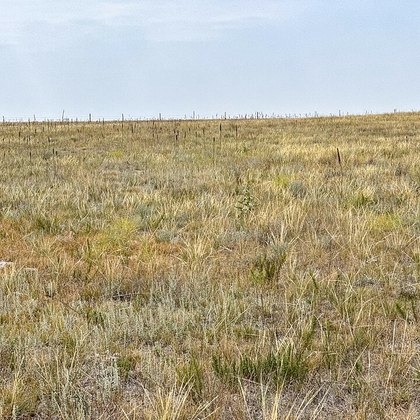
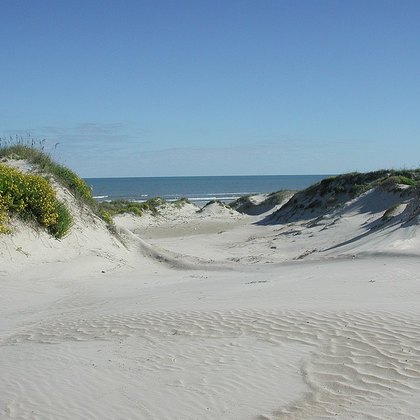
The centre of Laysan Island is a shallow, strongly brackish to hypersaline lake, fringed by marsh vegetation and exposed mudflats — there and on the surrounding bunchgrass grassland the bird spends nearly its whole life. By day it hides in the dense, low cover around the lake; towards dusk it moves out onto the open mudflats to catch insects. On Midway and Kure Atoll, where the species has been introduced, no such inland lake exists, and it instead uses lawns, small marshes and the edges of artificial pools. Treeless ground is no obstacle for Laysan Duck — trees are almost absent from its islands — but bare sand with no vegetation at all it avoids.
Where the bird is most often found, arranged by the USNVC — the vegetation classification of the United States and Canada — and CMECS for sea and coast.

Range and movements
Fossil evidence shows the species once occurred across the whole Hawaiian island chain; in historical times it has been confined to Laysan Island, in the far northwest of the chain, well beyond the inhabited islands. Between 2004 and 2005 birds were moved to Midway Atoll, where the population expanded quickly, and in 2013 a third population was established on Kure Atoll. All three islets lie hundreds of kilometres northwest of Kauaʻi, the nearest inhabited Hawaiian island, and the species does not move between islands on its own — every occurrence outside Laysan has been the work of people. On this guide's map Laysan Duck therefore falls outside the window used for the main Hawaiian islands and gets its own, zoomed-in map.
- Resident
Where and when to look
Laysan Duck can only be seen with a permit for Papahanaumokuakea Marine National Monument, the protected area that contains Laysan, Midway and Kure — Midway Atoll, where guided visits used to be possible, is currently closed to the public. Look around dusk along the edge of a lawn or pool, when the birds come out of cover to feed. Watch for the white eye-ring as the first field mark; the weak, hesitant flight confirms the identification if the bird has already flushed.
Conservation
Critically Endangered (CR): after a low point of no more than a handful of birds around 1912, when introduced rabbits had destroyed the vegetation of Laysan, the species recovered slowly to a few hundred, with a further crash to around a hundred birds after a drought in 1993. Spreading the population across three islets since the introductions of 2004 and 2013 has reduced the risk from any single disaster, but avian botulism, present on Midway since 2008, and warming, less predictable seas remain the main threats. With the entire world population confined to a few square kilometres spread across three low-lying atolls, the species remains vulnerable to a single storm or tsunami.
Scientific name
Anas laysanensis | Rothschild, 1892
Rothschild described the species in 1892 directly as Anas laysanensis, in the genus it still stands in today, so author and year do not stand in parentheses. The species name refers to Laysan Island, the only island where the bird occurred naturally in historical times; the type locality is that island itself. In Hawaiian the bird is called koloa pohaka; no separate Dutch name has been formed for it, and 'laysaneend' simply follows the name of the island.