All species › Passerines › Wagtails and pipits › Olive-backed Pipit
Olive-backed Pipit | Anthus hodgsoni
Siberische boompieper | Bisbita de Hodgson
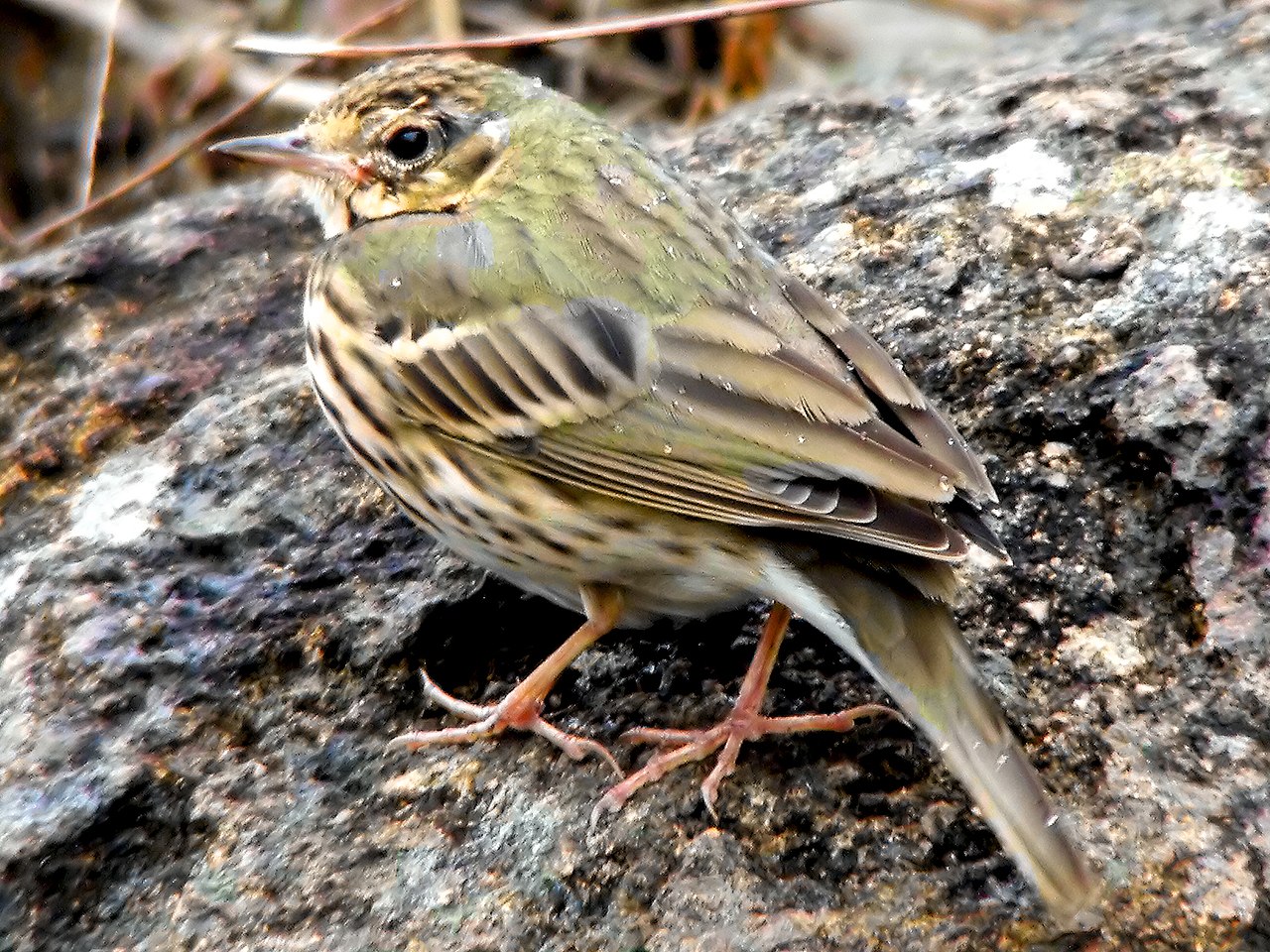
The Olive-backed Pipit is an Asian pipit of forest edges and open conifer woodland that occurs in the guide area only as a rare visitor, chiefly in the outer Aleutians and the Bering Sea islands. It is the greenest of all the pipits you can meet in North America and the only one that regularly perches in trees.
Voice
The flushing call is a high, rough speez or teez, clearly lower and hoarser than the thin call of Red-throated Pipit. The song, given on the breeding grounds from a treetop or in a song flight that ends in a tree, is a fast, high series of trills and descending figures, quicker and thinner than that of Tree Pipit. In North America observers hear virtually nothing but the call.
Recording: Teet Sirotkin — CC BY-SA 4.0 · Horns Båtvarv, Sweden · xeno-canto
Identification
The upperparts are olive-green and only faintly streaked, which separates it from every other North American pipit. A supercilium runs back from the bill, buff in front of the eye and white behind it; at the rear edge of the ear-coverts stands a small white spot with a dark spot in front of it. The underparts are white to buff with heavy black streaking on breast and flanks. There are two pale wing bars, and the legs are flesh-coloured. It forages on the ground while walking but flies up into a tree when disturbed, which pipits of open country do not do.
Confusion species
American Pipit and Siberian Pipit are grey-brown rather than olive-green above, lack the white ear spot and seldom go into trees. Red-throated Pipit is heavily streaked right onto the rump and has a thin, reedy call; in Olive-backed the rump is unstreaked. Pechora Pipit, another Asian visitor to the Bering Sea islands, has two pale lines along the mantle and a short, hard call. In case of doubt the green, barely streaked back and the white spot behind the ear-coverts settle it.
Habitat
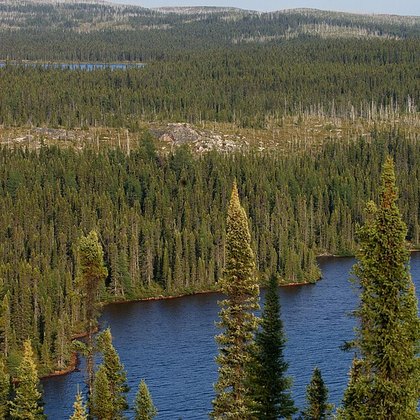
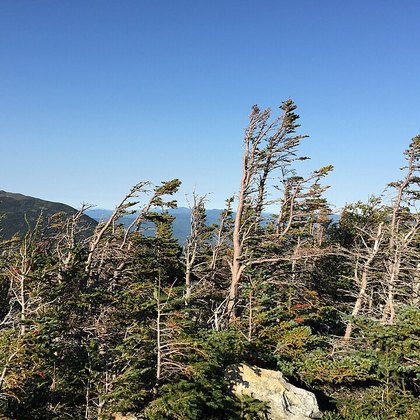
On the breeding grounds, open conifer and birch woodland, forest edges and treeline zones in taiga and mountains, to great altitude in the Himalaya. It winters in evergreen woodland, in plantations and along forest edges, foraging on the forest floor in the litter layer. Birds turning up in western Alaska are usually found in dwarf scrub, in weedy ground around buildings or on village lawns, without the trees they use in their own range.
Where the bird is most often found, arranged by the USNVC — the vegetation classification of the United States and Canada — and CMECS for sea and coast.



Range and movements
The range runs from northeastern European Russia through Siberia to Kamchatka and Japan, and south along the Himalaya and through China. Wintering is in South and Southeast Asia, from the Indian subcontinent to the Philippines. In North America it is a rare migrant in western Alaska, most records coming from the outer Aleutians and, less often, the Bering Sea islands; a few records lie further south, in California and Nevada.
Where and when to look
The best chance is on Attu, Shemya or Adak in the second half of May and in September, when onshore winds out of Asia bring visitors in. Watch for a pipit that settles on a ledge, a structure or a bush after flushing instead of dropping into the grass, and try to get the call as it goes up.
Conservation
The species is listed globally as Least Concern (LC); the range is extensive and the population is judged large and stable. In North America it amounts to a few birds a year, so conservation plays no part here; the number of records depends mainly on how many observers are in the Aleutians during migration. In Asia forestry affects it locally, but it also uses plantations and disturbed woodland.
Scientific name
Anthus hodgsoni | Richmond, 1907
Richmond gave the species the name Anthus hodgsoni in 1907, as a replacement for an earlier epithet that proved unusable; as the species has stayed in that genus, author and year appear without parentheses. The species name honours Brian Houghton Hodgson, British resident in Nepal and a collector of Himalayan birds. The genus Anthus goes back to Greek anthos, in Pliny the name of a small bird of grassland. The English name refers to the olive back, the Dutch name to the bird's origin and its kinship with Tree Pipit, the Spanish name to the man it is dedicated to. The specimen described came from Bengal.