All species › Passerines › Wagtails and pipits › Red-throated Pipit
Red-throated Pipit | Anthus cervinus
Roodkeelpieper | Bisbita gorgirrojo
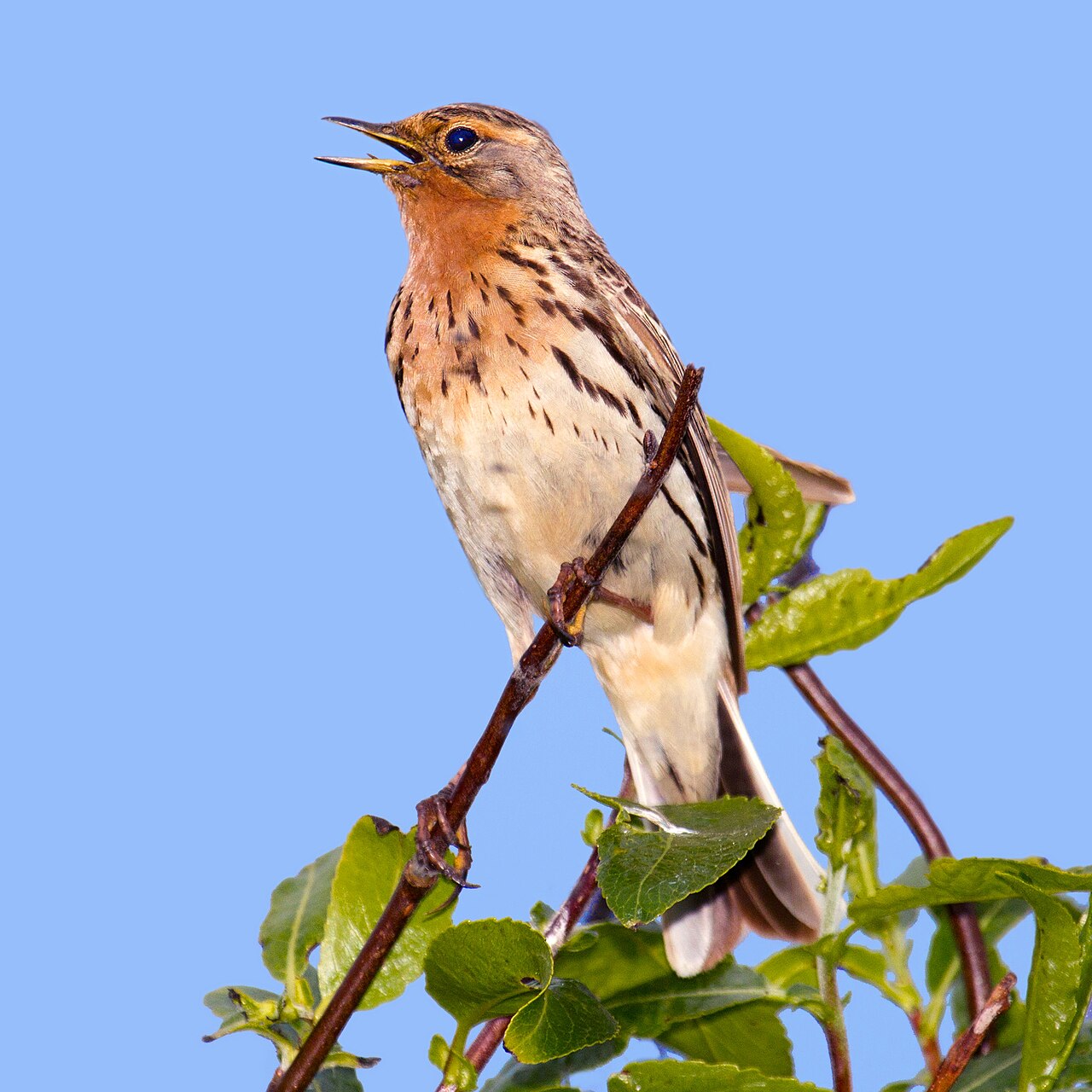
The Red-throated Pipit is a tundra pipit of northern Eurasia that reaches North America only as a breeding bird of a small area in western Alaska. In breeding plumage it is the one pipit in the guide area with a rusty-red throat and breast; in autumn a handful of young birds appear along the California coast.
Voice
The call is a long-drawn, high, thin pssiiih, falling at the end and carrying far; it is thinner and more drawn out than the call of any other pipit in the area and is often the first sign that one is among a flock of American Pipits. The song is delivered in a song flight that begins with climbing wingbeats and ends in a descent on spread wings: a series of dry, buzzing trills and repeated chee notes.
Recording: Sonothèque ADVL — CC0 · Arrondissement of Avranches (near Vains), Manche, Normandy, France · xeno-canto
Identification
In breeding plumage the throat, face and upper breast are brick-red to pinkish orange, deepest and most extensive in the male, paler in the female. The upperparts are heavily streaked black on brown, with two pale lines along the mantle; characteristically, the rump is clearly streaked as well. Flanks and breast carry heavy black streaks on a white to buff ground. The legs are pale flesh-coloured. Young and winter birds lack the red entirely and are then told by the streaked rump, the heavy streaking and the call.
Confusion species
American Pipit is plainer above, has an unstreaked rump, dark legs and a much shorter, hard pipit call. Siberian Pipit likewise has an unstreaked rump and pale legs, but no pale mantle lines. Pechora Pipit does have mantle lines but a short, hard call and an unstreaked rump. In autumn birds without red, the combination of streaked rump, heavy flank streaking and the long thin call is what separates it.
Habitat
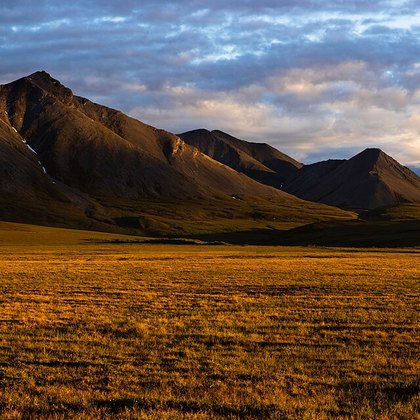
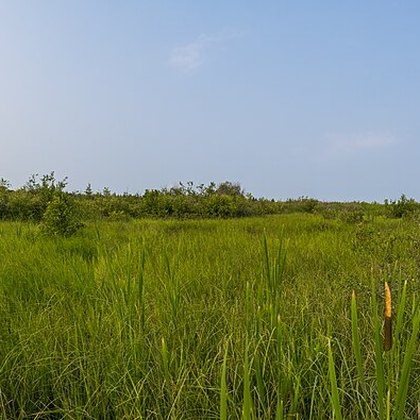
Fairly dry, rocky tundra next to hummocky sedge meadows and wet hollows, where the nest is placed in a grass tussock or under a dwarf willow. In the Alaskan breeding range it keeps to coastal plains and lower mountain tundra. On migration and in winter it seeks wet, short grassland: closely grazed coastal pasture, sod farms, rice fields, the margins of irrigation basins and drying mudflats.
Where the bird is most often found, arranged by the USNVC — the vegetation classification of the United States and Canada — and CMECS for sea and coast.


Range and movements
The breeding range runs from northern Scandinavia through the Russian tundra to Chukotka and reaches North America on the Seward Peninsula and the adjoining coast of northwestern Alaska. Almost the whole population winters in Africa and southern Asia as far as Indonesia and the Philippines. In North America a small part leaves the breeding grounds southward along the Pacific coast: in October small numbers, mostly immatures, appear on the California coast, usually among flocks of American Pipits.
- Breeding (summer)
- Passage
- dark = core range, pale = thinly spread
Where and when to look
In June look for it on the Seward Peninsula along the Kougarok and Teller roads: drive slowly and listen for the drawn-out call over the tundra. In California the second half of October is the time; work through flocks of American Pipits on sod farms and listen, because the call gives the bird away before the plumage does.
Conservation
The species is not globally threatened and the population is put at about two million birds, almost entirely in Eurasia. The American breeding population is small, lies at the edge of the range and is barely surveyed, so no trend can be established for Alaska. A decline has been reported in northern Europe; the main pressures lie outside the breeding range, in the loss of wet grassland and shoreline in the wintering areas.
Scientific name
Anthus cervinus | (Pallas, 1811)
Pallas described the species in 1811 as Motacilla cervina, from material from the Kolyma; because it was later moved to Anthus, author and year stand in parentheses. The species name cervinus is Latin for 'deer-coloured', from cervus 'deer', and refers to the reddish brown of throat and breast. The genus Anthus goes back to Greek anthos, in Pliny the name of a small bird of grassland. The English, Dutch and Spanish names all three name that same red throat.