All species › Passerines › New World sparrows › Olive Sparrow
Olive Sparrow | Arremonops rufivirgatus
Olijfgors | Cerquero oliváceo
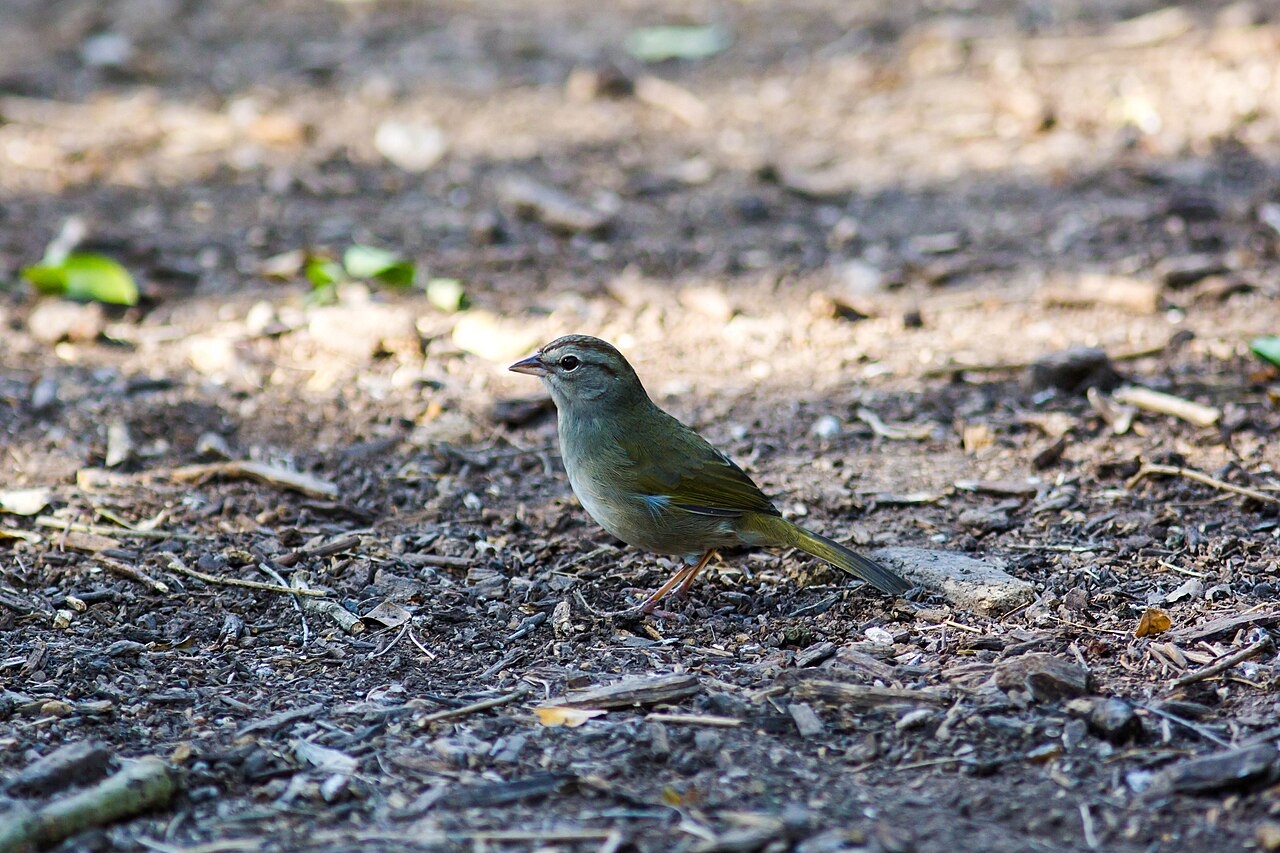
The Olive Sparrow is a stocky, olive-green ground bird of thorn scrub and tropical woodland that in the United States occurs only in southern Texas. It stays low in dense cover and shuffles through the leaf litter, so you will usually hear it first. The head is grey with two brown crown stripes, which separates it from any other sparrow of the Rio Grande.
Voice
The song is an accelerating series of slightly musical, downslurred tsip or tsew notes that run together at the end, often likened to a metal ball bouncing to rest on a concrete floor. Only the male sings, all year but most of all from February to June. There is also a sharp, dry chik as a contact call and a high, thin tseee. The sound almost always comes from impenetrable scrub.
Recording: Manuel Grosselet — CC BY-NC-SA 4.0 · La Soledad, Santa María Jacatepec, Oaxaca, Mexico · xeno-canto
Identification
Upperparts are plain olive-green, without streaking or wingbars; underparts are dingy white to buff, with olive flanks and a yellow patch at the bend of the wing. The head is grey with a broad grey central crown stripe between two rufous lateral stripes, and a thin brown eyeline. The bill is stout and conical, the legs sturdy and pink, the tail fairly long and rounded. The sexes look alike.
Confusion species
Within the Texas range confusion is mainly possible with females and juveniles of other woodland sparrows, but none of them has plain olive-green upperparts without any streaking combined with two rufous crown stripes. Green-tailed Towhee has a rufous crown and a white throat with black malar stripes and occurs further west at higher elevation. In Central America it overlaps with Green-backed Sparrow Arremonops chloronotus, which has black rather than rufous crown stripes and a more sharply defined head pattern.
Habitat
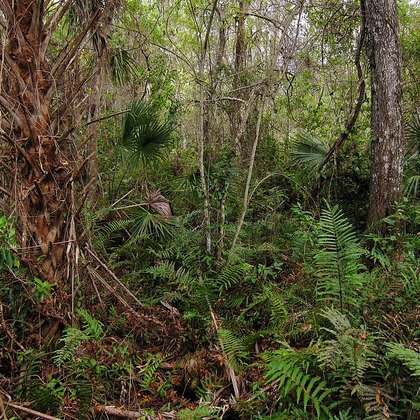
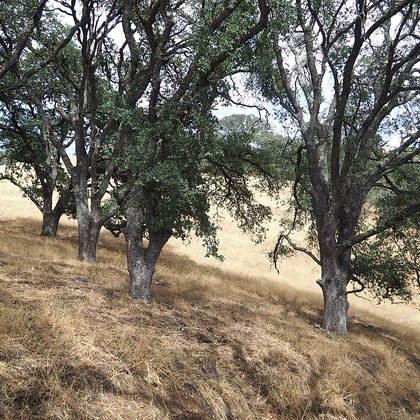
Dense, dry scrub with a closed understorey and open litter-covered ground: mesquite (a thorny leguminous shrub of the Southwest that forms dense thickets) and thorn scrub of the lower Rio Grande, brush along creeks, and the understorey of tropical deciduous forest. Also field corners and neglected citrus groves with enough cover. Open short vegetation and built-up land are avoided; the bird is nearly always within a few metres of the ground.
Where the bird is most often found, arranged by the USNVC — the vegetation classification of the United States and Canada — and CMECS for sea and coast.


Range and movements
The range runs from the lower Rio Grande in southern Texas south along the Gulf slope through Tamaulipas, Nuevo León, San Luis Potosí, Veracruz and the Yucatán Peninsula, and along the Pacific slope of Guerrero and Oaxaca into Central America. Eight subspecies are recognised, differing in the colour of crown and underparts and occupying separate areas. The species does not migrate; every area is held all year. The division across Mexican states is inferred here from the range description.
- Resident
- Breeding (summer)
- Winter
- Passage
- dark = core range, pale = thinly spread
Where and when to look
In south Texas a morning in March or April in a reserve such as Santa Ana or Bentsen gives the best chance. Stand on a trail through dense scrub and wait for the bouncing song series; then move slowly towards it and watch the ground under the bushes, not above them. It regularly crosses a trail in a low, short flight, and the unstreaked olive-green then shows at once.
Conservation
The IUCN keeps the species at Least Concern (LC) and puts the population at about 4.8 million mature birds with a stable trend. In Texas the large-scale clearing of thorn scrub in the twentieth century was followed by a decline, but numbers there have been stable since the 1980s. Restoration of brush in the reserves along the lower Rio Grande yields new breeding ground; hard frost and prolonged drought can set numbers back locally.
Scientific name
Arremonops rufivirgatus | (Lawrence, 1851)
Lawrence described the species in 1851 as Embernagra rufivirgata; because it was later placed in Arremonops, author and year stand in parentheses. The genus name is formed from Arremon, a related genus, and Greek ops 'face, appearance', so 'resembling Arremon'. The species name rufivirgatus comes from Latin rufus 'reddish' and virgatus 'striped', after the two crown stripes. The type came from the Rio Grande near Brownsville, Texas.