All species › Passerines › New World sparrows › Grasshopper Sparrow
Grasshopper Sparrow | Ammodramus savannarum
Sprinkhaangors | Chingolo saltamontes
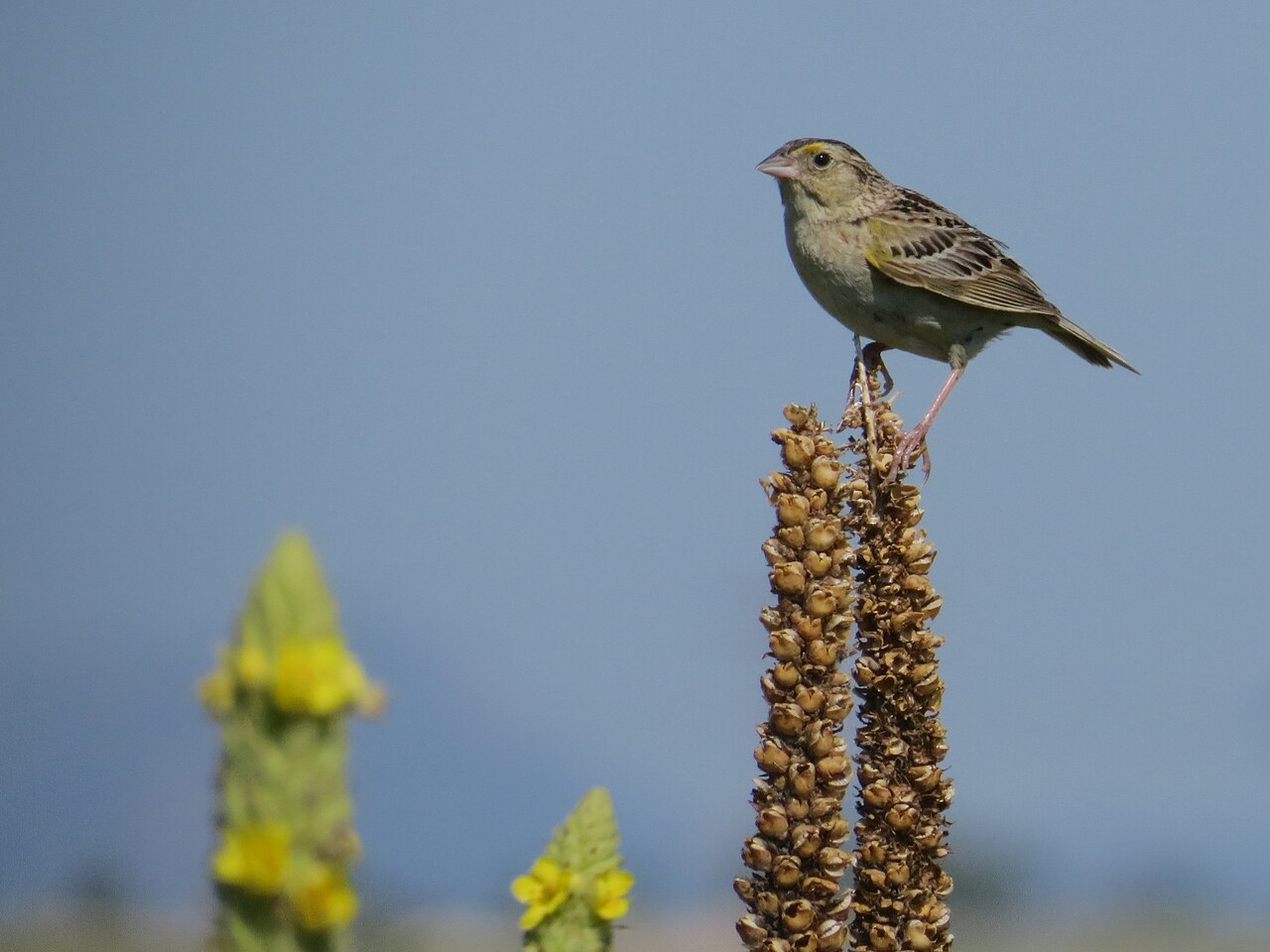
The Grasshopper Sparrow is a small, short-tailed grassland bird with a flat crown and a large bill for its size. Its name comes from the thin, insect-like song and from the share of grasshoppers in the summer diet. Outside the song period it runs off through the grass rather than flying, so on occupied ground it is easily overlooked.
Voice
The song is two short, thin introductory notes followed by a high, dry trill that imitates the sound of a grasshopper; it lies so high that many ears lose it. Males also give a longer, bubbling series of shifting pitch, mostly at dusk and while setting up a territory. The call is a short, high tik. Singing is done from a grass stem, a thistle or a barbed wire, often with quivering wings.
Recording: Peter Wilton — CC BY-SA 4.0 · Santa Teresa County Park (near San Jose), Santa Clara County, California, United States · xeno-canto
Identification
The head is flat, with a dark crown split by a pale central stripe, and an orange-yellow spot between eye and bill and usually on the bend of the wing as well. The underparts are unstreaked: a buff breast with a white belly. The back is mottled in sand, black and chestnut. The tail is short and pointed, the bill large and pale, and there is a narrow white eyering. Juveniles do show fine streaks across the breast.
Confusion species
Henslow's Sparrow has an olive-green head, a heavier bill and clear black streaks on a buff breast. Baird's Sparrow has an ochre central crown stripe and a necklace of fine dark streaks across the breast. LeConte's Sparrow is a brighter orange-buff on face and breast, with a grey ear patch and streaked flanks. Savannah Sparrow is longer-tailed and clearly streaked on breast and flanks. The unstreaked buff breast together with the yellow lore is the combination that settles it for Grasshopper Sparrow.
Habitat
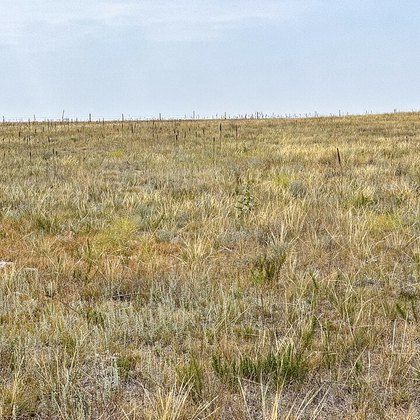
Open grassland with a varied structure: tall clumps of dead grass to hide the nest in, and bare patches between them for taking insects off the ground. Prairie, hayfield, lightly grazed pasture, old fields and restored grassland; encroaching shrubs and trees make a site unsuitable. In winter mainly grass-dominated fields with the same open ground, since seeds are then picked up from the surface.
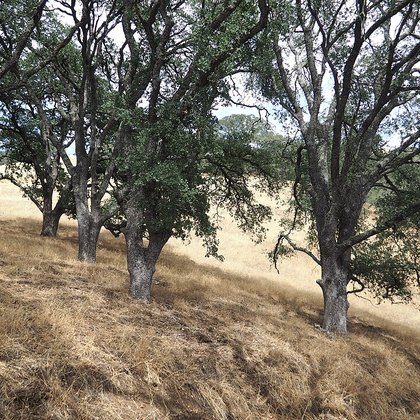
Where the bird is most often found, arranged by the USNVC — the vegetation classification of the United States and Canada — and CMECS for sea and coast.



Range and movements
Breeds from southern Canada across most of the United States apart from the driest deserts, at highest density on the prairies. Eastern birds migrate thousands of kilometres to the Gulf coast and Central America, while western populations move shorter distances. Resident populations live in Florida, on the Greater Antilles and in Central America from Belize to Nicaragua. In northern and central Mexico it is mainly a winter visitor; the exact division across states there is inferred from the range description.
- Resident
- Breeding (summer)
- Winter
- Passage
- dark = core range, pale = thinly spread
Where and when to look
Look for it in May and June in a large, weedy grass field and scan the tops of the tallest stems and the barbed wire: a singing male often stays on the same perch for minutes. Take your time, because the trill lies so high that you pick it up only once you listen for it. Walking in behind the song perch achieves little; the bird then runs off through the grass.
Conservation
The IUCN keeps the species at Least Concern worldwide, but the 2022 State of the Birds reports a long-term, range-wide decline of 2.13 per cent per year. Loss of grassland to arable farming and the encroachment of shrubs and trees into unmanaged grassland are the main causes. The Florida subspecies is critically endangered: fifteen breeding pairs were counted in 2017 and about 120 birds in 2022 after years of captive breeding and release. Moderate grazing and a burn cycle of two to three years keep breeding ground suitable.
Scientific name
Ammodramus savannarum | (Gmelin, 1789)
Gmelin described the species in 1789 as Fringilla savannarum; because of its placement in another genus, author and year stand in parentheses. The genus Ammodramus comes from Greek ammos 'sand' and dramein 'to run', so 'sand-runner', after its habit of running over bare ground. The species name savannarum is Latinised for 'of the savannas'. The specimen described came from Jamaica, where the species is resident.