All species › Falcons › Falcons and caracaras › Prairie Falcon
Prairie Falcon | Falco mexicanus
Prairievalk | Halcón Mexicano
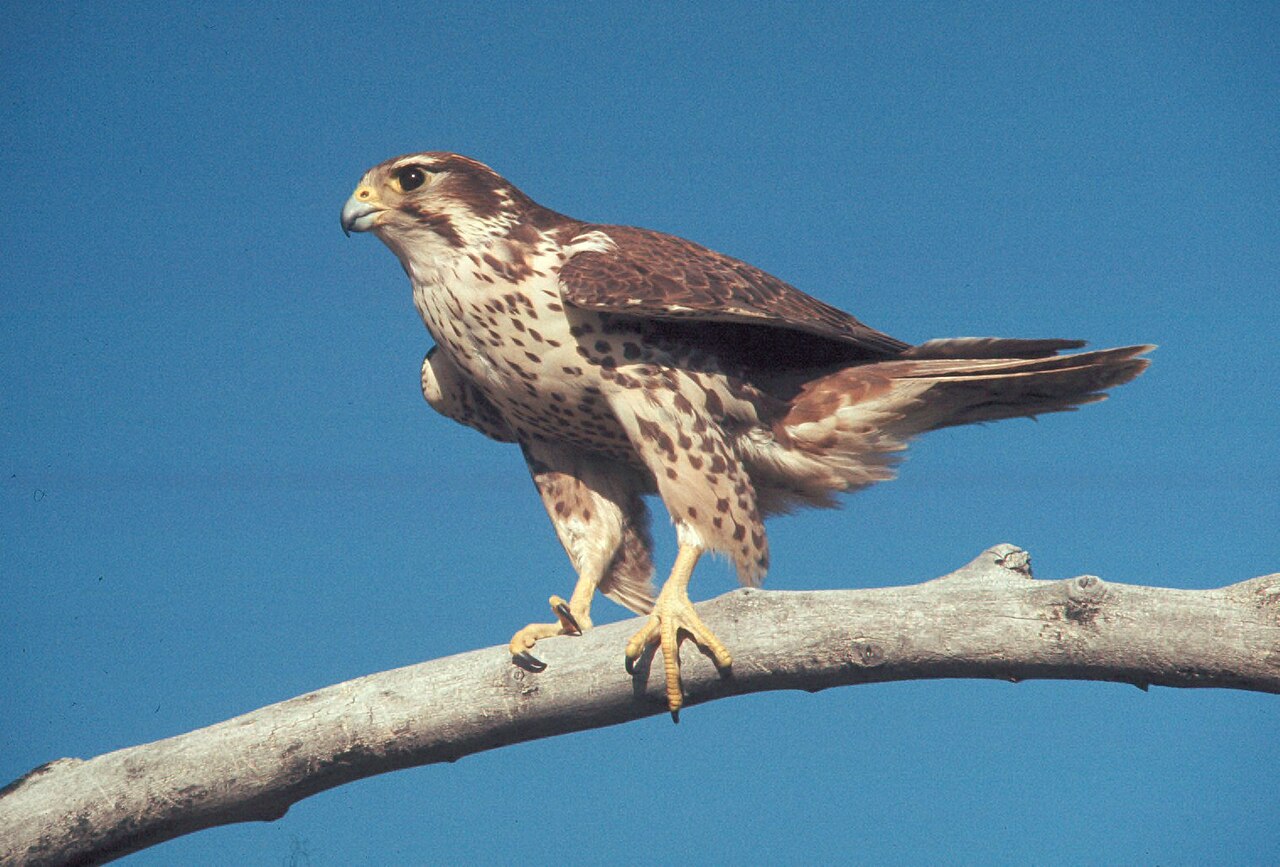
The Prairie Falcon is the characteristic large falcon of the dry, open spaces of western North America, from steppe with sagebrush (grey-green wormwood scrub of the dry western interior) to high alpine meadows, nesting on cliffs with wide views over the surrounding terrain. Its sandy-brown, environment-matching colour makes it less conspicuous in flight than most other large falcons.
Voice
On territory the Prairie Falcon gives a loud, chattering series of cries, similar to that of the Peregrine Falcon but higher and sharper in tone. During courtship and nest defence this call is sustained and piercing. Away from the breeding season it is largely silent.
Recording: Bobby Wilcox — CC BY-NC-SA 4.0 · Nevada (near Austin), Lander County, Nevada, United States · xeno-canto
Identification
A large, sandy-brown falcon with pale underparts, brown spotting and a thin, narrow moustache against an otherwise pale facial pattern. Distinctive in flight is the dark triangle of 'armpit' feathers beneath the wing base, clearly visible against the otherwise pale underwing. Females are considerably larger than males. Young birds are darker brown above and more heavily streaked, rather than spotted, below.
Confusion species
Peregrine Falcon is darker above with a broad, solid black moustache and a wholly different, higher-contrast colouring, and lacks the Prairie Falcon's dark armpit triangle. American Kestrel is much smaller with a double black facial stripe. In dry, open terrain with cliffs, a large, sandy-coloured falcon with dark armpits is almost always a Prairie Falcon.
Habitat
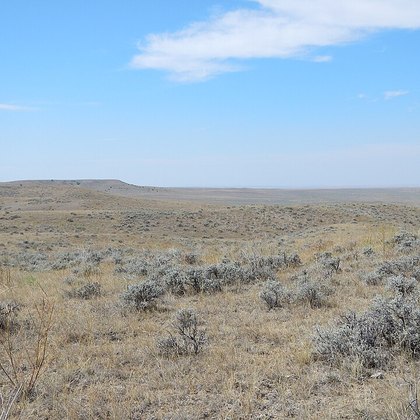
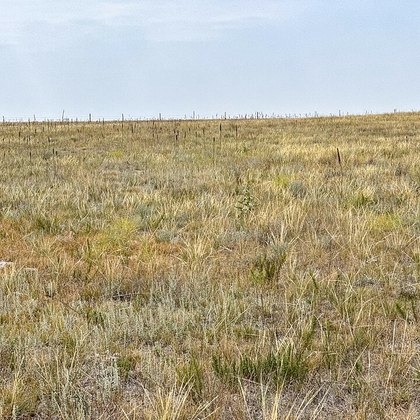
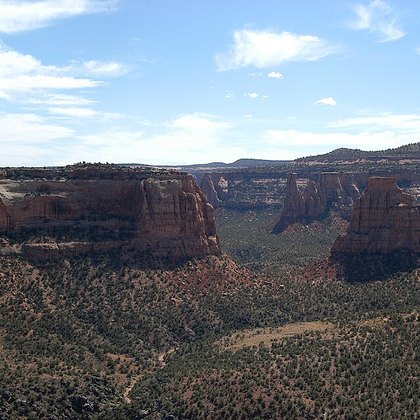
Dry, open spaces with sparse vegetation are essential: sagebrush steppe, desert edge, shortgrass prairie, farmland and alpine meadows at considerable elevation. For nesting the species depends entirely on rock ledges on cliff faces and steep canyons with wide views over its hunting grounds.
Where the bird is most often found, arranged by the USNVC — the vegetation classification of the United States and Canada — and CMECS for sea and coast.



Range and movements
Breeds across western North America, from southern Canada to central Mexico, with the densest populations in the interior basins between the Rocky Mountains and the Sierra Nevada. Most birds are year-round residents or move only short distances to lower ground after the breeding season; northern birds may travel farther south when snow hampers hunting.
- Resident
- Breeding (summer)
- Winter
- Passage
- dark = core range, pale = thinly spread
Where and when to look
In the western United States, look for cliffs above dry steppe or prairie: a Prairie Falcon often perches quietly on a ledge or flies low and fast along the cliff face, its dark armpit triangle standing out at once against the light. In winter many Prairie Falcons also range over open farmland and grassland on the plains, hunting Horned Larks and other small birds low over the ground.
Conservation
The species is listed as Least Concern (LC) and the population is generally stable, though it faces local pressure from the conversion of steppe and dry grassland to farmland and from disturbance of nesting cliffs by recreation and mining.
Scientific name
Falco mexicanus | Schlegel, 1850
Schlegel described the species in 1850 as Falco mexicanus; the genus has remained unchanged since, hence no parentheses around author and year, despite the species having been placed at times in Hierofalco. Falco is Latin for 'falcon'; mexicanus refers to Mexico, where the first specimen was collected, even though the species breeds there only in the north and centre of the country. Schlegel gave the provenance simply as Mexico; in 1862 he named Monterrey, in the north-east of the country, as the origin of the type. The Dutch name, prairievalk, matches the English one, after the open prairies and steppes where the species hunts.