All species › Falcons › Falcons and caracaras › Peregrine Falcon
Peregrine Falcon | Falco peregrinus
Slechtvalk | Halcón peregrino
The Peregrine Falcon is the fastest animal on Earth: in a hunting stoop it can exceed three hundred kilometres per hour. By the mid-twentieth century agricultural pesticides had all but wiped it out in eastern North America; since the ban on DDT and years of reintroduction it once again breeds on cliffs, bridges and skyscrapers from Alaska to Mexico.
Voice
Near the nest it gives a series of sharp, harsh cries, a sustained and piercing kek-kek-kek-kek, especially when an intruder approaches too closely. Between mates a softer, whining wee-chup is used during food exchanges and nest-relief. Outside the breeding season the Peregrine Falcon is a quiet bird; hearing one almost always means an occupied nest site is nearby.
Recording: Mirko Tomasi — CC BY-SA 4.0 · Induno Olona, Province of Varese, Lombardy, Italy · xeno-canto
Identification
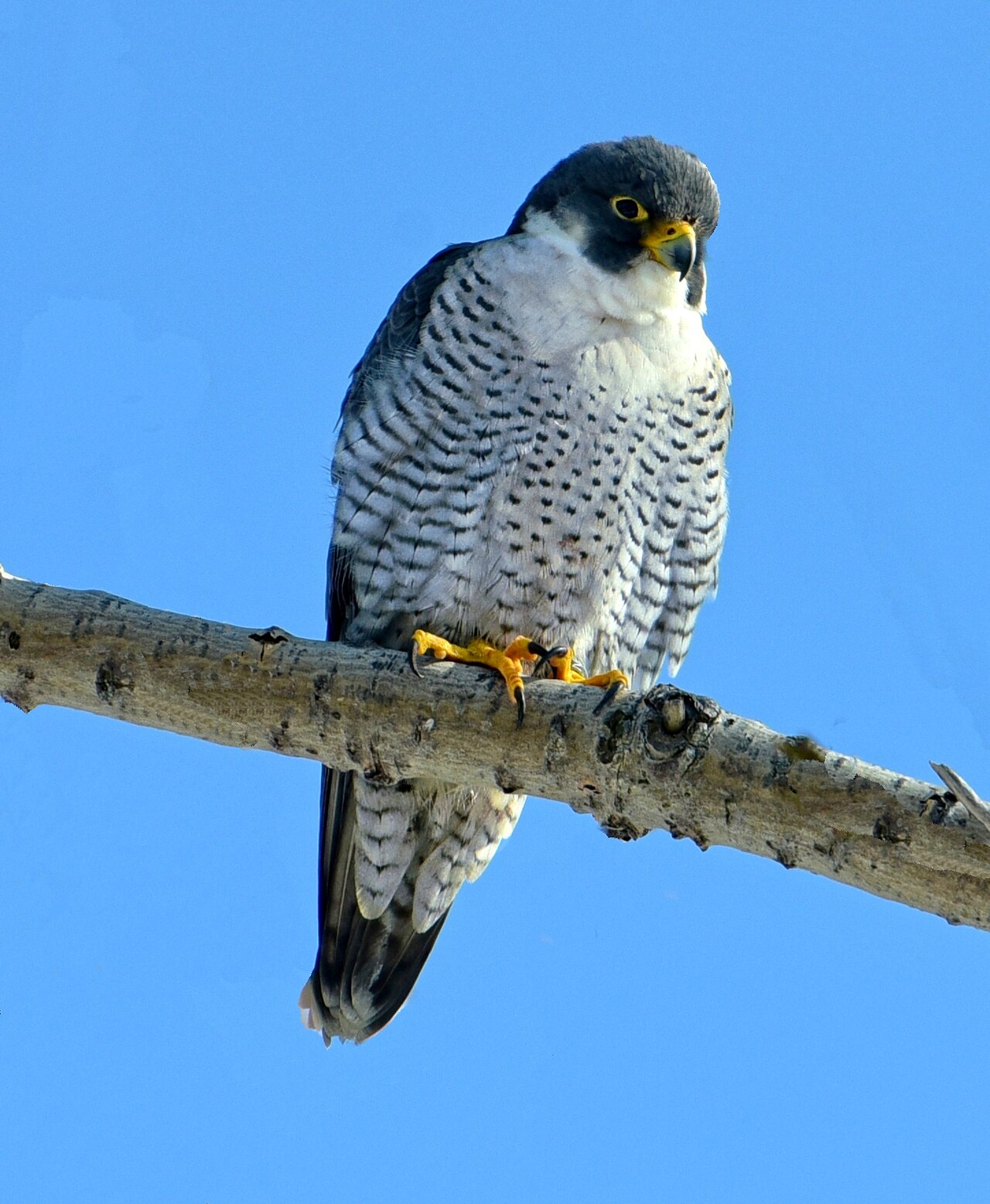
A stocky, powerful falcon with long, pointed wings and a relatively short tail, slate-blue-grey above and white below with fine, dense barring. Distinctive is the broad black 'moustache' running down from the eye across the cheek, set against an otherwise white throat and cheeks. Females are considerably larger than males; juveniles are browner above and streaked lengthwise rather than barred below. In flight the streamlined, anchor-shaped silhouette stands out, with fast, stiff wingbeats alternating with long glides.
Confusion species
Merlin is considerably smaller and slimmer, with rusty leg feathers and a narrower moustache, and lacks the Peregrine's heavy chest. American Kestrel is much smaller with a far less sharply defined moustache. At great height a Peregrine Falcon is sometimes mistaken for a large gull because of its pointed wings, but its direct, purposeful flight and characteristic silhouette set it apart from any gull at once.
Habitat
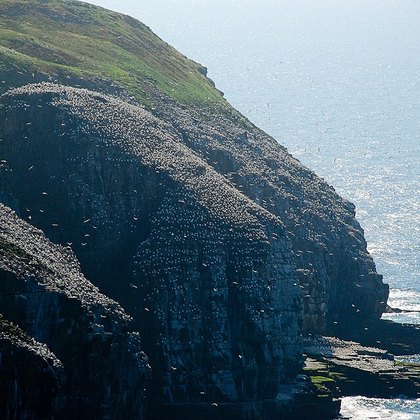
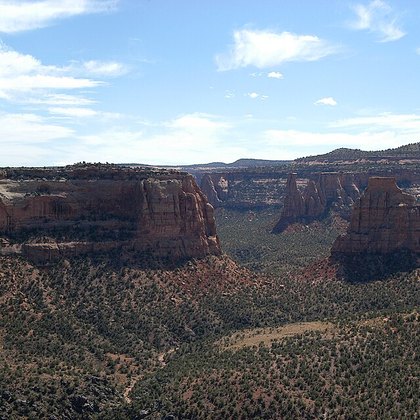
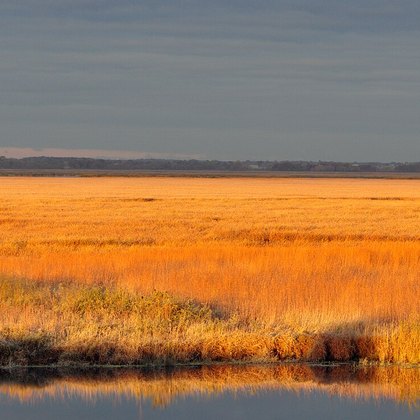
Cliffs along coasts and mountains are the original nesting habitat, offering wide views and a clear approach for stooping on other birds. Since the 1980s it has also nested on tall buildings and bridges in large cities, where pigeons and starlings provide a rich, year-round supply of prey. Open water, marsh and tundra with abundant waterbirds attract it as well, especially outside the breeding season.
Where the bird is most often found, arranged by the USNVC — the vegetation classification of the United States and Canada — and CMECS for sea and coast.


Range and movements
Breeds from the Arctic tundra of Alaska and northern Canada south to Mexico, with the densest populations along coasts, in mountains and in cities. Birds from the high Arctic are long-distance migrants that winter as far south as South America and are seen on passage through the interior United States; birds from more temperate regions and most city birds stay year-round near their nest site. After a low point around 1970, when the eastern population disappeared entirely, the species has recovered across the continent through the DDT ban and reintroduction programmes.
- Resident
- Breeding (summer)
- Winter
- Passage
- dark = core range, pale = thinly spread
Where and when to look
In cities, look for a tall building, church steeple or bridge pier with a broad ledge or window sill: many Peregrines use such a spot as a regular perch, marked by a white streak of droppings below it. Along the coast, a midday hour at a busy shorebird or waterfowl gathering often produces a stoop, announced by the sudden, simultaneous flush of hundreds of birds.
Conservation
From near-disappearance in eastern North America by the mid-twentieth century to a healthy, still-growing population today, thanks to the 1972 DDT ban and decades of reintroduction on cliffs and buildings. The species is now regarded as one of the continent's greatest conservation successes, though illegal persecution and window collisions remain local risks.
Scientific name
Falco peregrinus | Tunstall, 1771
Tunstall described the species in 1771 as Falco Peregrinus; the genus has remained unchanged since, hence no parentheses around author and year. Falco is Latin for 'falcon'; peregrinus means 'wandering' or 'foreign', after the long migrations of the northern populations, and gave the English word 'peregrine' to the language. The type locality lies in Northamptonshire, England.