All species › Falcons › Falcons and caracaras › Gyrfalcon
Gyrfalcon | Falco rusticolus
Giervalk | Halcón gerifalte
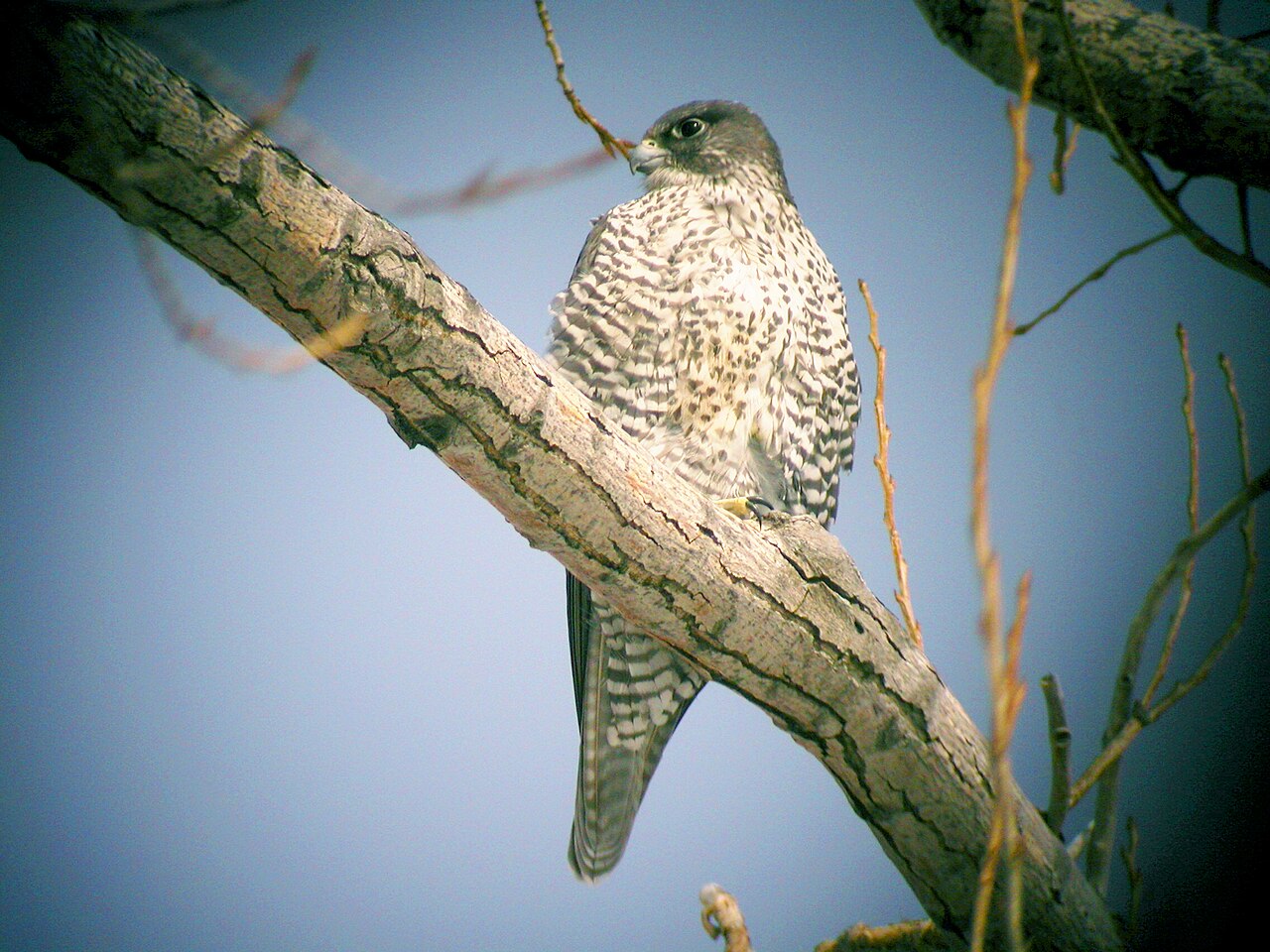
The Gyrfalcon is the largest falcon in the world and breeds all around the North Pole on cliffs of the Arctic tundra, taking waterfowl and ptarmigan year-round. Its plumage ranges from nearly pure white to dark slate-grey, a variation that can occur within a single population.
Voice
On territory the Gyrfalcon gives a deep, hoarse series of cries, slower and heavier in tone than those of the Peregrine Falcon. Between mates and during food exchanges a softer, chattering sound is used.
Recording: Lars Edenius — CC BY-NC-SA 4.0 · Lycksele Municipality, Västerbottens län, Sweden · xeno-canto
Identification
A large, broad-chested falcon with relatively long wings and a long tail, occurring in three main colour forms: a nearly pure white form with fine black spotting, a grey form with dense brown-grey barring, and a dark form nearly uniform slate-grey to blackish-brown. All forms lack the Peregrine Falcon's sharply defined moustache and have a heavier, less pointed wing shape.
Confusion species
Peregrine Falcon is smaller and slimmer with a broad, sharply defined black moustache, whereas the Gyrfalcon has fainter facial markings and a heavier, less streamlined build. Prairie Falcon is likewise pale but considerably smaller, with the distinctive dark armpit triangle the Gyrfalcon lacks. In flight the Gyrfalcon is recognised by slow, deep wingbeats rather than the fast, stiff beats of the smaller falcons.
Habitat
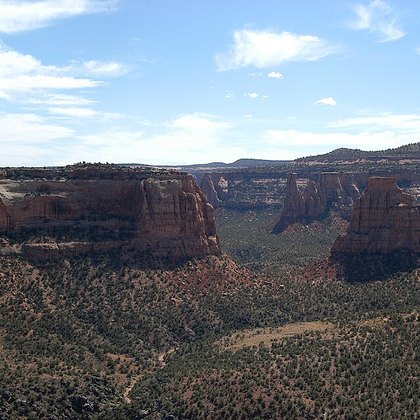
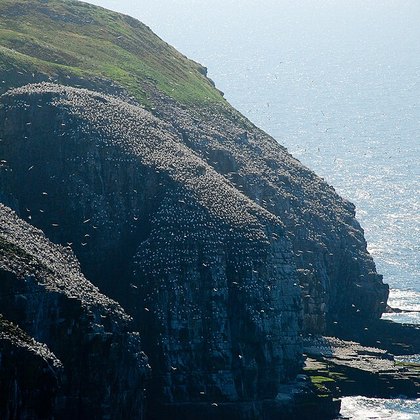
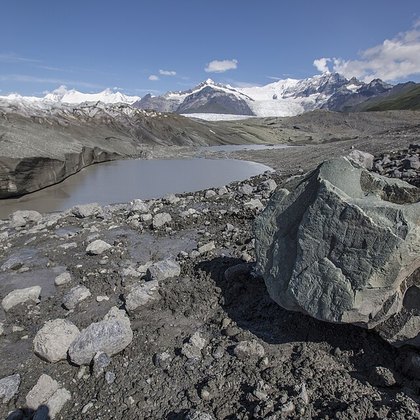
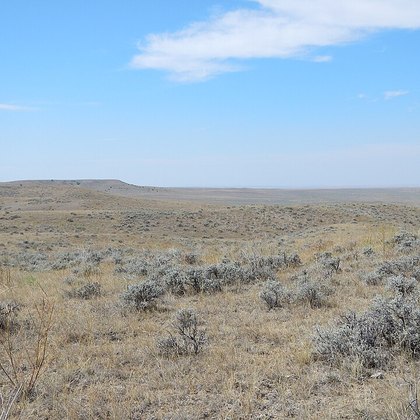
Cliffs on the open, treeless Arctic tundra provide the nesting habitat, with wide views over the hunting grounds. Outside the breeding season the Gyrfalcon seeks similarly open terrain: coastal plains, dunes, prairie and sagebrush (grey-green wormwood scrub of the dry western interior) steppe, where it hunts waterfowl and other medium-sized game.
Where the bird is most often found, arranged by the USNVC — the vegetation classification of the United States and Canada — and CMECS for sea and coast.

Range and movements
Breeds circumpolar around the entire North Pole, from Alaska and northern Canada to Greenland and Scandinavia. Most birds are year-round residents, remaining near their territory even through the dark polar winter; some young and northern birds move south in severe winters as far as the northern United States.
- Breeding (summer)
- Winter
- dark = core range, pale = thinly spread
Where and when to look
In severe winters, watch open coastal plains and large river deltas in the northern United States and southern Canada, where a Gyrfalcon often lingers near a concentration of waterfowl; its slow, heavy wingbeat sets it apart from a Peregrine Falcon at once.
Conservation
The global population is stable and listed as Least Concern (LC), thanks to its remote and largely undisturbed breeding range in the high Arctic. Climate change and the northward shift of prey species and competitors are being monitored as possible long-term risks.
Scientific name
Falco rusticolus | Linnaeus, 1758
Linnaeus described the species in 1758 as Falco Rusticolus; the genus has remained unchanged since, hence no parentheses around author and year. Falco is Latin for 'falcon'; rusticolus combines rusticus ('rural, rough') with colere ('to inhabit'), referring to the remote, inhospitable regions where the species lives.