All species › Waders, gulls and terns › Plovers and lapwings › Semipalmated Plover
Semipalmated Plover | Charadrius semipalmatus
Amerikaanse bontbekplevier | Chorlitejo Semipalmeado
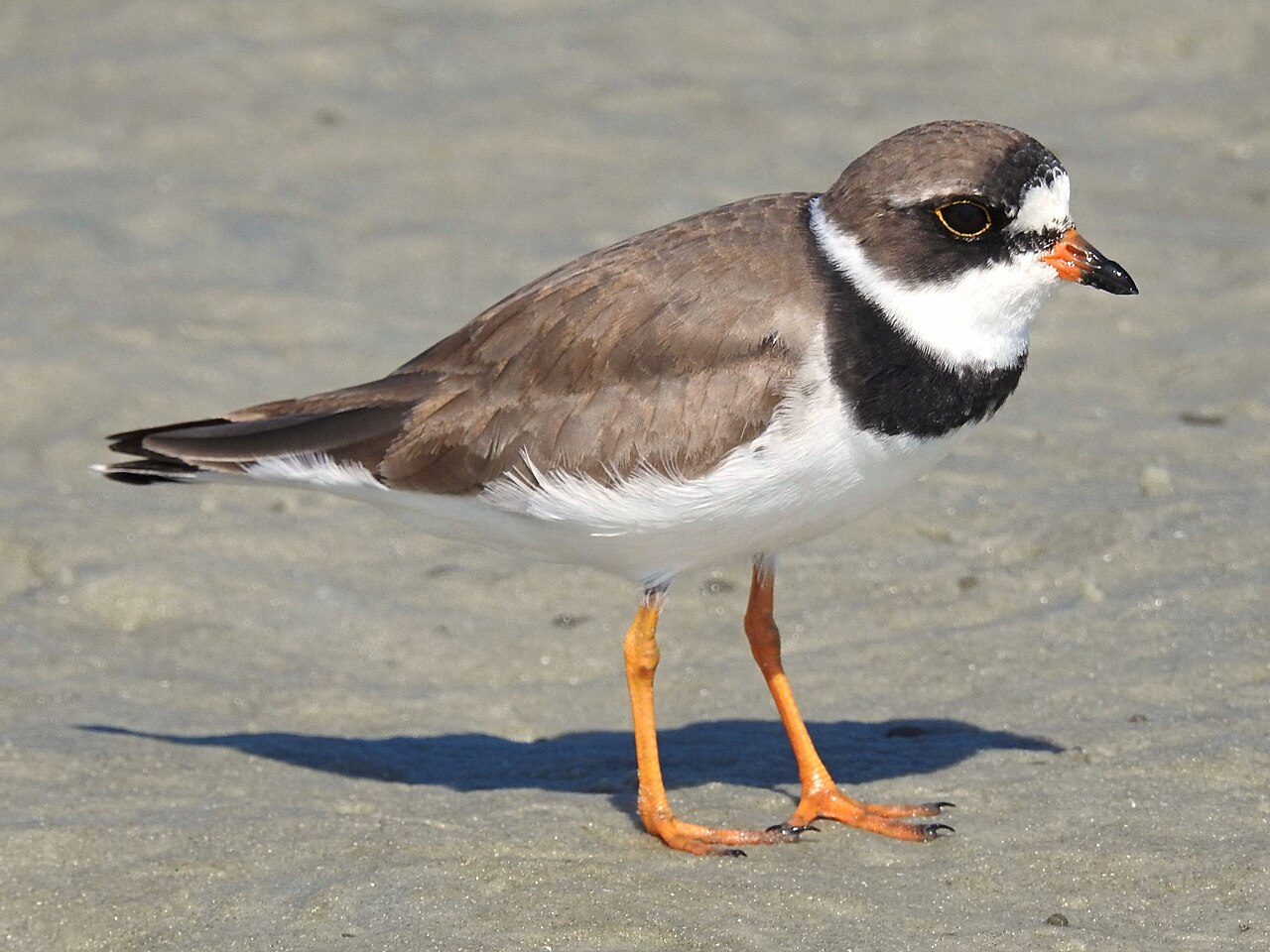
The Semipalmated Plover is the small plover that stands on almost every mudflat on the continent: brown above, white below, with a single black breast band and short orange legs. It breeds on the gravel and bare tundra of Alaska and Arctic Canada and moves south in autumn across the full width of North America, as far as Chile and Argentina. Its name refers to the webbing between the front toes, which few plovers show so clearly.
Voice
The call is a two-syllable, hoarse and rising chu-weet, audible from far off above the noise of the surf and the best single mark of the species. Birds taking off give it once; a flock on a flat passes it from one bird to the next. Over the breeding ground the male circles on slow, deep wingbeats and repeats a rolling chu-wee chu-wee dozens of times over. At the nest there is a sustained high piping that leads the chicks out of danger, and a short hard chip at sudden disturbance.
Recording: Don Profota — CC BY-NC-SA 4.0 · South Bozeman, Gallatin County, Montana, United States · xeno-canto
Identification
A small, compact plover with a round head, large dark eyes and a short, stubby bill. The upperparts are plain grey-brown, the underparts white, with a single black breast band, a black mask through the eye and a white forehead patch below a black crown bar; the bill is orange with a black tip and the legs are yellow-orange. A yellow ring around the eye stands out at once in good light. The female usually has a browner, less sharply edged mask; juveniles lack the black altogether and have a dark bill and a brown, sometimes broken band. In flight a narrow white wingbar shows, and a dark tail with white sides. It runs in short bursts, stops abruptly and pecks with a quick forward stab.
Confusion species
Common Ringed Plover (Charadrius hiaticula) of Greenland and high Arctic Canada is so like it that the difference has to be worked through point by point on the flat. Voice decides it: Common Ringed Plover whistles a pure, rising too-lee, Semipalmated Plover calls hoarse and rough. Of the plumage marks the yellow orbital ring is the most useful — broad and obvious here, narrow or absent on Common Ringed Plover — and the black breast band is narrower here and of even width, while on Common Ringed Plover it is broader and deepest at the centre; the white supercilium runs on behind the eye on Common Ringed Plover and is usually missing here. The bill is shorter and blunter with less orange at the base, and there is a small web between the middle and inner toe that Common Ringed Plover lacks — visible on a close bird walking over wet mud. Piping Plover (C. melodus) is far paler and sandier, Killdeer much larger with two breast bands, and Wilson's Plover has a far heavier, all-black bill and dull flesh-coloured legs.
Habitat
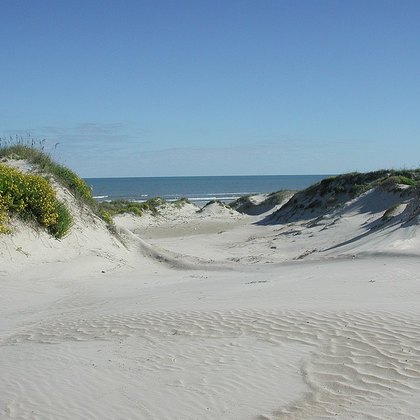
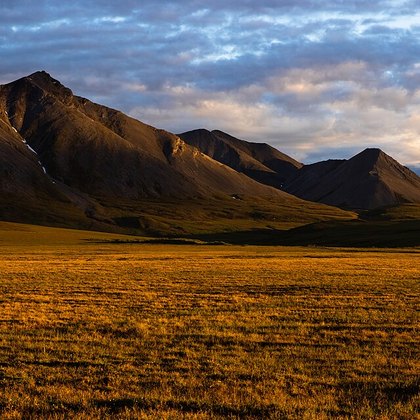
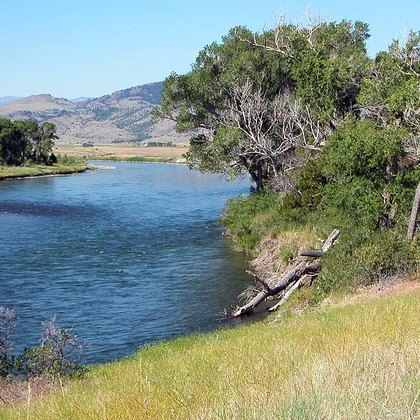
Breeds on open, bare ground close to water: gravel bars, sand flats, dried-out river beds and sparsely vegetated tundra, often some way back from the coast. Outside the breeding season it stands on mudflats, sandy beaches and the muddy margins of estuaries and lagoons, and inland on drying lake shores, flooded fields and the settling ponds of sewage works. It avoids dense vegetation and steep banks; what it needs is a flat, open surface it can see across. Unlike the sandpipers it does not stand in tight flocks but spreads out over the flat, each bird on its own patch.
Where the bird is most often found, arranged by the USNVC — the vegetation classification of the United States and Canada — and CMECS for sea and coast.


Range and movements
The breeding range runs from the Chukotka Peninsula and western Alaska through the Aleutians and across Arctic and subarctic Canada to Newfoundland and Nova Scotia. It migrates on a broad front: in May, and again from July to October, it can be found on muddy margins in nearly every state and province, far inland as well as on the coast. It winters on the coast from Oregon and New Jersey south along both coasts of Mexico and Central America, through the West Indies to northern Chile and northern Argentina, and out to the Galápagos. Unlike many Arctic waders its numbers have not fallen clearly over the past half century.
- Resident
- Breeding (summer)
- Winter
- Passage
- dark = core range, pale = thinly spread
Where and when to look
Look for it in August and September on a mudflat on a falling tide, in the hour when the water drops and the flat has just come dry. Work the flat by ear: the hoarse chu-weet gives it away before the eye finds it. When a party of small plovers is in front of you, check the orbital ring and the width of the breast band first, and the bill only after that.
Conservation
Partners in Flight puts the breeding population at some two hundred thousand birds and considers it stable; the Red List rates it Least Concern (LC). The pressures lie mainly on migration and in winter: shorebird hunting in Suriname and Guyana, oil spills and pollution of tidal flats. On the breeding grounds the warming of the tundra is the least predictable factor, because it shifts the moment the insects emerge relative to the arrival of the birds.
Scientific name
Charadrius semipalmatus | Bonaparte, 1825
Charles Lucien Bonaparte described the species in 1825 as Charadrius semipalmatus, in the fifth volume of the Journal of the Academy of Natural Sciences of Philadelphia; because it still stands in that genus, author and year appear without parentheses. The genus Charadrius is Late Latin for a yellowish bird named in the fourth-century Vulgate, taken from Greek kharadrios, a bird of ravines and stream beds. semipalmatus means 'half-webbed', from semi-, 'half', and palma, 'palm of the hand', after the webbing between the front toes. Bonaparte gave the type locality as the sea coast of New Jersey.