All species › Waders, gulls and terns › Sandpipers and allies › Sharp-tailed Sandpiper
Sharp-tailed Sandpiper | Calidris acuminata
Siberische strandloper | Correlimos acuminado
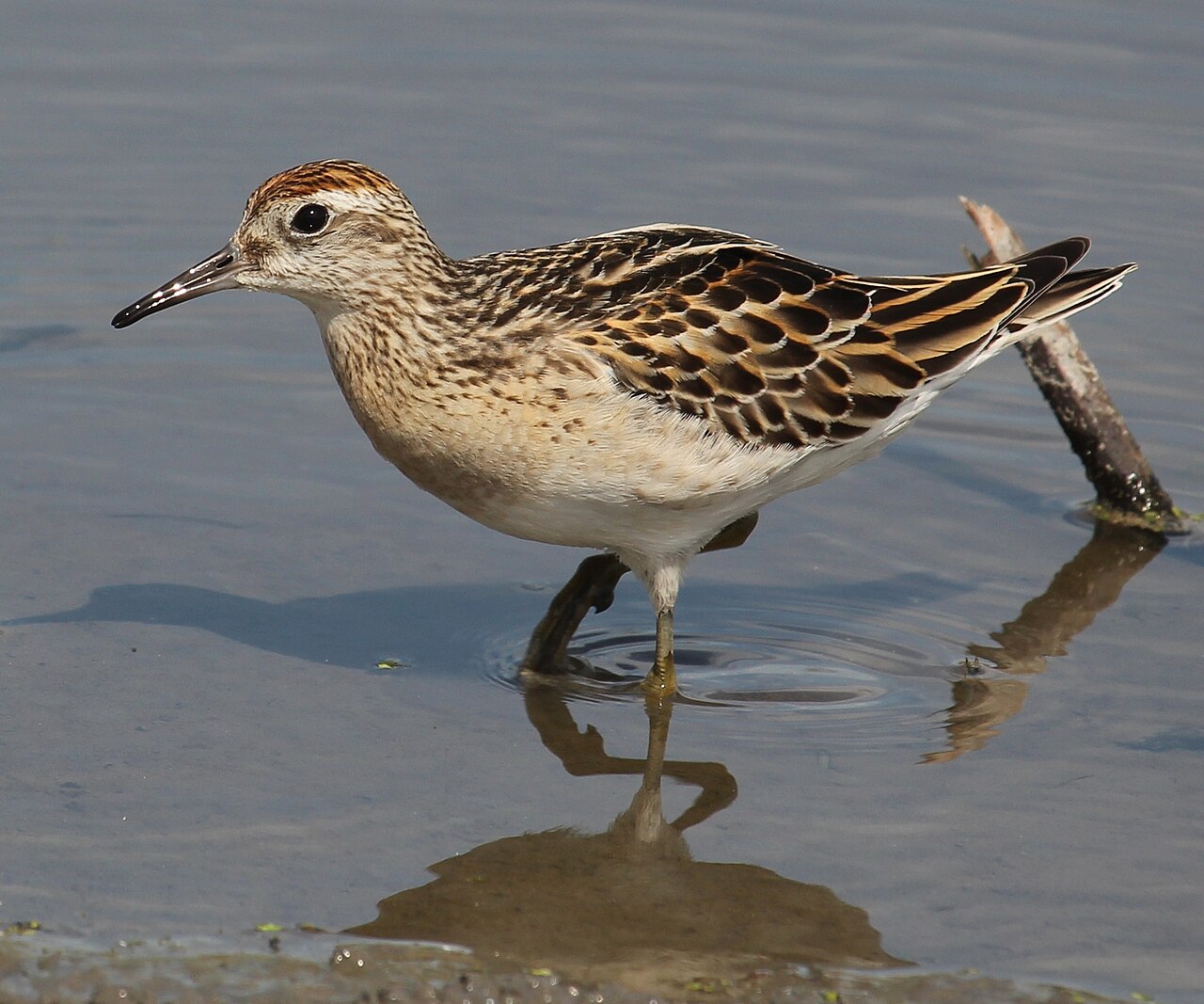
Sharp-tailed Sandpiper is a medium-sized sandpiper with a rufous cap, a broad white eyebrow and an unstreaked, warm buff breast. It breeds on the tundra between the Lena and the Kolyma and winters in Australia, but the young birds first make a detour across western Alaska every autumn. That makes it the one Siberian sandpiper to be expected here every year, and almost always in juvenile plumage.
Voice
The call is a short note that rises and then falls again, often given twice in quick succession, which gives it a conversational quality. It is a softer and lower sound than the sharp krrt of Pectoral Sandpiper, and it is usually the first thing that betrays a bird in a flock. In the display flight over the tundra the male gives a brief gurgle followed by a sputtering trill. The ground display adds low hooting notes and clicks, a combination not expected from a wader. In Alaska and further south you hear almost nothing but the call.
Recording: Ukolov Ilya — CC BY-NC-SA 4.0 · Allaikhovsky District, Sakha Republic, Russian Federation · xeno-canto
Identification
The juvenile, the form most often seen here, has a bright rufous crown, a broad white eyebrow, a white eye-ring and an unstreaked, warm orange-buff breast that fades into the white belly. The upperparts are dark with wide rufous and white feather edges, which form two pale lines down the back. Adults in breeding plumage are much more heavily marked: arrowheads and V-shaped bars run from the breast across the flanks to below the tail. In winter plumage the bird is greyer and duller, but the rufous crown and the pale eyebrow remain. The bill is short, slightly curved and dark with a pale base; the legs are yellowish green. The English and scientific names refer to the pointed outer tail feathers, visible in the hand and seldom in the field.
Confusion species
Pectoral Sandpiper (Calidris melanotos) is the species at issue: it has a sharp border between the streaked breast and the white belly, duller plumage and a longer bill, while the breast of Sharp-tailed Sandpiper shades off gradually and is warmer in colour. Dunlin (C. alpina) has a longer bill that curves at the tip and lacks the rufous crown. A juvenile Ruff (C. pugnax) is larger, longer-legged and has two white ovals beside the rump. In doubt, look at crown, eyebrow and the change from breast to belly, in that order.
Habitat
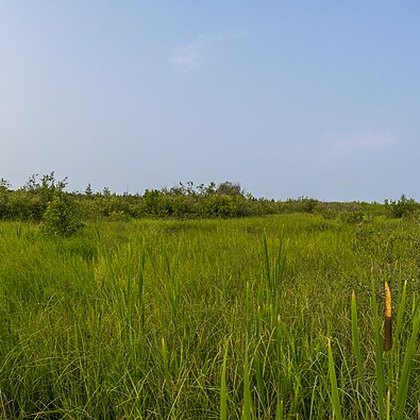
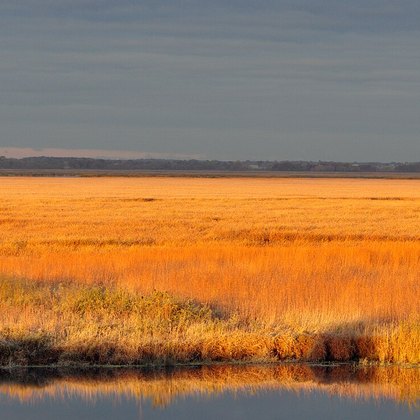
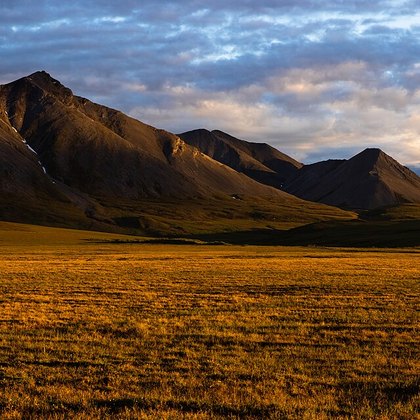
On migration it seeks shallow water with short or emergent vegetation, fresh, brackish or salt: wet sedge meadows on the coastal plain, the margins of tundra pools, brackish lagoons and the upper edge of tidal flats. Further south it turns up on flooded meadows, impoundments, sewage ponds and rice fields. It eats insects and their larvae, snails, small crustaceans, worms and seeds, picked up while walking and taken from the mud with shallow probes. Open mud without plant growth and dry arable land it uses little. It breeds on wet low Arctic tundra with sedge tussocks and a great deal of standing water.
Where the bird is most often found, arranged by the USNVC — the vegetation classification of the United States and Canada — and CMECS for sea and coast.


Range and movements
The breeding range is small and lies in northeastern Siberia, between the Lena and the Kolyma. By far the most birds winter in Australia, with smaller numbers in New Zealand and on the islands between. Adults migrate south through eastern Asia in autumn, but the young birds fly east to the coast of western Alaska first, fatten there from August to October and then cross the Pacific in a single flight. That explains why almost only juveniles are seen in North America, with the weight of them on the delta of the Yukon and the Kuskokwim and along the Bering Sea coast, and why small numbers carry on each autumn as far as Washington, Oregon and California. In spring it is rare here.
Where and when to look
September is the month: look on a wet coastal meadow or along a lagoon in western Alaska, or further south on a flooded coastal pasture, among Pectoral Sandpipers. Look for the bird with the rufous cap and the warm orange-buff breast without streaking; in a grey flock it stands out at once when the light is right. Check late Pectoral Sandpipers again in October, because the last birds come through only then.
Conservation
The Red List holds the species as Vulnerable (VU). The breeding population is put at 60,000 to 120,000 birds, with about 73,000 as the best estimate, and counts in Australia, where nine in ten birds winter, point to a fall of some 45 per cent in fifteen years. Loss and pollution of tidal flats along the flyway through eastern Asia, and changes in the water supply of the inland wetlands of Australia, are named as the main causes. For North America this mainly means that fewer juveniles are to be expected in Alaska from year to year.
Scientific name
Calidris acuminata | (Horsfield, 1821)
Thomas Horsfield described the species in 1821 as Totanus acuminatus, from a bird collected on Java; since it was placed in the genus Calidris, author and year stand in parentheses. acuminatus is Latin for 'tapering to a point', from acumen, 'point', after the narrow pointed outer tail feathers that also gave the species its English name. The type locality is given no more exactly than Java, far outside the breeding range. The description stands in the thirteenth volume of the Transactions of the Linnean Society of London, on the same page as that of Great Knot. The genus Calidris goes back to the Greek kalidris, in Aristotle the name of a grey speckled bird of the waterside.