All species › Passerines › Longspurs and snow buntings › Snow Bunting
Snow Bunting | Plectrophenax nivalis
Sneeuwgors | Escribano nival
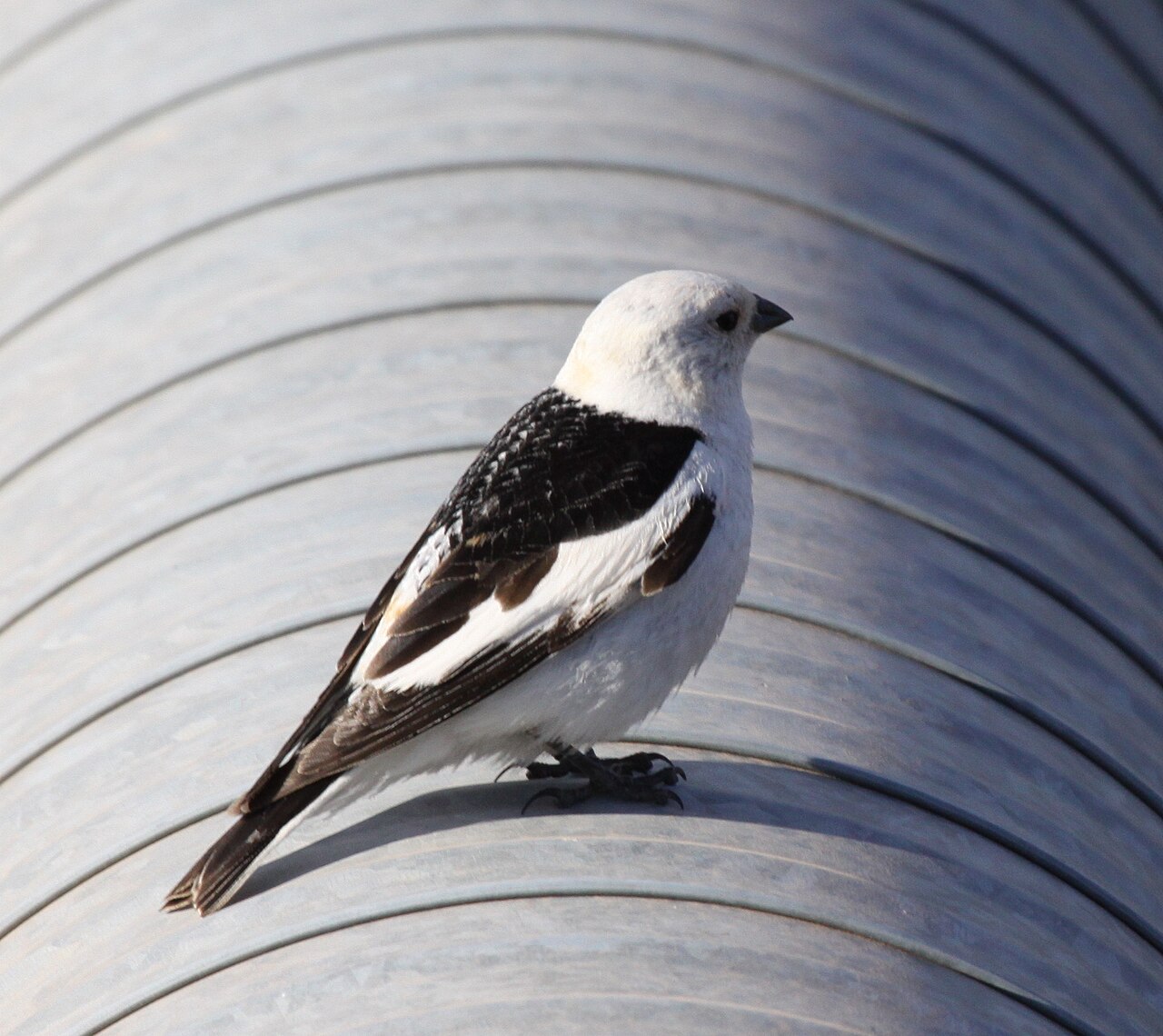
The whitest songbird of the northern hemisphere, and the one that breeds closest to the pole: in Greenland right into the northernmost stone desert. In summer the male is snow white with a black back and black wingtips; in winter he carries a rusty brown wash that is not moulted away but worn away. Winter flocks roll low over bare fields and beaches, showing great white panels in the wing.
Voice
The song is a short, loud and clear phrase of some seven notes with a rolling ending, carrying far across a boulder field: chree-chree-cheeroo-wee. The male sings from a stone or in a short song flight on raised, quivering wings. The flight call is a dry, rolling pirr, alongside a clear whistled tew; in a flock passing overhead that roll is the sound by which the species is known. On the breeding grounds the song starts in early April, when it is still far below freezing.
Recording: Mats Rellmar — CC BY-NC-SA 4.0 · Longyearbyen, Spitsbergen, Norway · xeno-canto
Identification
In breeding plumage the male is pure white with a black back, black primaries and a black bill; in flight more than half the wing is white. The female in summer is greyer on head and back and has less white in the wing. In winter plumage both carry an ochre to rusty wash on crown, cheek and back and an orange-yellow bill, so that the bird looks brown on the ground and turns out to be white only when it lifts. Juveniles are greyish, with a streaked breast and the least white of all. The breeding plumage comes not from a moult but from the brown feather tips wearing away through the winter, helped by the birds rubbing themselves against snow and stone.
Confusion species
McKay's Bunting (Plectrophenax hyperboreus) of the Bering Sea islands is whiter still: the male has an almost entirely white back and black only in the wingtip and at the tail end. Lapland Longspur (Calcarius lapponicus), often in the same winter flock, is far darker and browner and has no white wing panel; by voice it is separated by a hard tick among the rolling notes. Horned Lark (Eremophila alpestris) walks the same fields but is brown with a black face pattern, and in flight shows a black tail instead of white wing panels.
Habitat
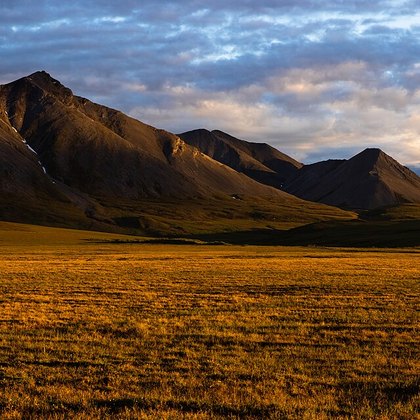
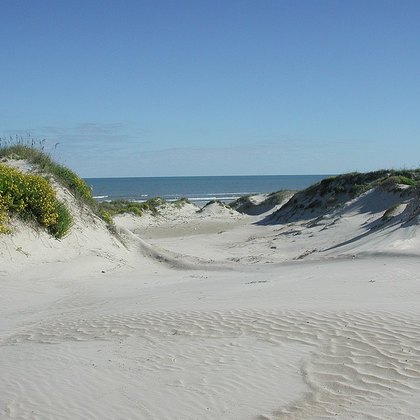
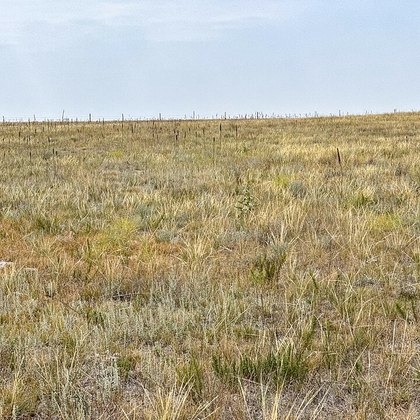
In the breeding season boulder fields, block screes, cliff bases and the bare parts of the Arctic tundra, where loose stones offer a crevice to nest deep inside. Greenland is the clearest case: along the whole ice-free coast, right to the far north, this is the commonest land bird. In winter, bare, open and level ground — harvested fields, stubble, roadsides, sea walls, dunes and the tideline of beaches. Forest, scrub and long grass it avoids entirely.
Where the bird is most often found, arranged by the USNVC — the vegetation classification of the United States and Canada — and CMECS for sea and coast.


Range and movements
A breeding bird of the whole North American Arctic: Greenland, the Canadian islands and the mainland of Nunavut and the Northwest Territories, northern Quebec, Labrador and northern and western Alaska; beyond this region it breeds right around the pole. In autumn it moves south and winters in a broad band from southern Canada into the northern United States, with its southern edge roughly on a line from Nebraska through Ohio to Virginia. In Manitoba, Quebec, Labrador and Alaska it breeds in the north and winters in the south, so that it is present there all year. How far it comes depends on the winter: in hard years flocks appear where mild winters hold none.
- Resident
- Breeding (summer)
- Winter
- Passage
- dark = core range, pale = thinly spread
Where and when to look
In December or January drive along a sea wall or a country road through open farmland and watch the verges: the flocks sit low and look brown, until they lift and the white comes out of the wing. They usually return to almost the same spot after a short loop, so waiting pays. On the breeding grounds there is no need to search: the male sings from the largest stone around.
Conservation
Least Concern (LC), with an estimated breeding population of 29 million birds. Even so it declined by about 38 per cent between 1970 and 2014 and is on the list of common birds in steep decline. In the wintering grounds the shortfall is food: weed seed along field margins is disappearing, and milder winters shift the range north. On the breeding grounds it is the Arctic summer itself that is at issue, growing shorter and less predictable.
Scientific name
Plectrophenax nivalis | (Linnaeus, 1758)
Linnaeus described the species in 1758 as Emberiza nivalis, among the buntings; because it was later placed in another genus, author and year stand in parentheses. The genus Plectrophenax was introduced in 1882 by Stejneger, from the Greek plektron, 'spur', and phenax, 'impostor' — to be read as a bird that carries the long hind claw of the longspurs without being one of them. nivalis is Latin for 'of the snow'. The type locality is Lapland: Linnaeus knew the bird from Sweden and not from America.