All species › Passerines › Longspurs and snow buntings › Lapland Longspur
Lapland Longspur | Calcarius lapponicus
IJsgors | Escribano lapón
The Lapland Longspur is the most numerous songbird of the North American Arctic: from Alaska to Greenland it breeds on nearly every square kilometre of wet tundra. In winter it moves to the plains, where flocks of hundreds to thousands roll over stubble fields and roadsides and are often overlooked on the ground. On the hind toe it carries a long, almost straight claw — the spur that gives the longspurs their name.
Voice
The song is a short, rolling phrase of clear musical notes that speeds up towards the end and falls away; the male climbs from a tussock, spreads his wings and sings as he parachutes back down. The usual call is a dry, hard tick, often combined with a shorter whistled tew. In a winter flock passing overhead that hard tick is the mark: among the rolling pirr of the Snow Buntings it sounds like a tap on glass. On the breeding grounds it sings for as long as there is light, which in the polar summer means round the clock.
Recording: Stanislas Wroza — CC BY-NC-SA 4.0 · Soppavann, Finland · xeno-canto
Identification
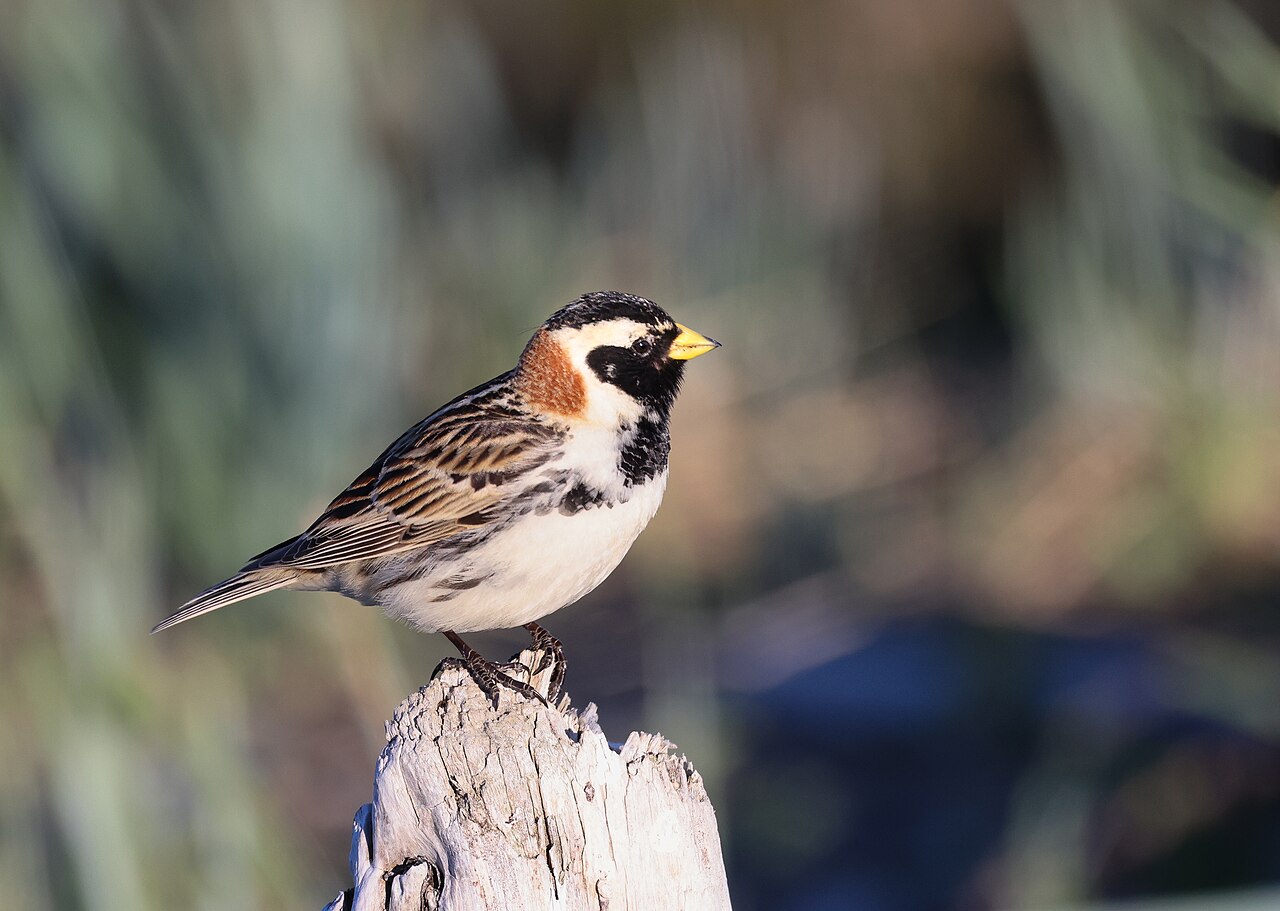
In breeding plumage the male has a black head, throat and upper breast, a broad cream-white stripe running from behind the eye down to the side of the breast, and a chestnut nape. The female is brown and streaked, with a paler ear patch enclosed by a dark border and usually a wash of chestnut on the nape. In winter plumage the black is hidden under pale feather edges, so that the male too looks brown and streaked; the dark frame around the ear patch, the chestnut in the wing and finely streaked flanks remain. The moment the bird lifts, two white outer tail feathers show, and at close range on a perched bird the long straight hind claw can be seen. It walks and creeps over the ground instead of hopping, and flattens itself when alarmed, so that a flock of hundreds seems to vanish at once.
Confusion species
Snow Bunting (Plectrophenax nivalis) is often in the same winter flock but is far whiter and shows large white panels in the wing in flight; the longspur has only two white tail edges. Smith's Longspur (Calcarius pictus) is a warmer buff-yellow below, has more white in the tail and keeps in winter to taller, drier grass in a narrow band from Texas to Illinois. Horned Lark walks the same fields but has a black face pattern and black sides to the tail rather than white. Song Sparrow is as brown and streaked in winter plumage, but has a long rounded tail without white, keeps to thickets and hops rather than walks.
Habitat
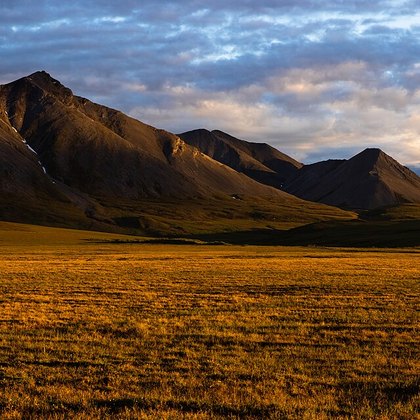
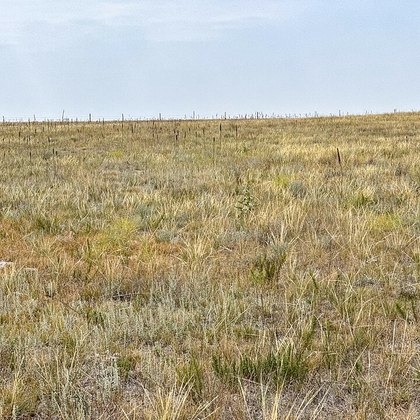
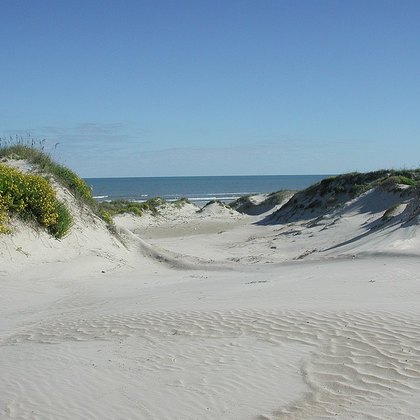
Breeds on wet tundra: sedge flats, peat polygons, slopes of dwarf willow and dwarf birch, and the edges of pools, from sea level up into mountain tundra. The nest sits deep in a tussock, lined with feathers and hair, and cannot be seen from above. In winter it seeks the barest open ground there is: harvested fields, stubble, shortgrass prairie, roadsides, airfields and the tideline of beaches. Forest, scrub and long grass it avoids entirely, and in winter it seldom settles on a branch or a wire — to find it, look at the ground.
Where the bird is most often found, arranged by the USNVC — the vegetation classification of the United States and Canada — and CMECS for sea and coast.


Range and movements
A breeding bird of the whole North American Arctic: Alaska, the Yukon, the Northwest Territories, Nunavut, the Hudson Bay coast of Manitoba and Ontario, northern Quebec, Labrador and all of Greenland; beyond this region it breeds right around the pole. In autumn it moves to a broad winter band from southern Canada into Texas, centred on the Great Plains and the farmland of the Midwest. In Manitoba, Ontario and Quebec it breeds in the north and winters in the south, so that it is present in the province all year. How far south the flocks come depends on the snow: once the fields are covered the whole picture shifts hundreds of kilometres in a few days, and shifts back as quickly with a thaw.
- Breeding (summer)
- Winter
- Passage
- dark = core range, pale = thinly spread
Where and when to look
In January or February drive a country road through open farmland and watch what lifts from the verge: on the ground the flocks are brown and inconspicuous, but as they go up they call hard and show the white tail edges. They usually swing round and drop back in almost the same spot, so stand still and let them return rather than walking after them. In mixed flocks with Snow Buntings and Horned Larks the longspurs usually keep closest to the ground and in the middle of the group.
Conservation
Least Concern (LC), and one of the most numerous birds of the Arctic: the breeding population is put at tens of millions. The trend is nonetheless downward — winter counts on the Great Plains and in the Midwest have shown a clear decline since the 1970s. In the wintering grounds it is a matter of food: the weed seed along field margins disappears as land is farmed cleaner and closer. On the breeding grounds the weather decides: a cold, wet June can leave whole districts without young in a single season.
Scientific name
Calcarius lapponicus | (Linnaeus, 1758)
Linnaeus described the species in 1758 as Fringilla lapponica, among the finches; because it was later placed in another genus, author and year stand in parentheses. The genus Calcarius was introduced by Bechstein in 1802, after Latin calcar, 'spur', for the long straight claw on the hind toe. lapponica means 'of Lapland'. The type locality is Lapland accordingly: Linnaeus knew the bird from his journey through northern Sweden and not from America, where the same species turns out to breed along the whole Arctic coast.