All species › Passerines › New World sparrows › Swamp Sparrow
Swamp Sparrow | Melospiza georgiana
Moerasgors | Chingolo pantanero
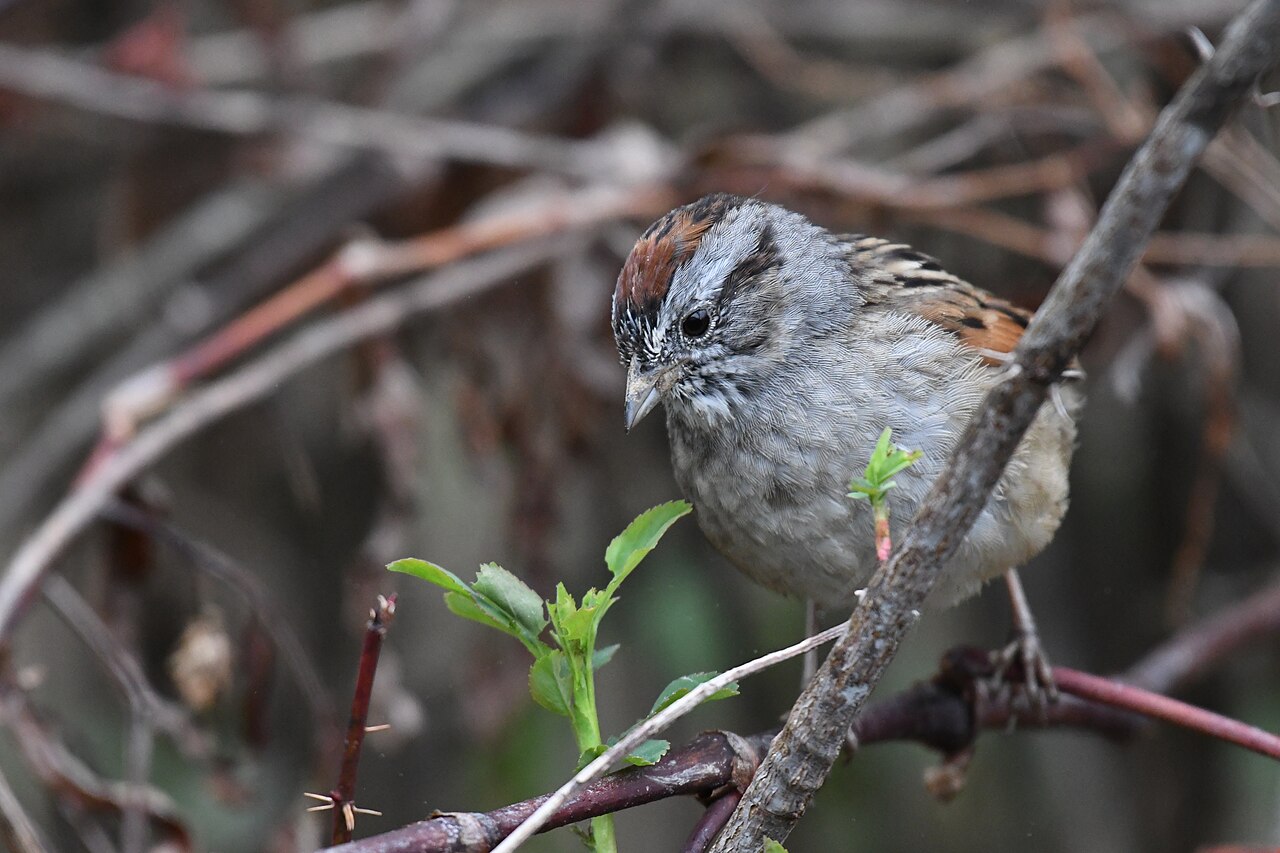
The Swamp Sparrow is the sparrow of reed, sedge and wet thicket across eastern and central North America: rufous on crown and wings, grey on face and breast, and longer-legged than related sparrows so that it can forage in shallow water. It is almost always found close to water.
Voice
The song is a slow, even trill on one pitch, more deliberate and fuller than Chipping Sparrow's and more musical than a junco's. A male holds several trill variants and alternates them; in spring he also sings at night. The call is a hard, metallic chink suggesting two pebbles struck together, and in flight a thin, high seep.
Recording: Stanislas Wroza — CC BY-NC-SA 4.0 · Marais Léon-Provancher, Portneuf, Québec, Canada · xeno-canto
Identification
A medium-sized, stocky sparrow with a short conical bill and a fairly long, rounded tail. In breeding plumage the male has a plain rufous crown, a grey face, a grey nape and a white throat that stands out sharply against the grey breast. Wings and back are warm rust brown with black streaking; the flanks are unstreaked buffy brown. Outside the breeding season the crown is brown with a grey median stripe and the whole bird is duller. Immatures have a streaked breast and a plain brown cap.
Confusion species
Song Sparrow is larger, with a heavily streaked breast carrying a dark central spot and a longer, rounded tail. Lincoln's Sparrow has fine, sharp streaks on a buff breast band and a buff moustachial stripe. Chipping Sparrow also shows a plain grey breast and a rufous crown, but adds a white supercilium, a black eyeline and a two-toned bill with a yellow lower mandible, and keeps to scrub rather than reeds. Watch for the combination of white throat, grey face and unstreaked buffy flanks.
Habitat
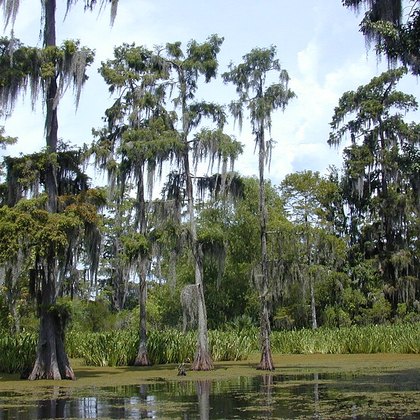
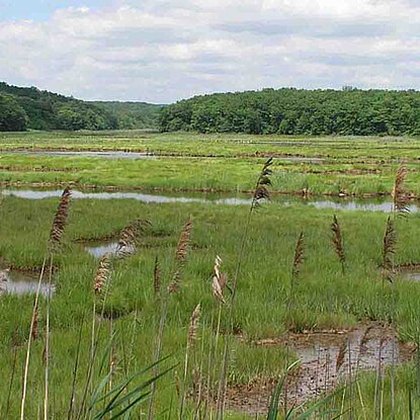
Freshwater marsh with cattail, reed and sedge tussocks, shrubby bogs with willow, wet sedge meadow and the fringes of streams and ponds; also swamp woodland with openings. The coastal-plain subspecies nigrescens breeds in tidal salt marsh on the Atlantic coast. In winter the species spreads more widely: besides marsh it uses weedy fields and streamside thickets, sometimes hundreds of metres from open water.
Where the bird is most often found, arranged by the USNVC — the vegetation classification of the United States and Canada — and CMECS for sea and coast.





Range and movements
The breeding range runs from British Columbia and the Northwest Territories across boreal Canada to Newfoundland, and in the United States from Montana and the Dakotas through the Great Lakes to New England and south along the Atlantic coast to Maryland and Delaware. The winter range lies mainly in the southeast, from Texas and the Gulf Coast to Florida and north into the central states; small numbers winter in the west. A few birds reach northeastern Mexico in winter. The coastal-plain subspecies winters in the marshes of the Carolinas.
- Resident
- Breeding (summer)
- Winter
- Passage
- dark = core range, pale = thinly spread
Where and when to look
Stand at the edge of a reed marsh at first light in May and look for the singing bird on a cattail stem or a willow twig — that is as high as it perches at any time of year. In winter pishing works well: the bird often comes up on top of the vegetation for a few seconds, shows the white throat and unstreaked flanks, and drops back down.
Conservation
The species is listed as Least Concern (LC), is widespread and numerous and shows a stable overall trend. There is regional loss: through drainage of inland marshes and, on the Atlantic coast, through the loss of tidal salt marsh to sea-level rise and coastal development. The coastal-plain subspecies, with its small range, is the part most exposed to this.
Scientific name
Melospiza georgiana | (Latham, 1790)
John Latham described the species in 1790 as Fringilla georgiana; because it was later moved to another genus, author and year stand in parentheses. The specimen came from the interior of Georgia, where the species only winters — hence a species name that says nothing about the breeding range. The genus Melospiza was introduced in 1858 by Spencer Fullerton Baird, from Greek melos 'song' and spiza 'finch'. The English name refers to the habitat.