All species › Cranes, rails and allies › Rails and crakes › Baillon's crake
Baillon's crake | Zapornia pusilla
Kleinst waterhoen | Polluela chica
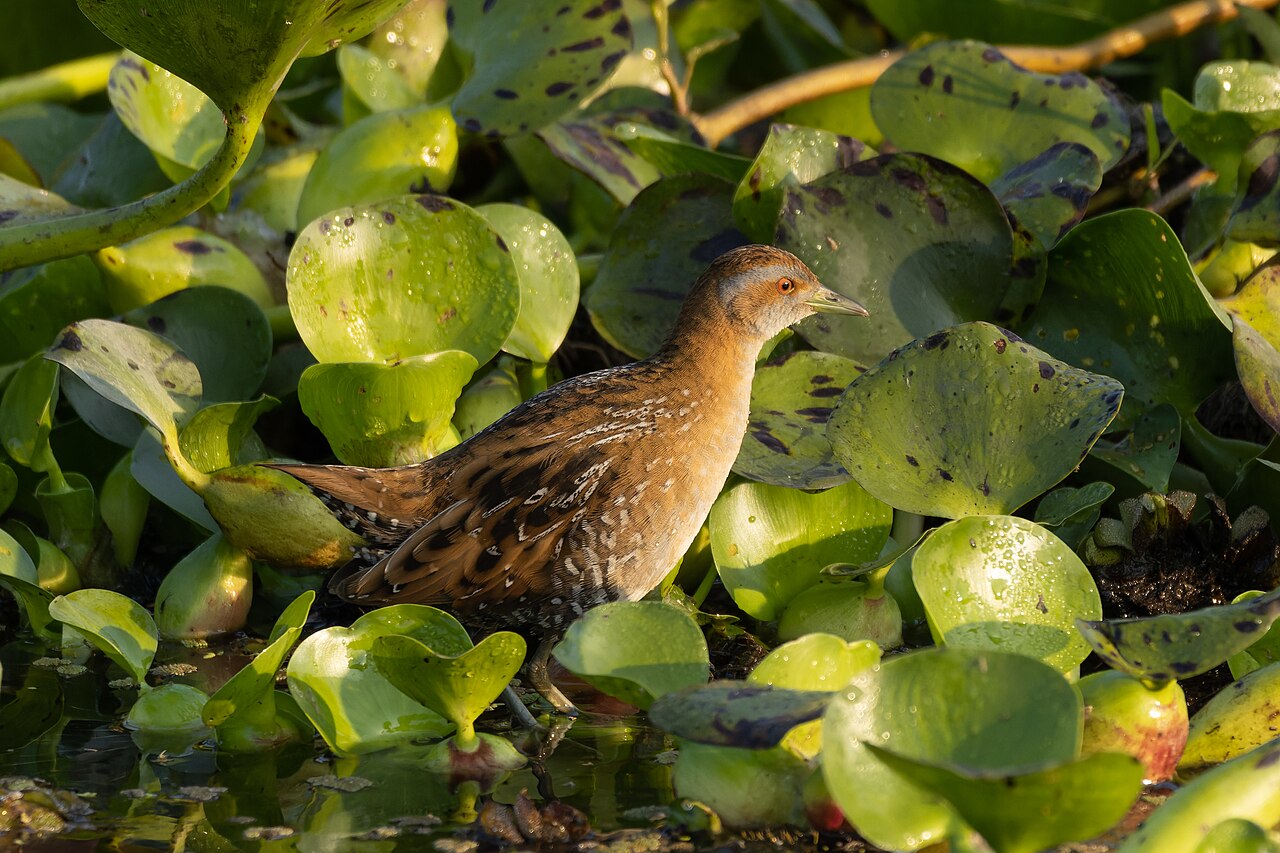
Europe's smallest rail, barely bigger than a sparrow and even more secretive than its relatives. To find one you must stand out by a sedge marsh at night and listen for the male's dry rattle.
Voice
A short dry rattle, trrrrrrrr, about two seconds long and repeated after short pauses, like running a stick along a comb or a distant Natterjack Toad. The pitch stays level from start to finish. Given only in darkness, from May to July. To separate them by ear: Spotted crake one detached whistle a second, little crake an accelerating, falling barking series, Baillon's an even purring rattle.
Recording: Sharadapte — CC BY-SA 4.0 · Wikimedia Commons
Identification
Tiny, with a short green bill showing no red, flesh to grey-green legs and warm rufous upperparts marked with conspicuous white streaks and spots. Flanks and belly are crisply barred black and white, reaching much further forward than on little crake. The sexes look alike, the female slightly paler on the throat. Usually all you get is a shape crossing floating leaves.
Confusion species
Little crake: male unbarred blue-grey below, female buff, both with red at the bill base and green legs. Baillon's has no red on the bill, bold broad barring onto the belly and white streaks on the mantle. Juveniles are buff with fine wavy barring on the flanks and can be genuinely difficult.
Habitat
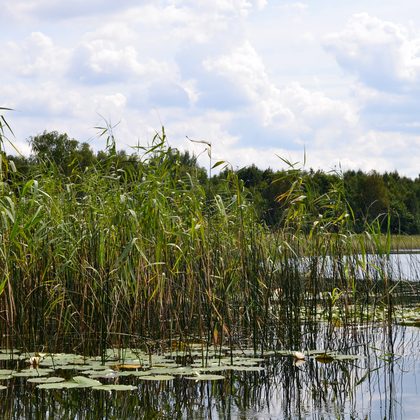
Shallow, densely vegetated marsh with low sedge, club-rush and floating vegetation in a few centimetres of water, often in rice fields and silting pools. More than the other crakes it walks over floating plant mats rather than bare mud. Very sensitive to the breeding site drying out.
Where the bird is most at home, classified with EUNIS — the European standard for habitats.


Range and movements
Scarce and scattered from Spain and France to the Volga, with the main European strongholds in Spain, Hungary and the Danube delta; in Iberia it breeds in the Guadalquivir marshes, the Ebro delta and the Albufera of Valencia, and on passage it is recorded as far as Cyprus. In north-west Europe it is a major rarity, with a handful of calling birds a year and only occasional breeding.
- Breeding (summer)
- Passage
- dark = core range, pale = thinly spread
How and when to look
May and June, between sunset and midnight, at a shallow sedge marsh or rice field with plenty of floating leaves. Find a spot where you can listen without walking in, and give it at least an hour; the rattles come in short bursts separated by long silences. In the Mediterranean the Albufera rice fields in May are the best bet.
Conservation status
Declined throughout Europe through drainage of shallow marshes, canalisation and intensified rice growing; the species vanishes as soon as spring water levels drop. Because of its nocturnal habits the population is almost certainly underestimated, and targeted night listening regularly turns up new territories.
Scientific name
Zapornia pusilla | (Pallas, 1776) (GBIF: Porzana pusilla)
Pallas described the species in 1776 as Rallus pusillus; because it was later moved to another genus, the author and year stand in brackets. The genus Zapornia was introduced in 1816 by Leach. Zapornia is a near-anagram of Porzana, the genus of the French ornithologist Louis-Pierre Vieillot. pusilla is Latin for 'very small'; this is the smallest crake in Europe. The specimen the first description was based on came from Transbaikalia, Siberia.