All species › Waterfowl › Ducks, geese and swans › Black swan
Black swan | Cygnus atratus
Zwarte zwaan | Cisne negro
An all-black swan with a blood-red bill, present in Europe only through escapes and deliberate releases from waterfowl collections. A small, scattered population now breeds on Dutch lakes and town ponds.

Click a thumbnail to switch the photo above.
Voice
Far more musical than the mute swan's hissing: a high, plaintive, bugling kwee-hoo or kor-ee, repeated in duet by a pair. There is also a soft high whistle in contact and a hard hiss at the nest. Heard all year, most often during territorial encounters in spring.
Recording: Sonothèque ADVL — CC0 · xeno-canto
Identification
Unmistakable: sooty black throughout, with snow-white primaries hidden until the bird flies or stretches, and a bright red bill crossed by a white band near the tip. The neck is strikingly long and kinked, longer than in any other swan. Juveniles are dull grey-brown with a dull greyish bill.
Confusion species
No native swan is black, so confusion is essentially impossible; only at long range and against the light can a dirty mute swan or a dark goose cause a moment's doubt. The red bill and the very long neck settle it. Hybrids with mute swan occur and look washed-out grey-brown.
Habitat
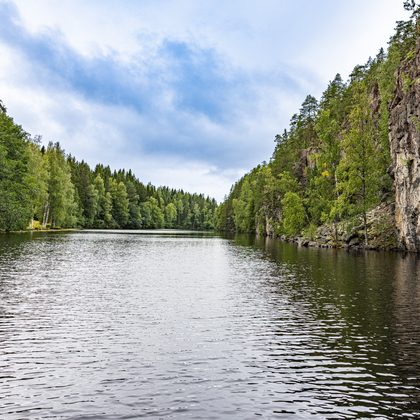
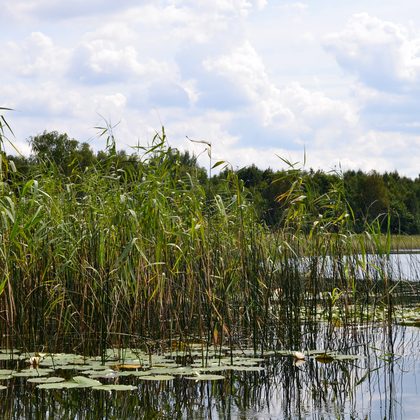
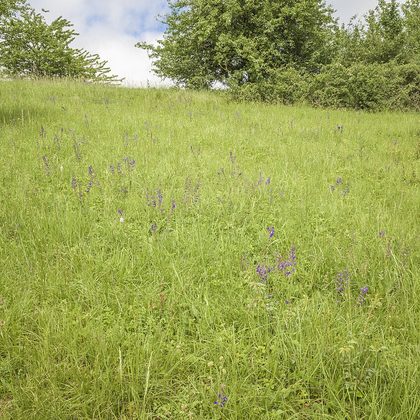
Shallow fresh and slightly brackish water rich in aquatic vegetation: recreation lakes, town ponds, canals, clay pits and polder ditches. Also grazes adjoining grassland. Nests on islets and banks in a bulky reed mound, often in winter or very early spring, well outside the rhythm of native swans.
Where the bird is most at home, classified with EUNIS — the European standard for habitats.

Range and movements
Native to Australia, breeding in the south-west and south-east and in Tasmania, and introduced to New Zealand. In Europe all birds derive from introductions and escapes, with small populations in the Netherlands, England and Germany. In Spain it is restricted to park birds and occasional breeding; nowhere truly established.
- Resident
- Breeding (summer)
- Winter
- Passage
- dark = core range, pale = thinly spread
How and when to look
Possible in any month, but easiest in March and April when pairs display noisily and lead cygnets. Look on recreation lakes and town ponds in the west of the country, for instance around Rotterdam and in Flevoland, and come in the morning when birds graze along the bank.
Conservation status
Common and unthreatened in Australia. The European population stays small and grows slowly; hard winters knock it back and birds are removed locally. Competition with mute swan and hybridisation are the usual concerns, but no real ecological damage has been demonstrated in the Netherlands so far.
Scientific name
Cygnus atratus | (Latham, 1790)
Latham described the species in 1790 as Anas atrata; because it was later moved to another genus, the author and year stand in brackets. The genus Cygnus was introduced in 1764 by De Garsault. Cygnus is Latin for 'swan', a variant of cycnus and borrowed from Greek kyknos with the same meaning. atratus is Latin for 'clothed in black', from ater 'black', for the wholly black plumage. The specimen the first description was based on came from the lakes of Australia.