All species › Waterfowl › Ducks, geese and swans › Canada goose
Canada goose | Branta canadensis
Grote canadese gans | Barnacla canadiense grande
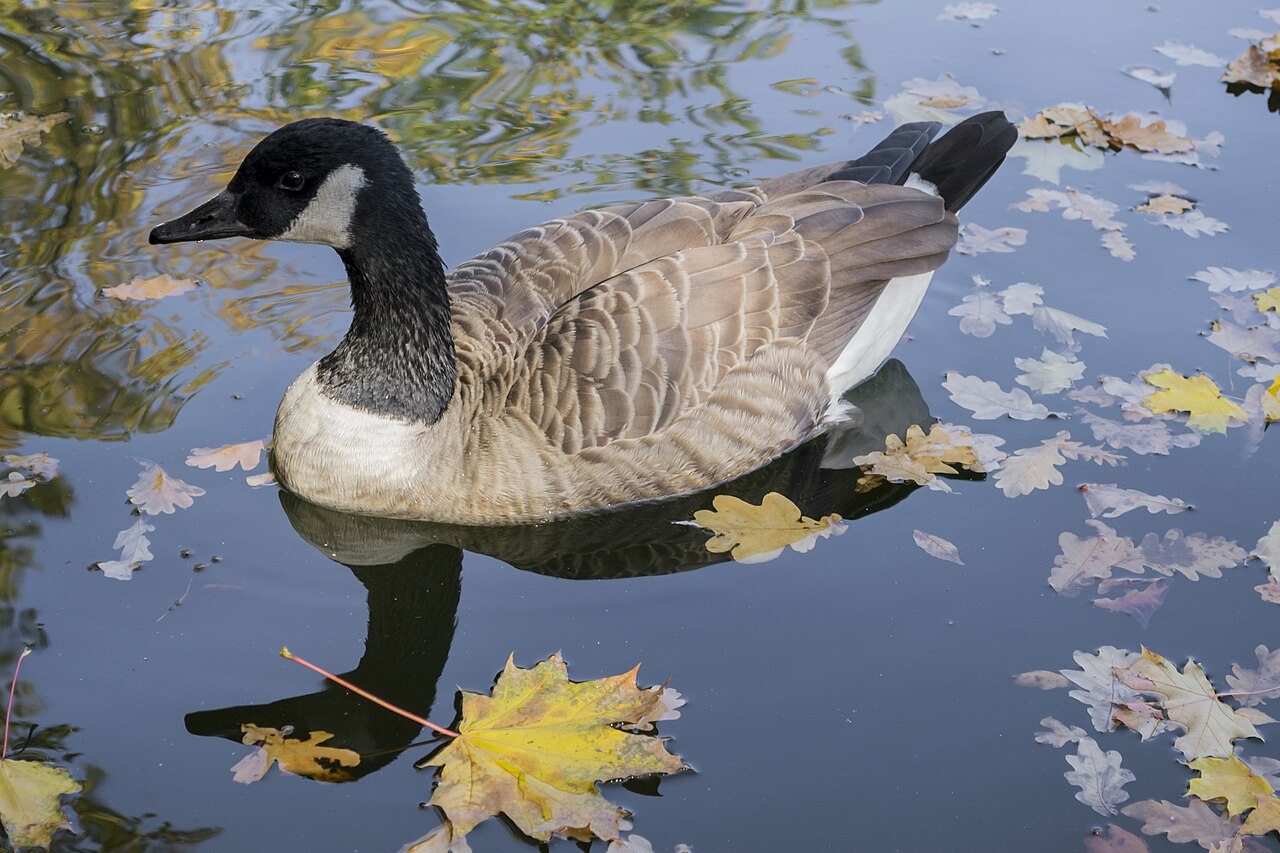
A big, loud goose with a black stocking neck and a white chinstrap, now the commonest large goose of the Dutch interior. It is an introduced species here, breeding on almost every town pond and polder lake.
Click a thumbnail to switch the photo above.
Voice
Noisy all year. The flight call is a disyllabic trumpeting ah-honk rising on the second note, deeper in the male than the female, and birds at nests hiss with the neck outstretched. Most in evidence at dawn as flocks leave the roost, and during territorial disputes from March to May.
Recording: Jonathon Jongsma — CC BY-SA 3.0 · Wikimedia Commons
Identification
Large and long-necked, with a black head and neck broken by a white chin patch running up behind the eye, brown back, pale flanks and a white rear with black tail. In flight note the slow heavy beat and the broad white band across the rump. Juveniles show a duller, less sharply cut cheek patch.
Confusion species
The real problem is cackling goose hutchinsii, which is far smaller with a short neck, steep rounded head and stubby bill, while canada goose looks long and horse-headed. Barnacle goose is smaller with a wholly white face, black breast and silver-grey upperparts, and never shows the chinstrap pattern.
Habitat
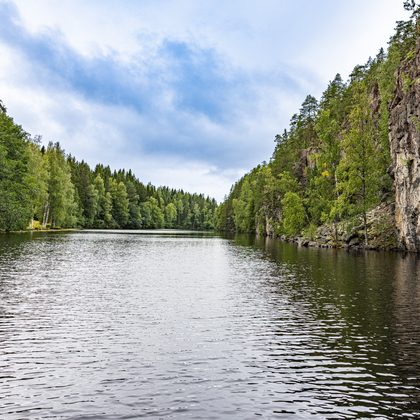
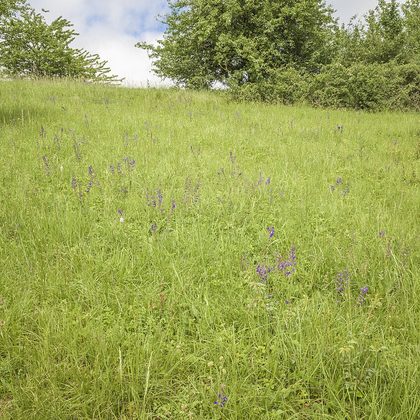
Fresh water with grassy margins: town ponds, gravel pits, recreation lakes, canals, river floodplains and farmland. Moults in June and July in large flocks on safe open water. Nests on islands, banks and even green roofs, and grazes lawns, pasture and winter cereals wherever it is left undisturbed.
Where the bird is most at home, classified with EUNIS — the European standard for habitats.



Range and movements
Native to North America, breeding from Alaska to Newfoundland and wintering across the United States. European birds are introduced: released in England from the seventeenth century, later in Sweden, Germany and the Low Countries. Resident in north-west Europe and Scandinavia; in the Mediterranean region essentially absent apart from occasional escapes.
- Resident
- Breeding (summer)
- Winter
- Passage
- dark = core range, pale = thinly spread
How and when to look
Easy in any month, but June and July repay the effort: look for moulting flocks on the large lakes and meres of lowland north-west Europe and southern Scandinavia. Come at first light as birds leave the roost for grassland, and measure every small individual against Cackling goose.
Conservation status
European populations are still growing and spreading. The species causes grazing damage to grass and crops, enriches recreational waters and creates aviation hazards, and hybridisation with native geese is debated. In the Netherlands numbers are managed by shooting and by treating eggs, with limited effect on the overall trend.
Scientific name
Branta canadensis | (Linnaeus, 1758)
Linnaeus described the species in 1758 as Anas canadensis; because it was later moved to another genus, the author and year stand in brackets. The genus Branta was introduced in 1769 by Scopoli. Branta is a Latinised form of Old Norse brandgás, 'burnt goose', that is, black goose. canadensis is New Latin for 'from Canada', after the North American breeding range. The specimen the first description was based on came from Quebec City, Canada.