All species › Waterfowl › Ducks, geese and swans › Blue-winged teal
Blue-winged teal | Spatula discors
Blauwvleugeltaling | Cerceta aliazul
The Nearctic answer to Garganey and the dabbling duck most likely to turn up on an inland scrape. A displaying drake in May, with its white facial crescent, is unmistakable; every other plumage means a long, patient comparison with Garganey.

Click a thumbnail to switch the photo above.
Voice
Little to go on. Drakes in a party give a thin, high peeping tsee-tsee that barely carries; females a soft, slightly nasal quacking kwek-kwek. Sound is likeliest from displaying birds in May and June, and a lone vagrant among Garganey will usually stay silent.
Recording: Jonathon Jongsma — CC BY-SA 3.0 · Wikimedia Commons
Identification
The breeding drake has a slate-grey head with a crisp white crescent between bill and eye, a warm spotted body and a white flank patch before the black stern. Female, eclipse drake and juvenile are mottled brown with a fairly plain head, a bold pale spot at the bill base and a broken pale eye-ring. The bill is long and slightly spatulate, the legs yellow, and in flight the pale blue forewing shows with a white bar across the greater coverts behind it.
Confusion species
Garganey Spatula querquedula is the only real trap. Its drake has a broad white supercilium sweeping back into the nape over a brown head, where blue-winged teal has a slate head with a vertical white crescent. On females the head decides it: Garganey shows a strongly striped face with dark eye-stripe, pale supercilium and a second pale line across the cheek, while Blue-winged has a plainer head with a larger white loral spot, a heavier bill and yellow legs. Female Shoveler is bigger and carries a far broader, spatulate bill.
Habitat
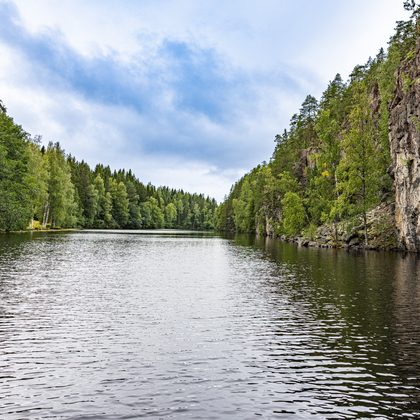
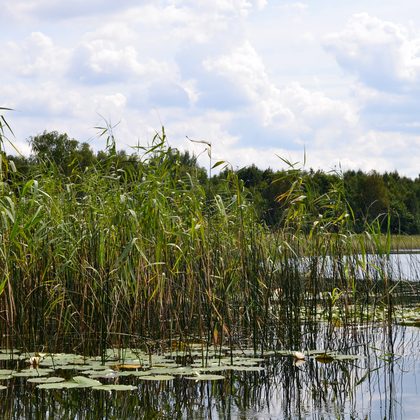
Shallow fresh water with plenty of cover: reed-fringed pools, wet grassland, floods and the muddy margins of reserve scrapes. The bird keeps close to cover and often spends the day asleep on a mud bank or among rushes, which is why it goes unnoticed for days at a time.
Where the bird is most at home, classified with EUNIS — the European standard for habitats.


Range and movements
Breeds from Alaska to the American prairies and winters from the southern United States to South America, and it is one of the first ducks to leave in August. In the map area it is an annual vagrant: most records come from Ireland and the British Isles — south-west England, the Northern Isles —, where a good number arrive in autumn with Nearctic waders; along the North Sea and the Atlantic coast of Iberia it is a matter of odd birds, from the Cantabrian coast and Galicia to the Ebro delta and the inland reservoirs. It is also held in collections in Europe, so birds outside the expected season deserve the same scepticism as any other ornamental duck.
How and when to look
Try shallow reed-fringed pools and reserve scrapes from late April to June, and repeat the work in September and October on coastal pools and marismas. Work through dozing Garganey until every bird has lifted its head, and watch the forewing when a party flushes: pale blue with a white bar behind it. After a run of westerlies the wetlands of Ireland and Scilly and the coast of Galicia and Cantabria remain the classic bet.
Conservation status
Numerous and widespread in North America, with a population counted in millions that swings sharply from year to year with water levels on the prairies. Drainage of prairie potholes, long droughts and hunting pressure along the flyways are the familiar concerns; none of them explains the European records, which involve single birds carried off course on migration.
Scientific name
Spatula discors | (Linnaeus, 1766)
Linnaeus described the species in 1766 as Anas discors; because it was later moved to another genus, the author and year stand in brackets. The genus Spatula was introduced in 1822 by Boie. Spatula is Latin for 'spoon' or 'spatula', after the broad, spoon-shaped bill of the shoveler. discors is Latin for 'discordant, differing', literally 'not of one heart'. The specimen the first description was based on came from Virginia or Carolina.