All species › Passerines › Starlings › Common starling
Common starling | Sturnus vulgaris
Spreeuw | Estornino pinto
The Starling is a spiky, short-tailed songbird that glitters metallic green and purple at close range and looks plain black from afar. In winter it forms roosting flocks of thousands over reedbeds.

Click a thumbnail to switch the photo above.
Voice
The song is a long rattling medley of clicks, chirrups and sliding whistles, with a diagnostic high drawn-out tseeeeoo delivered with quivering wings, interspersed with mimicry of Curlew, Buzzard or a car alarm. Heard mostly January to June. The flight call is a short, hoarse tcherr.
Recording: Marie-Lan Taÿ Pamart — CC BY-SA 4.0 · Wikimedia Commons
Identification
Compact, with a short tail, pointed triangular wings and a straight, sharp bill. Breeding plumage glossy black with green and purple, bill yellow (blue-grey base in males, pink in females). Winter plumage heavily spangled with white spots and the bill dark. Juveniles are uniform mouse-brown with a pale throat, moulting patchily into spotted plumage in autumn.
Confusion species
Blackbirds are slimmer, long-tailed and hop; Starlings walk briskly and upright. In Spain and Portugal the real challenge is spotless starling, which in summer is unspotted black with long shaggy throat feathers, and even in winter is far less spangled, with a longer bill and a distinctly shaggier belly.
Habitat
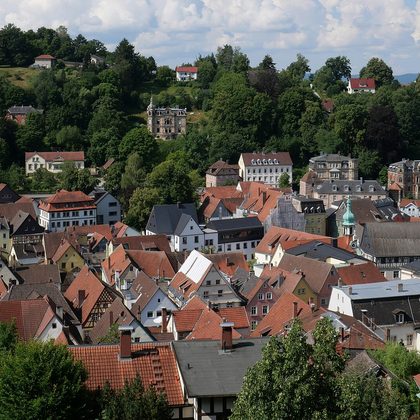
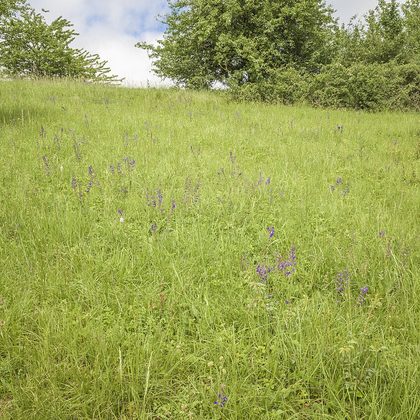
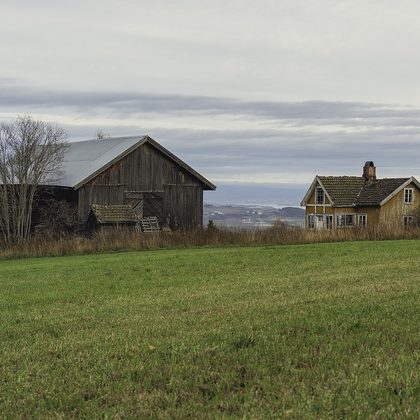
Nests in cavities: tree holes, nest boxes, cavity walls, roof tiles and hollow street lamps. Feeds on short grass, pasture, playing fields and freshly cut arable, probing and then prising the bill open in the turf. Outside the breeding season it roosts in reedbeds, young plantations or city trees.
Where the bird is most at home, classified with EUNIS — the European standard for habitats.


Range and movements
Breeds throughout Europe; northern and eastern populations move west and south-west. Present year-round in the Netherlands, with a huge autumn influx. In Spain it breeds mainly in the north, while spotless starling replaces it as the breeding starling over most of the country; in winter northern Starlings flood the whole peninsula.
- Resident
- Breeding (summer)
- Winter
- Passage
- dark = core range, pale = thinly spread
How and when to look
In November and December go to a large reedbed or an urban roost half an hour before sunset and stand with the wind behind you, so the flocks swirl against the last light. In spring, singing males show best from a chimney pot or TV aerial early in the morning.
Conservation status
Not globally threatened (IUCN: Least Concern), but sharply reduced in north-west Europe. Loss of herb-rich grassland, more intensive mowing, fewer soil invertebrates and the sealing of nest cavities during roof renovations are the main drivers.
Scientific name
Sturnus vulgaris | Linnaeus, 1758
Linnaeus described the species in 1758 and placed it straight away in the genus where it still stands. He introduced the genus Sturnus in that same work. Sturnus is the Latin word for 'starling'. vulgaris is Latin for 'common, ordinary'. The specimen the first description was based on came from Sweden.