All species › Swifts › Swifts › Common Swift
Common Swift | Apus apus
Gierzwaluw | Vencejo común | Mauersegler | סיס חומות | Martinet noir
Few birds live as completely in the air as the Swift: it feeds, sleeps and mates on the wing and comes down only to breed. A fledged youngster may stay airborne for almost two years.

Click a thumbnail to switch the photo above.
Voice
A piercing high scream, srreee, often given in chorus by parties racing low between buildings at dusk. Heard around colonies from late April to early August; outside those months the species has left Europe altogether.
Recording: Luis Alvarez Menendez — CC BY-SA 4.0 · Wikimedia Commons
Identification
Stiff, scythe-shaped wings, a short forked tail and uniform sooty brown plumage that looks black against the sky. In good light a pale throat patch shows. Flight is fast and flickering, with long glides and sudden banking turns; juveniles have pale feather fringes and a more obvious whitish throat.
Confusion species
House and Barn Martins are smaller, pale below and flutter more. Among swifts, Pallid Swift is the real problem: browner, with a stronger head and throat pattern, broader-based wings and a disyllabic scream. It is a vagrant in north-western Europe, but lives alongside Common Swift across much of Iberia. Alpine Swift is far bigger and has a white belly.
Habitat
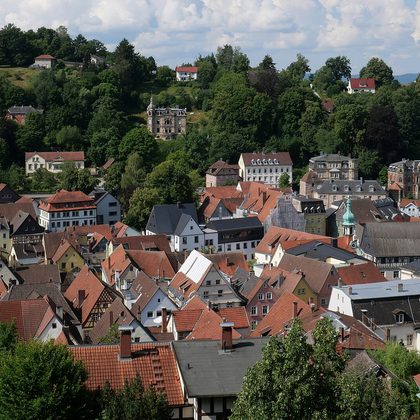
Nests almost exclusively in buildings — under roof tiles, in cavity walls, behind fascia boards and in nest boxes, above all in older town centres and village cores. Feeds high over towns, lakes and open country, dropping to low levels over water in wet weather.
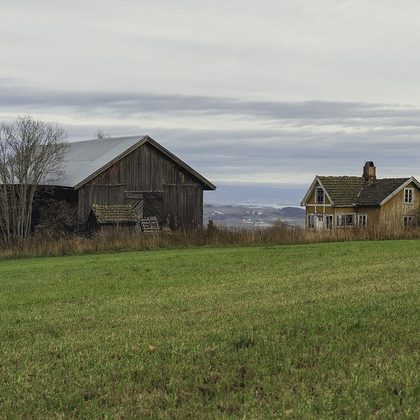
Where the bird is most at home, classified with EUNIS — the European standard for habitats.
Range and movements
Breeds across almost all of Europe, from Iberia to beyond the Arctic Circle, and on into Anatolia, the Levant and North Africa; in north-western and central Europe in every town with old buildings, in the Mediterranean as numerous in the countryside as in the cities. Winters in central and south-eastern Africa, from the Congo Basin and East Africa in the north to the Zambezi in the south, shifting from one area to the other as the winter goes on. Birds from the Low Countries, the British Isles and central Europe take the western route over Iberia and the Maghreb; Fennoscandian and Baltic birds go by the Apennine peninsula and the Balkans. Departure begins in August and is so rapid that the species vanishes abruptly; in spring the West African rainforest is the last staging point before the Sahara is crossed in April, and the birds are back in late April and May.
- Resident
- Breeding (summer)
- Passage
- dark = core range, pale = thinly spread
How and when to look
Stand in an old quarter on a warm June evening, an hour before sunset: that is when the screaming parties form and tear along the housefronts. In muggy, thundery weather also watch for high flocks streaming away ahead of a front.
Conservation status
Not globally threatened (IUCN: Least Concern). Declining across much of western Europe. The main cause is loss of nest sites: renovation, cavity insulation and new building seal off the spaces under roofs. Falling numbers of aerial insects add to the pressure. Nest bricks and keeping existing holes during building work demonstrably help.
Scientific name
Apus apus | (Linnaeus, 1758)
Linnaeus described the species in 1758 as Hirundo apus; because it was later moved to another genus, the author and year stand in brackets. The genus Apus was introduced in 1777 by Scopoli. Apus is Latin for a swift, from Greek a- 'without' and pous 'foot', the ancients taking it for a kind of swallow without feet. The specific name repeats the genus name. The specimen the first description was based on came from Sweden.