All species › Waterfowl › Ducks, geese and swans › Eurasian wigeon
Eurasian wigeon | Mareca penelope
Smient | Silbón europeo
The whistling of Wigeon is widely heard over wet Dutch polders in winter. This grazing duck gathers in dense flocks that crop the sward short and rest by day on open water.
Click a thumbnail to switch the photo above.
Voice
The male gives a loud, high, two-syllable whistle, an excited whee-oo that carries far across open country and instantly signals winter. The female purrs low and short, krrr. Audible almost continuously from October onwards, including at night from feeding and migrating flocks.
Recording: British Library — CC BY-SA 4.0 · Wikimedia Commons
Identification
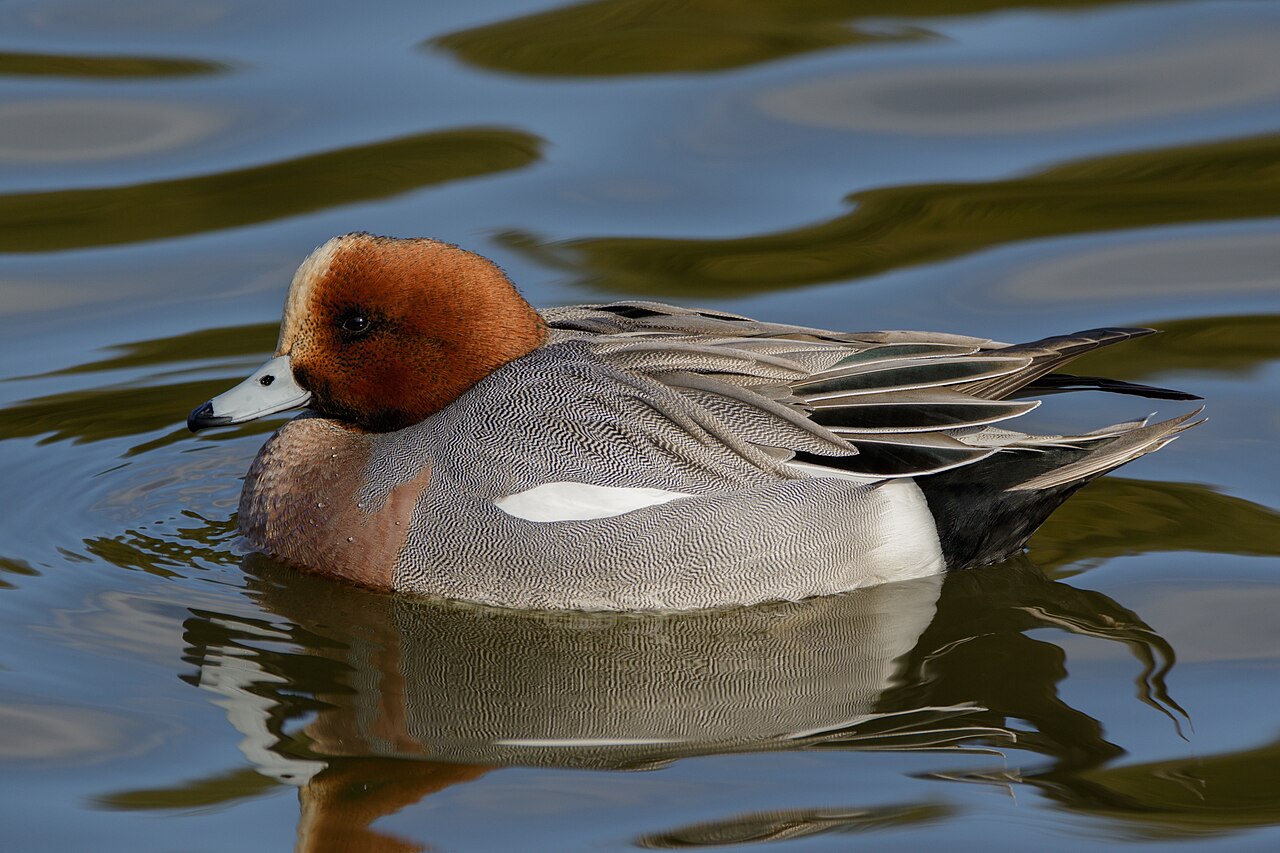
Compact duck with a short blue-grey black-tipped bill, a high rounded forehead and a pointed rear. The male has a chestnut head with a butter-yellow blaze, pink-flushed breast, grey flanks and a black undertail. The female ranges from rufous to cold grey-brown, always with a sharply cut white belly. In flight the male shows a large white forewing panel.
Confusion species
American wigeon males have a green eye-stripe on a grey-speckled head with a cream blaze; females are grey-headed with sharp contrast against rufous flanks and show white axillaries. Gadwall is larger and squarer with a white speculum. The stubby bill and steep forehead always set Wigeon apart.
Habitat
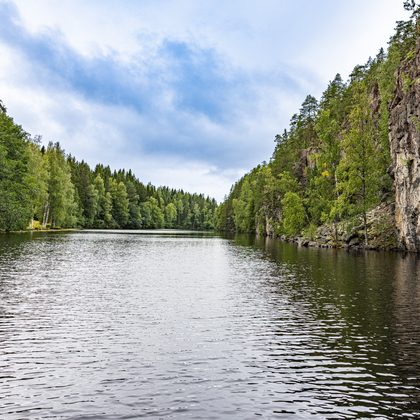
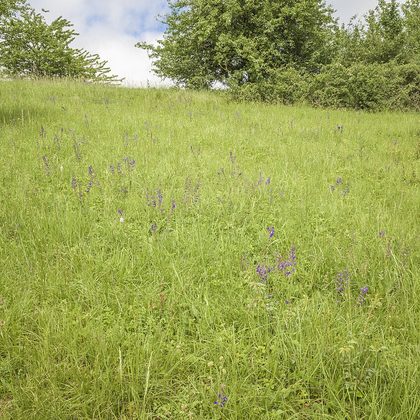
Winters on short wet grassland, saltmarsh, flooded polders, freshwater lakes and sheltered estuaries. Breeds on lakes, bog pools and slow rivers in the boreal zone. Grazes like a goose on the turf, in dense slowly advancing parties, and uses open water as a safe roost.
Where the bird is most at home, classified with EUNIS — the European standard for habitats.


Range and movements
Breeds in Iceland, Scandinavia and northern Russia, with only a handful of Dutch pairs. The Netherlands is one of Europe's most important wintering areas, with concentrations in the river district, the Delta and along the Wadden Sea. Spain holds smaller wintering numbers in Doñana, the Ebro delta and northern lagoons.
- Resident
- Breeding (summer)
- Winter
- Passage
- dark = core range, pale = thinly spread
How and when to look
Visit a wet polder at dusk in November or December and listen first: the whistling reveals the flock before you see it. By day, scan resting parties on open water and work methodically through every grey-headed bird for an American wigeon among them.
Conservation status
Still numerous as a winter visitor, but numbers in north-west Europe are falling as milder winters let birds stop short and remain further east. The Fennoscandian breeding population is shrinking. Disturbance at roosts, drying of grasslands and hunting along parts of the flyway all play a part.
Scientific name
Mareca penelope | (Linnaeus, 1758)
Linnaeus described the species in 1758 as Anas penelope; because it was later moved to another genus, the author and year stand in brackets. The genus Mareca was introduced in 1824 by Stephens. Mareca comes from the Portuguese marreco, a word for a small duck. penelope refers to the duck said in Greek tradition to have saved Penelope when she was thrown into the sea; her name is from pene 'thread' and ops 'appearance', after the weaving ruse with which she kept her suitors at bay. The specimen the first description was based on came from Sweden.