All species › Waterfowl › Ducks, geese and swans › Gadwall
Gadwall | Mareca strepera
Krakeend | Ánade friso
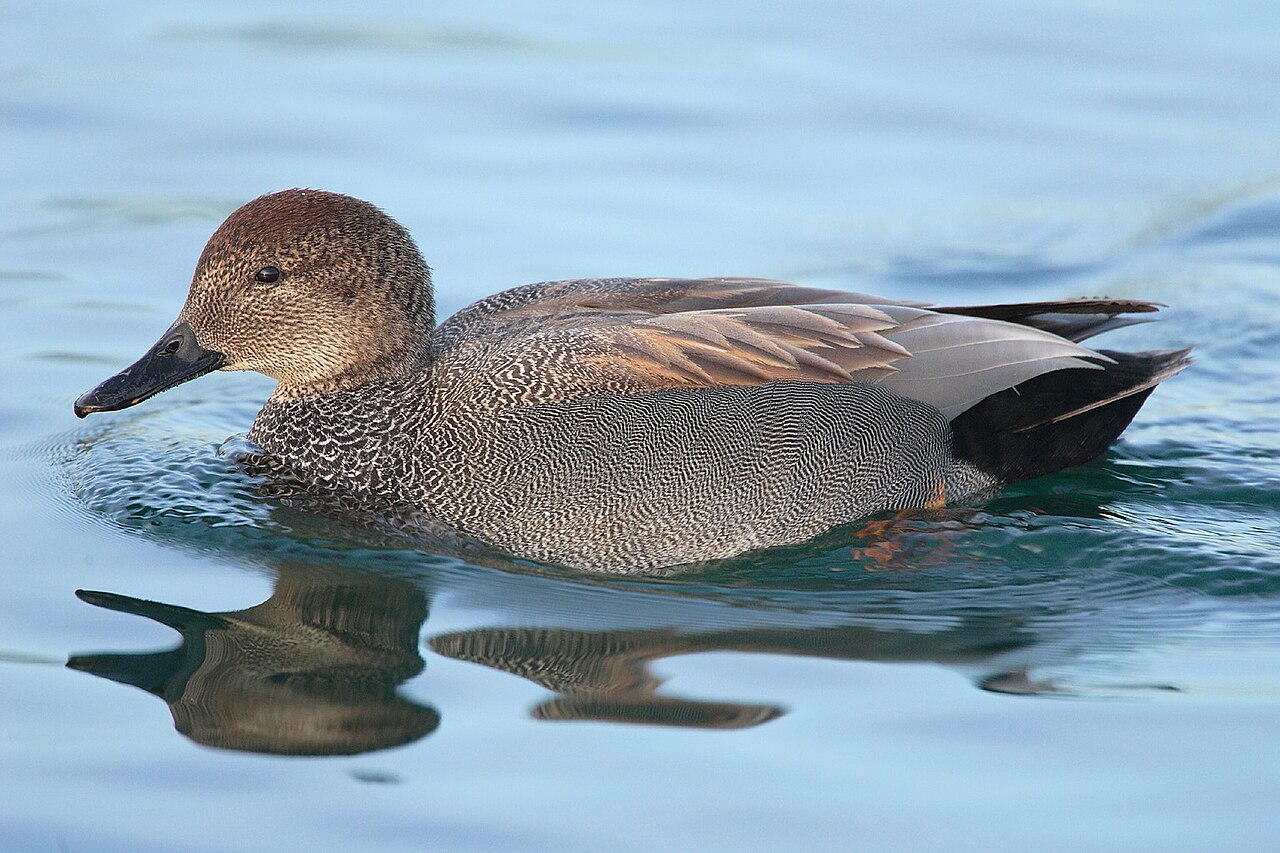
At a distance a grey-brown duck, close up finely patterned in shades of grey. The Gadwall has increased strongly in the Netherlands and now swims on almost every weedy pool, often shadowing Coots.
Click a thumbnail to switch the photo above.
Voice
The male gives a short, dry, nasal ehp or a rattling rrehb, often followed by a thin whistle during display. The female quacks like a Mallard but higher and more throttled. Heard mostly from October to April in displaying parties on open water.
Recording: Joost van Bruggen — CC BY-SA 4.0 · Wikimedia Commons
Identification
The male is finely vermiculated grey with a black stern, a chestnut-mottled shoulder panel and a dark grey bill. The female recalls a small Mallard but shows clean orange bill sides sharply divided from the dark culmen. Both sexes show a small white square in the wing, often visible while swimming; the eclipse male gives itself away by the black rump.
Confusion species
Females are confused with Mallard endlessly. Gadwall is smaller, steeper-foreheaded and neater-billed, and the orange is confined to sharply cut bill sides rather than smudged across the whole bill. The white speculum settles it every time, where Mallard shows blue bordered with white.
Habitat
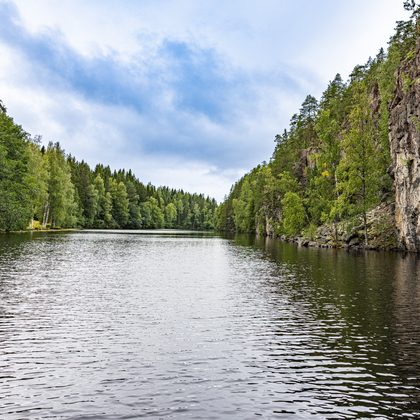
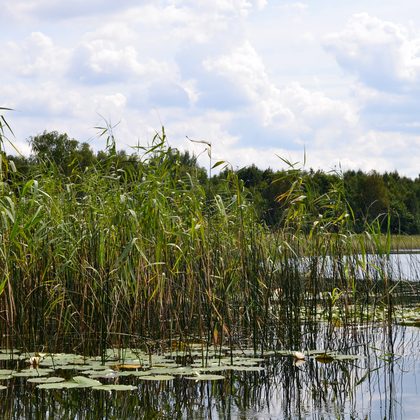
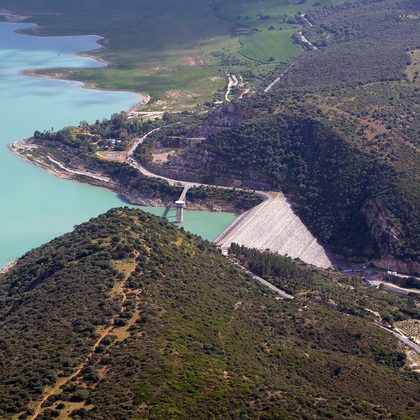
Shallow, nutrient-rich fresh water with abundant submerged plants: peat cuttings, clay pits, canals, town lakes and young wetland restoration sites. Nests in dense bankside cover on islets, often within black-headed gull colonies. Outside the breeding season also on brackish creeks and sheltered delta waters.
Where the bird is most at home, classified with EUNIS — the European standard for habitats.
Range and movements
Breeds from western Europe to Central Asia. The Netherlands holds one of the largest west European populations, concentrated in the peat lakes and the Delta. In Spain it breeds locally and winters in numbers at Doñana, the Ebro delta and the inland lagoons of La Mancha.
- Resident
- Breeding (summer)
- Winter
- Passage
- dark = core range, pale = thinly spread
How and when to look
Visit a pondweed-rich lake in March on a mild day and look around midday, when display parties are liveliest. Watch the Coots: Gadwall habitually rob the plants that Coots bring up from the bottom, and are often found trailing them.
Conservation status
Strongly increased since the 1970s through nutrient enrichment, new water bodies and milder winters. It profits from plant-rich shallow lakes and is nowhere threatened in Europe. Local risks are early mowing of bankside reed, fox predation and disturbance of nesting islets.
Scientific name
Mareca strepera | (Linnaeus, 1758)
Linnaeus described the species in 1758 as Anas strepera; because it was later moved to another genus, the author and year stand in brackets. The genus Mareca was introduced in 1824 by Stephens. Mareca comes from the Portuguese marreco, a word for a small duck. strepera is Latin for 'noisy', from strepere 'to make a din', after the rattling call. The specimen the first description was based on came from Sweden.