All species › Waterfowl › Ducks, geese and swans › Greater white-fronted goose
Greater white-fronted goose | Anser albifrons
Kolgans | Ánsar careto
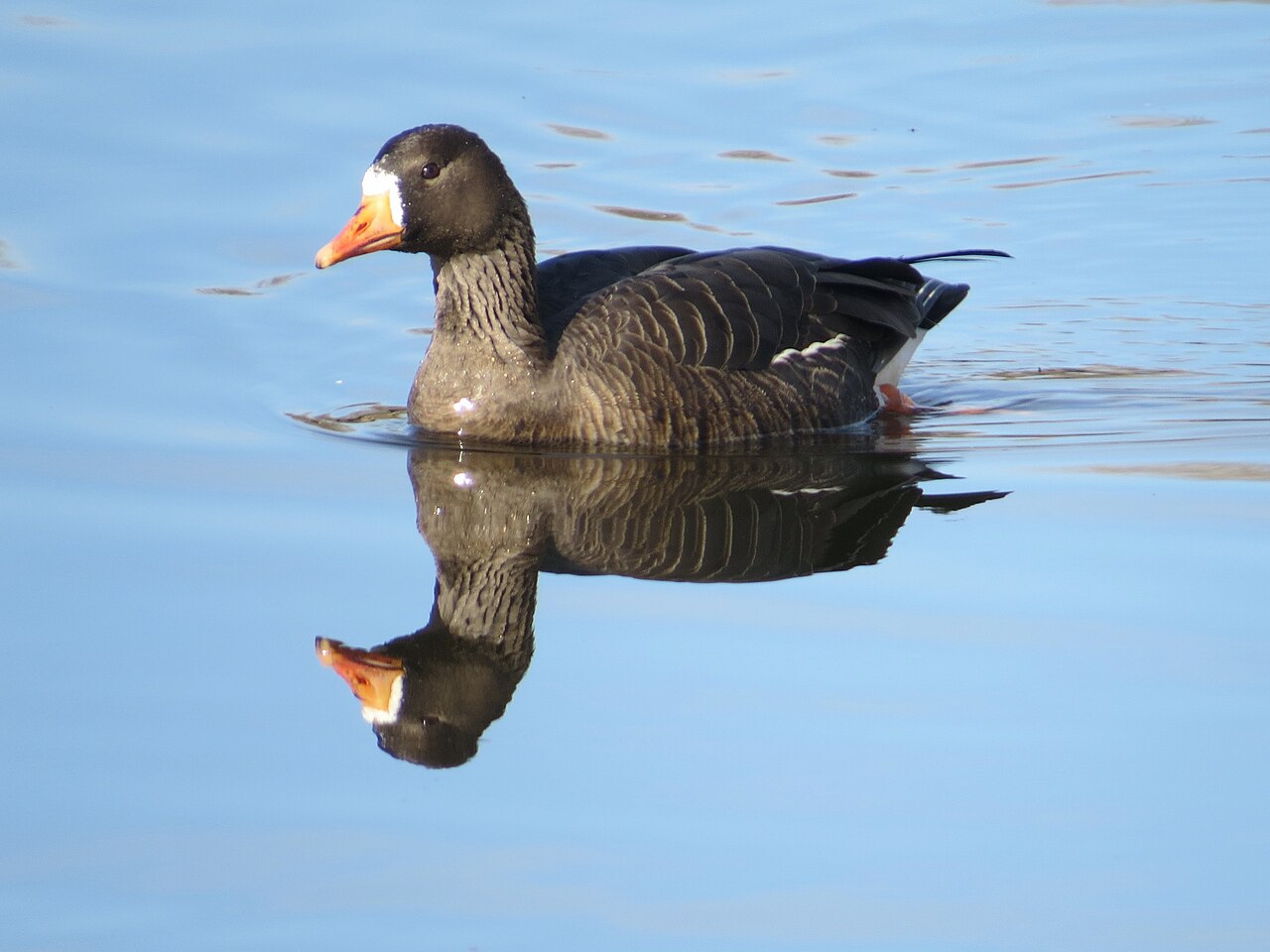
The White-fronted Goose is the definitive winter goose of the Dutch lowlands, arriving in noisy, high-pitched flocks over wet meadows. The white forehead and black belly bars identify it at a considerable distance.

Subspecies
Voice
A high, rapidly cackled two-syllable call, kyo-lyok, more musical and shriller than the hoarse honking of Greylag. Thousands together produce a rolling, laughing chorus. Most audible as flocks lift off at dawn and during passage in October and February.
Recording: Jens Loose — CC BY-SA 4.0 · Wikimedia Commons
Identification
Medium-sized grey-brown goose with a short pink bill, orange legs and a white blaze around the bill base. The belly carries irregular black bars, patterned differently on every bird. Juveniles in autumn lack both blaze and belly bars and are the real pitfall; they acquire the markings gradually through the winter. The Greenland subspecies flavirostris, wintering mainly in Ireland and Scotland and seldom reaching further east, is darker and more heavily barred, with an orange-yellow bill instead of a pink one.
Confusion species
Lesser white-fronted goose is smaller and shorter-billed, with a yellow eye-ring, a blaze extending behind the eye, and wing tips projecting beyond the tail. Bean Goose lacks the blaze and has a dark head and a black-and-orange bill. Greylag is paler and bulkier with an all-pink or orange bill and pale grey forewings.
Habitat
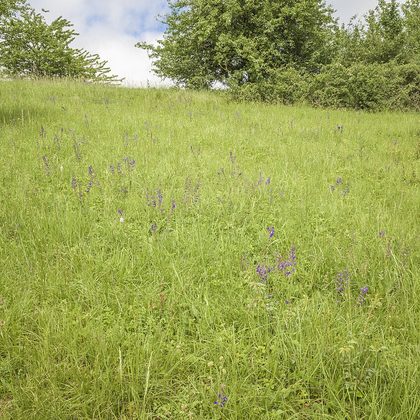
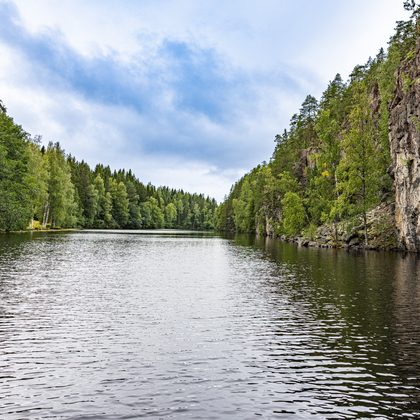
Winters on grassland, winter cereals, maize and sugar-beet stubble and flooded floodplain meadows. Roosts on shallow open water, lakes, creeks and sandbars. Breeds on the arctic tundra of northern Russia and Siberia, in damp sedge vegetation along rivers and lakes.
Where the bird is most at home, classified with EUNIS — the European standard for habitats.



Range and movements
The European population breeds in arctic Russia and winters almost entirely in the Netherlands, Germany and Poland, with the Netherlands the single most important wintering area worldwide. In Spain it is a rare visitor, with a few birds in northern wetlands and occasionally the Ebro delta in hard winters.
- Resident
- Breeding (summer)
- Winter
- Passage
- dark = core range, pale = thinly spread
How and when to look
Drive the floodplains and polders of the Dutch river district in December or January and be there at sunrise, when flocks move from roost to grassland. Then work through the flocks for noticeably small birds with a yellow eye-ring: Lesser White-fronts hide among them.
Conservation status
Numbers rose strongly for decades thanks to protection and nutrient-rich farmland, but breeding success swings widely with arctic weather and lemming cycles. The trend has recently levelled off and the wintering distribution is shifting east. Agricultural conflict and hunting pressure in eastern Europe now dominate management debates.
Scientific name
Anser albifrons | (Scopoli, 1769)
Scopoli described the species in 1769 as Branta albifrons; because it was later moved to another genus, the author and year stand in brackets. The genus Anser was introduced in 1760 by Brisson. Anser is the Latin word for 'goose'. albifrons is Latin, from albus 'white' and frons 'forehead', after the white blaze around the base of the bill. The specimen the first description was based on came from northern Italy.