All species › Pelicans, herons and ibises › Herons and bitterns › Grey Heron
Grey Heron | Ardea cinerea
Blauwe reiger | Garza real | Graureiher | אנפה אפורה | Héron cendré
The Grey Heron is a common sight beside ditches and city ponds. It is a predator with a very fast strike and fine plumes in breeding plumage.

Click a thumbnail to switch the photo above.
Voice
A harsh, grating fraank given in flight, often at dusk over towns, and heard right through the year. At the colony from February to May there is a mix of guttural croaks, bill-clattering and the hoarse squealing of begging young.
Recording: Benoît Van Hecke — CC BY-SA 4.0 · Wikimedia Commons
Identification
Large and grey with a white head and neck, a black supercilium running into a drooping crest, a black shoulder patch and a dagger-like yellow bill that briefly flushes orange-pink in courtship. In flight the neck is folded into an S, the legs trail, and the beats are slow and deep on bowed wings. Juveniles are duller, with a grey crown and no plumes.
Confusion species
Purple Heron is smaller and darker, with a rufous neck striped black, a thin snaky neck that sags more deeply in flight, and large toes; it stays in reedbeds. Great White Egret is entirely white. Storks and cranes fly with the neck outstretched, something a heron never does.
Habitat
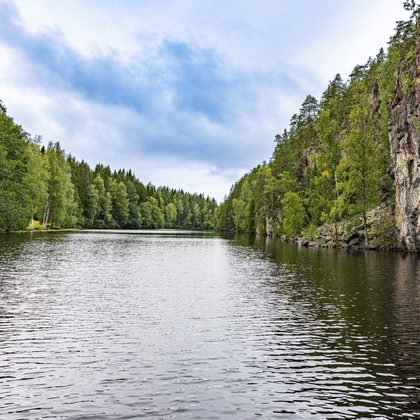
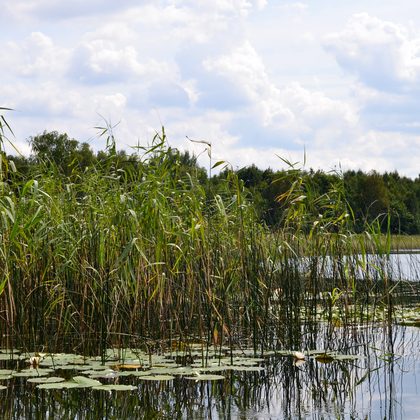
Any waterside: polder ditches, canals, reed fringes, park ponds and shallow tidal creeks. Also hunts voles well away from water in grassland and stubble, and in towns also visits fish stalls, garden ponds and aviaries.
Where the bird is most at home, classified with EUNIS — the European standard for habitats.



Range and movements
Widespread throughout Europe, North Africa, Anatolia and the Levant. In north-west Europe abundant year-round and tame, with heronries in parks and small woods. Around the Mediterranean it breeds mainly in deltas, along the big rivers and at reservoirs — Doñana, the Ebro delta, the Guadalquivir — with central European birds arriving in winter to escape frost.
- Resident
- Breeding (summer)
- Winter
- Passage
- dark = core range, pale = thinly spread
How and when to look
Visit a heronry in February or March, when the trees are still bare and nests and displaying pairs are in plain view. On frosty winter mornings herons hunch beside the last open water and on molehills, and are then easiest to approach.
Conservation status
Not globally threatened (IUCN: Least Concern). Increased strongly during the twentieth century thanks to protection and cleaner water, and now broadly stable. Severe winters with prolonged ice still cause heavy mortality, and locally the disturbance of colonies and the loss of gently sloping, vegetated banks matter.
Scientific name
Ardea cinerea | Linnaeus, 1758
Linnaeus described the species in 1758 and placed it straight away in the genus where it still stands. He introduced the genus Ardea in that same work. Ardea is the Latin word for 'heron'. cinerea is Latin for 'ash-grey', from cinis 'ashes'. The specimen the first description was based on came from Sweden.