All species › Waterfowl › Ducks, geese and swans › Greylag goose
Greylag goose | Anser anser
Grauwe gans | Ánsar común
The Greylag is the wild species from which the farmyard goose was bred, and the bulkiest grey goose in Europe. Once almost lost as a breeding bird, it is now everywhere in Dutch marshes and grassland.
Click a thumbnail to switch the photo above.
Voice
Loud and unmistakably farmyard: a deep cackling aahng-ahng-ahng. On take-off a fast rattling clamour, audible day and night over winter roosts. Softer conversational murmurs pass between pair members all year, and the whole voice is noticeably deeper than that of White-fronted Goose.
Recording: Joost van Bruggen — CC BY-SA 4.0 · Wikimedia Commons
Identification
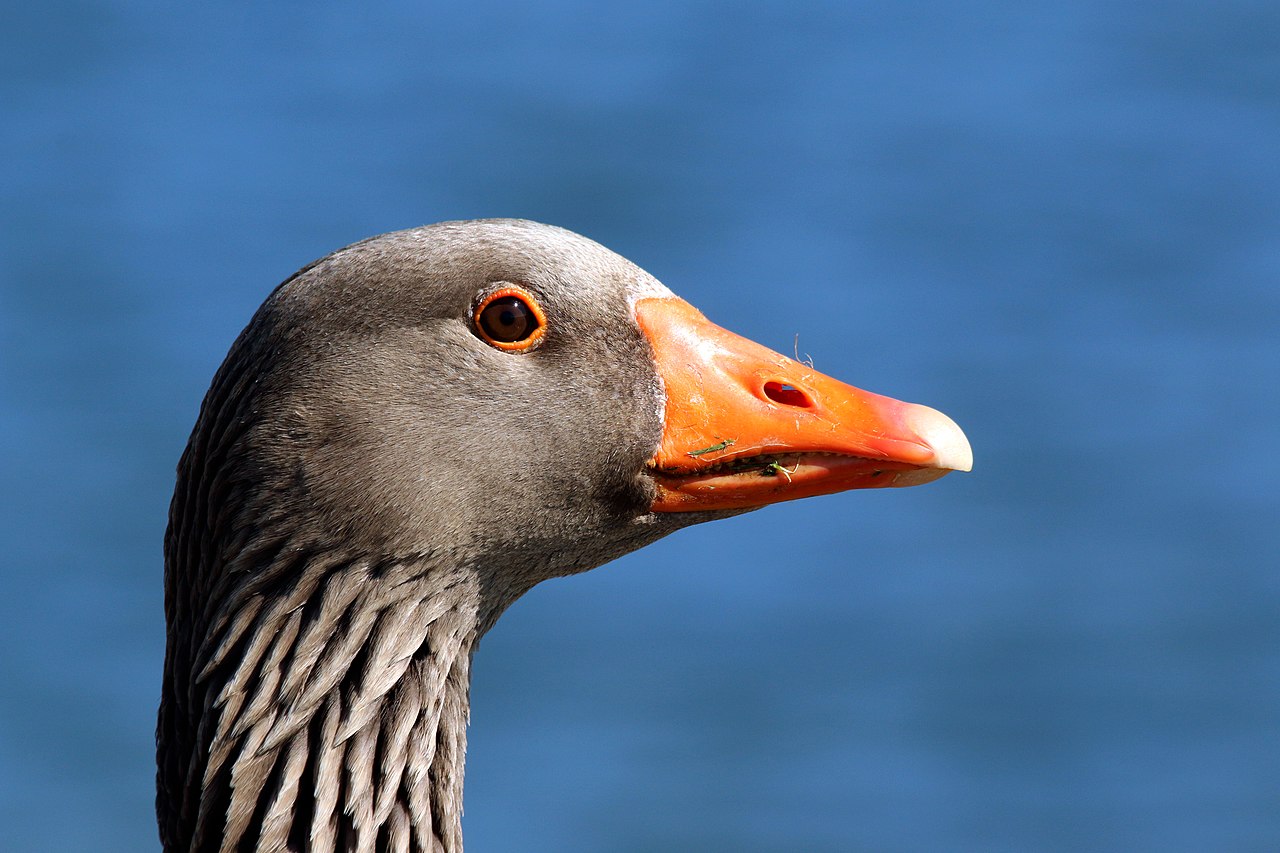
Heavy, thickset grey goose with a stout, uniformly orange-pink bill in the western form and pink legs. The strikingly pale grey forewing shows above and below in flight, a panel no other grey goose matches. Older birds show variable black belly blotches; juveniles are plainer, duller and unmarked below.
Confusion species
White-fronted Goose is smaller and darker, with a white bill base and black belly bars; Bean and Tundra Bean Geese have dark bills with an orange band and orange legs. When in doubt, take the pale forewing plus the heavy unmarked bill together, because only Greylag combines them.
Habitat
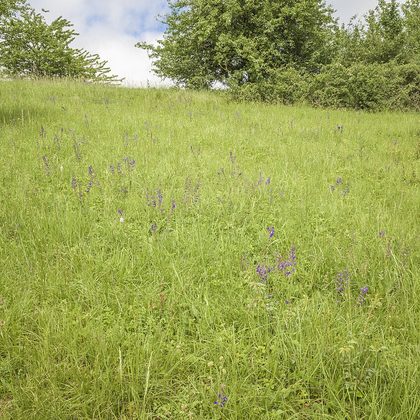
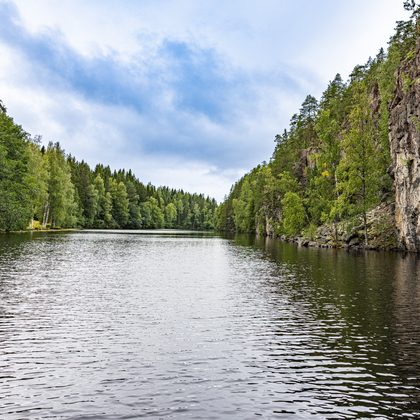
Breeds in reedbeds, clay pits, restored wetlands and rank waterside vegetation. Outside the breeding season it feeds on grassland, winter cereals and the leftovers of sugar beet and maize, roosting on open water or shallow floods a safe distance from any dyke or road.
Where the bird is most at home, classified with EUNIS — the European standard for habitats.


Range and movements
Breeds from Iceland and Scotland east to Central Asia. North-western Europe is both a breeding area — abundant and by now sedentary in the Low Countries — and an important wintering ground for the breeders of Scandinavia and the Baltic states. In the Mediterranean it is mainly a winter visitor, in Iberia in large numbers at Doñana, the lagoons of Villafáfila and the marshes of the north coast, while the breeding population there stays small and local.
- Resident
- Breeding (summer)
- Winter
- Passage
- dark = core range, pale = thinly spread
How and when to look
October to February at first light is the moment: flocks leave the roost for the fields, rice paddies or grassland and you hear them long before you see them. Stand on a dyke or a viewpoint with the wind in your face and the light behind you. In April, families with downy goslings betray themselves along reed edges.
Conservation status
Strongly increased in north-west Europe thanks to protection, wetter reserves and nutrient-rich farmland, turning a rare breeder into a resident. The downside is crop damage and continuing argument about management and culling. In parts of southern Europe the breeding population has remained scarce.
Scientific name
Anser anser | (Linnaeus, 1758)
Linnaeus described the species in 1758 as Anas anser; because it was later moved to another genus, the author and year stand in brackets. The genus Anser was introduced in 1760 by Brisson. Anser is the Latin word for 'goose'. The specific name repeats the genus name: anser is Latin for 'goose'. The specimen the first description was based on came from Sweden.