All species › Flamingos › Flamingos
Flamingos | Phoenicopteridae
Flamingo's | Flamencos | Flamingos
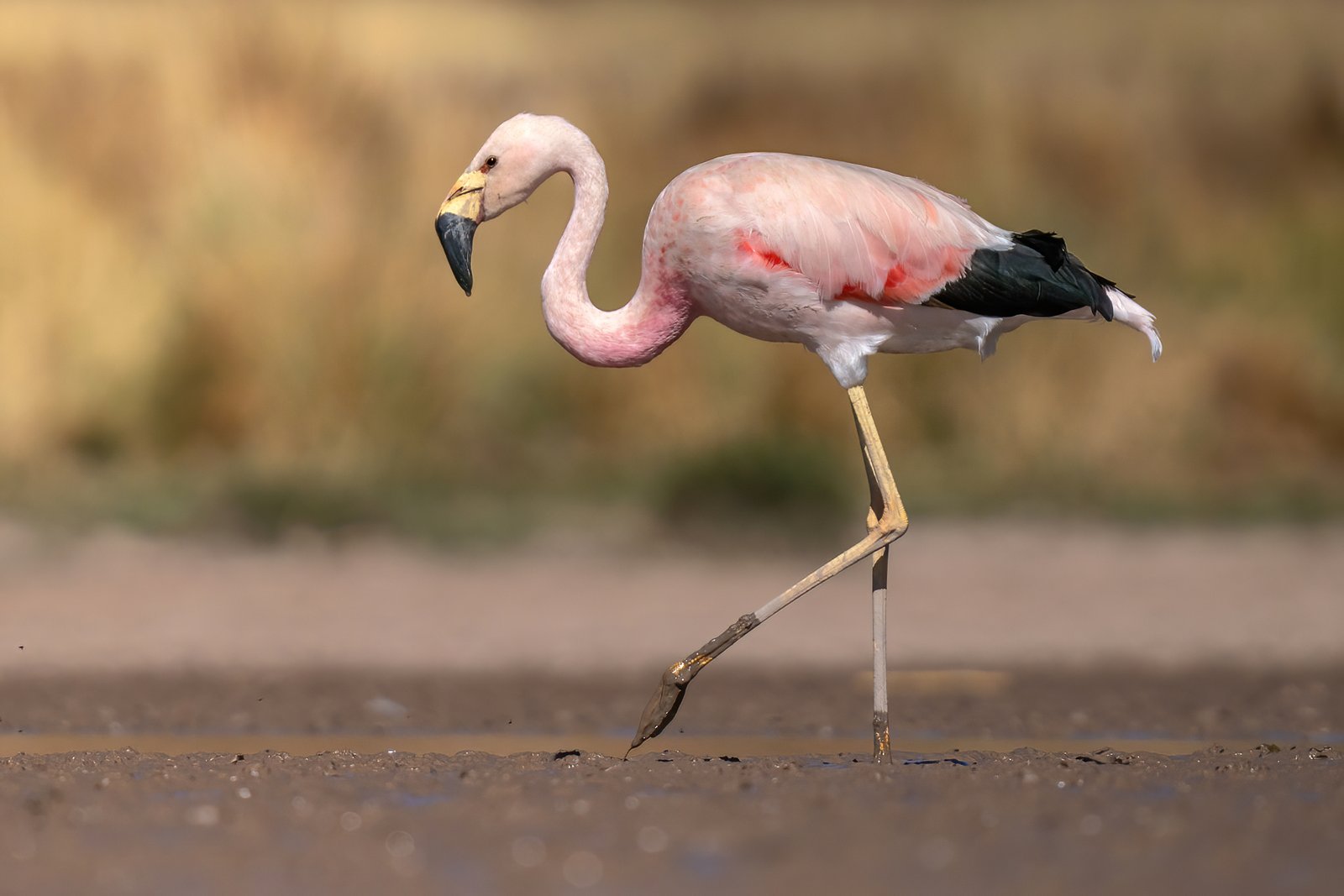
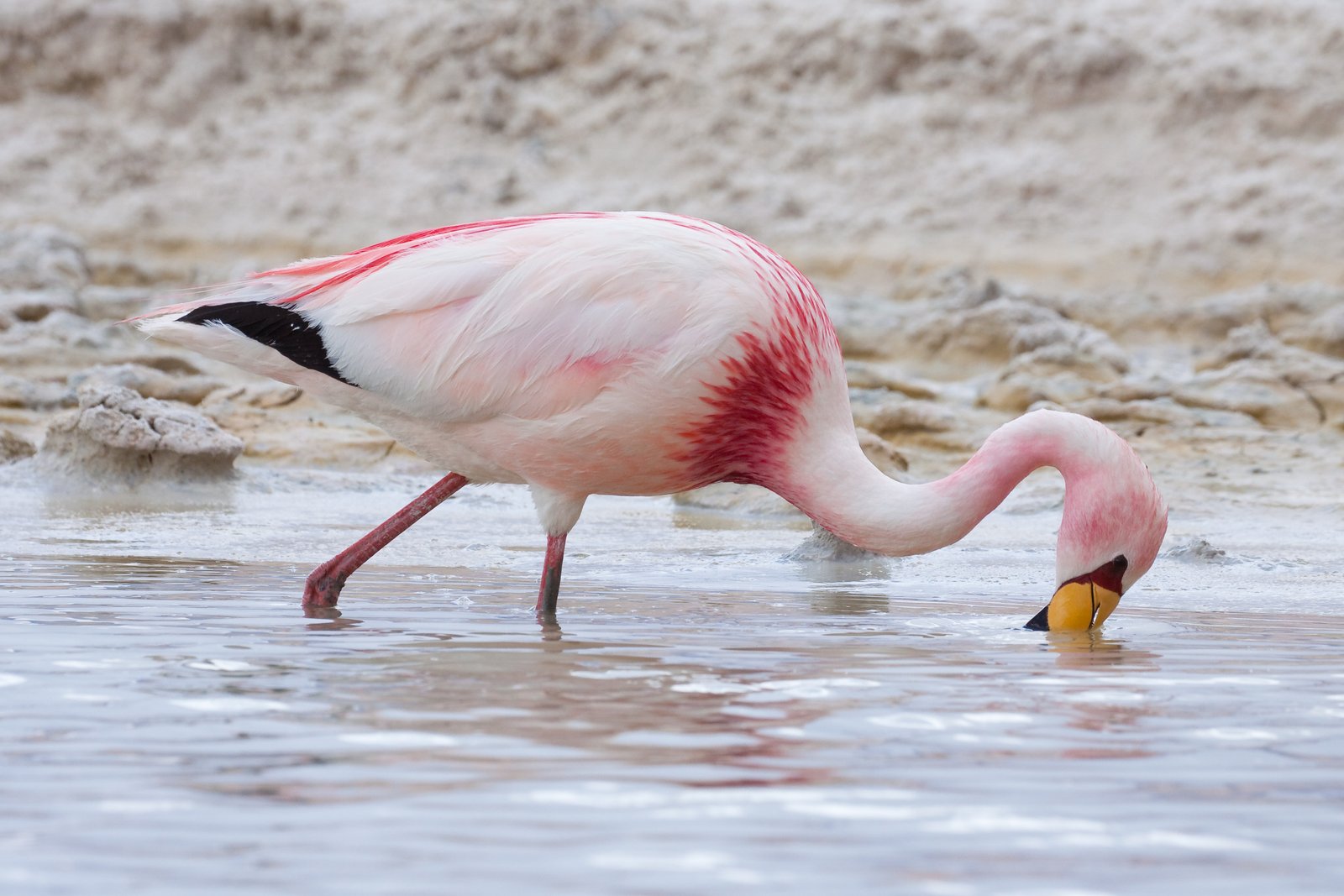
The tongue works as a piston, pumping water through the bill several times a second past the rows of horny plates that serve as a sieve; the finer those plates are set, the smaller the food retained. That difference is what separates the two genera: the deep-keeled bill of the Andean and James's Flamingos, very finely plated inside, sieves mainly diatoms from the water of the salt lakes of the Altiplano, while the coarser bill of the Chilean and American Flamingos takes brine shrimps, worms and other small bottom life, stirred loose by stamping paces. The Chilean Flamingo lives both on the high plateau and along the coast of Peru; the American Flamingo has a small population in the Galápagos. The nest is a truncated cone of raked-up mud holding a single chalk-white egg, and both parents feed the chick for weeks on a red secretion from the crop, long after it has joined a crèche of many other young walking the salt lake. That chick has a straight bill at first, which only takes on its kink over a matter of months. In flight neck and legs are held out perfectly straight and the black flight feathers stand out sharply against the pink coverts; flocks often move at night, in long slanting lines.
Native species 4 species
Species that occur here by nature: breeding birds, winter visitors and passage migrants. They are arranged by genus, in the sequence of the list.
Phoenicoparrus 2 species
Phoenicopterus 2 species
-
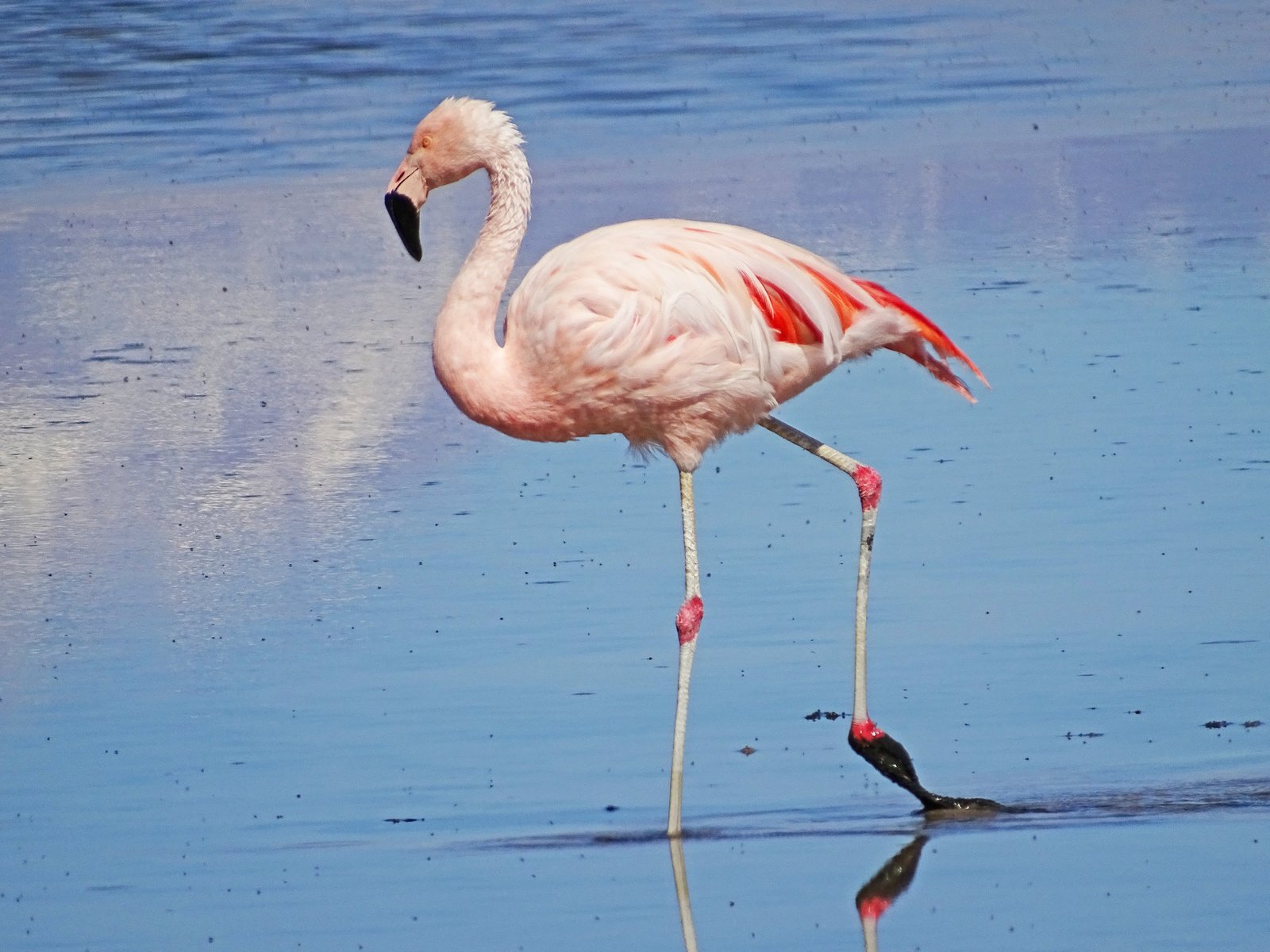
Chilean Flamingo
Phoenicopterus chilensis Altiplano salt lakes and salt flats
 Andean and high-plateau lakes
 Tidal flats, lagoons and estuaries
 Salt marsh and salt pans
 Dry puna and altiplano
 Andean bogs and bofedales
-
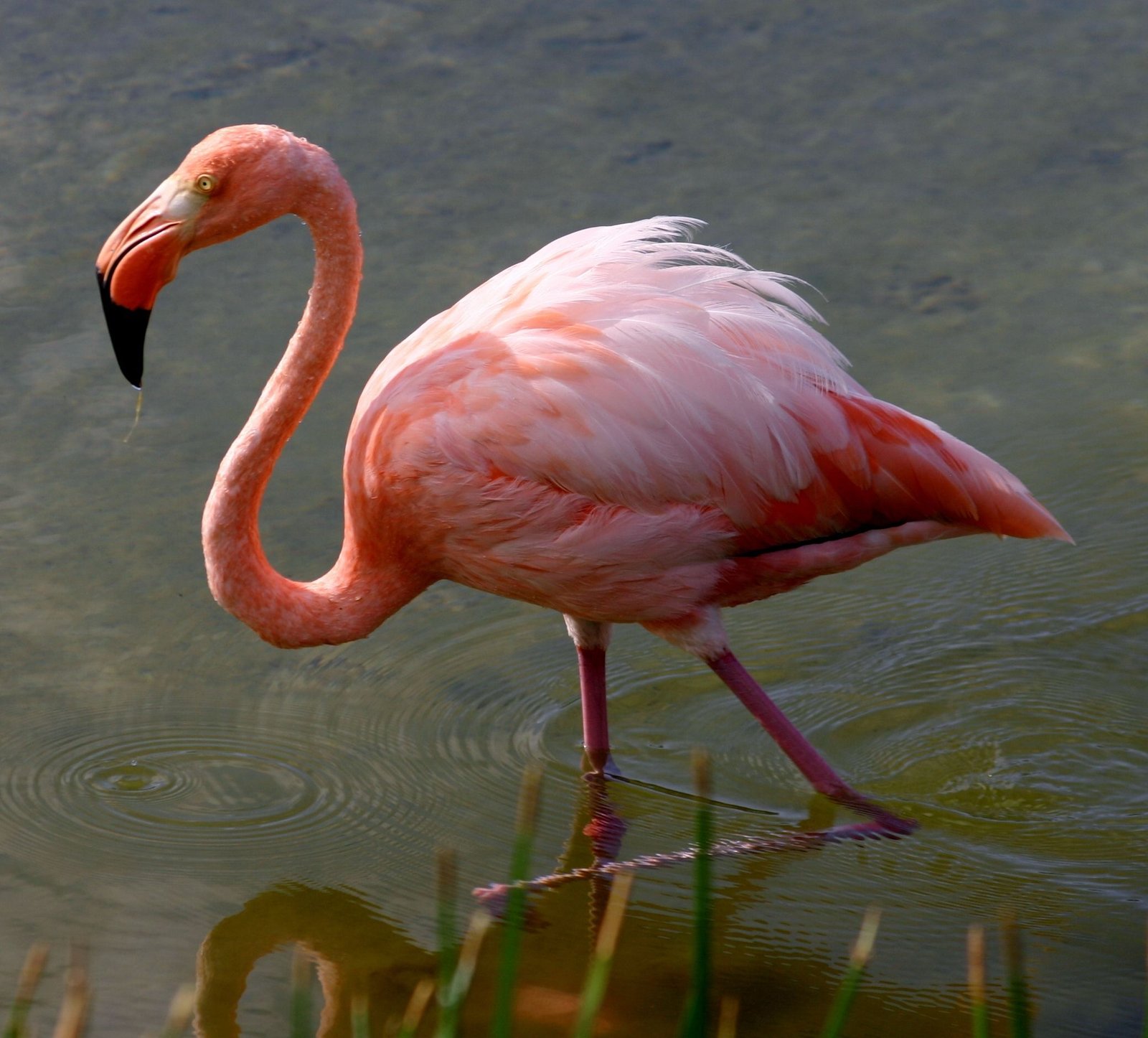
American Flamingo
Phoenicopterus ruber- Tidal flats, lagoons and estuaries
- Salt marsh and salt pans
 Galápagos coast and lava fields