All species › Pelicans, herons and ibises › Ibises and spoonbills
Ibises and spoonbills | Threskiornithidae
Ibissen en lepelaars | Ibis y espátulas
These birds feel their food rather than see it. The bill is long and packed with touch receptors: in the ibises it is decurved for probing mud, shallow water and grass tussocks, while in the spoonbills it widens at the tip into a spatula that is swept sideways through the water and snaps shut the moment something touches it. That lets them feed in turbid water and after dark. The face is partly or wholly bare, they fly with the neck outstretched in lines or slanting formations, alternating flapping with gliding, and they nest colonially in trees or reeds, laying two to five eggs whose naked young take food from the parent's throat.
Native species 4 species
Species that occur here by nature: breeding birds, winter visitors and passage migrants. They are arranged by genus, in the sequence of the list.
Eudocimus 2 species
-
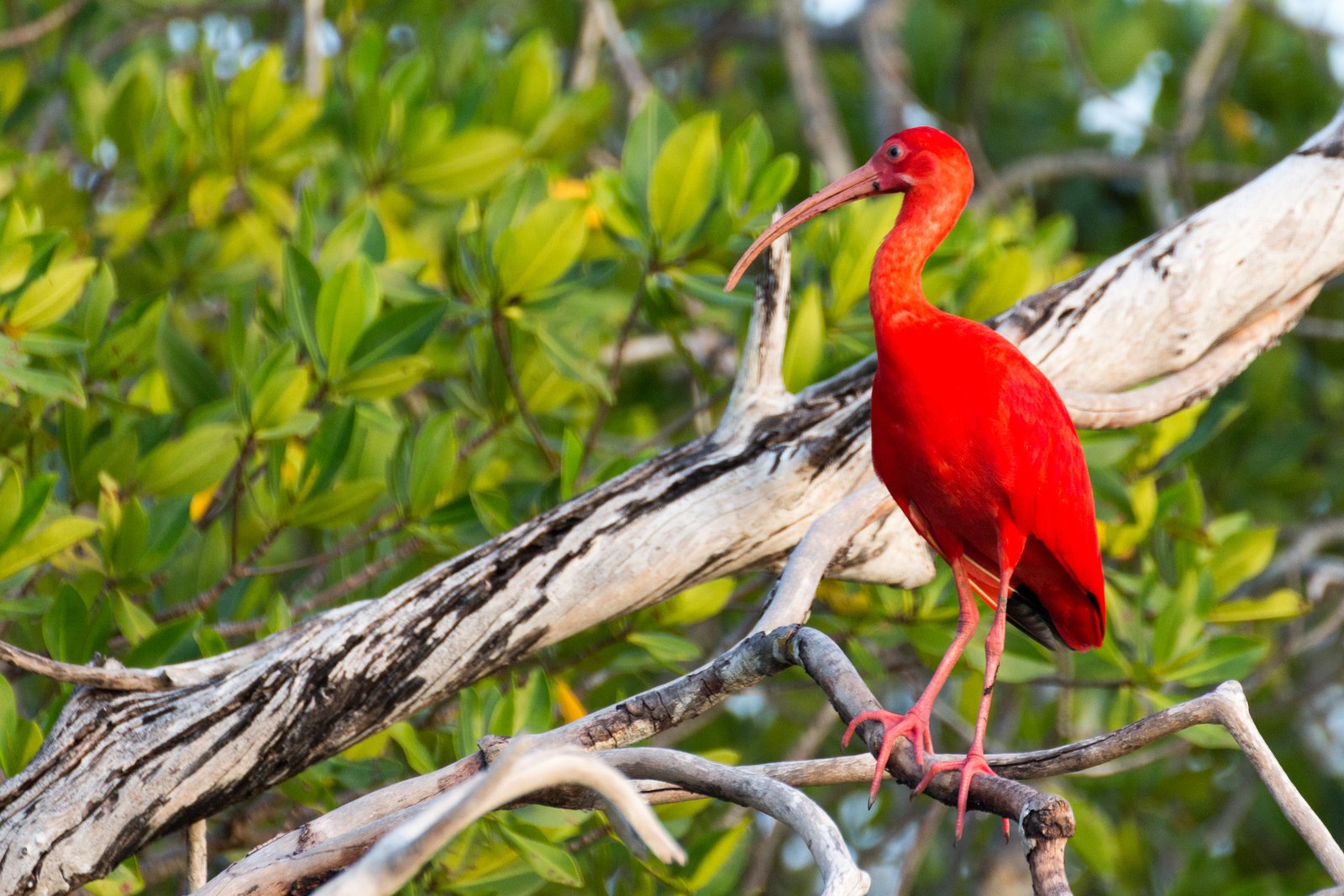
Scarlet Ibis
Eudocimus ruber Mangrove
 Tidal flats and mudbanks
 Saline lagoon and salt pan
 Freshwater marsh with reeds and sedges
-

American White Ibis
Eudocimus albus- Mangrove
- Tidal flats and mudbanks
- Saline lagoon and salt pan
- Freshwater marsh with reeds and sedges
 Rice fields and fish ponds
 Savanna and open grassland
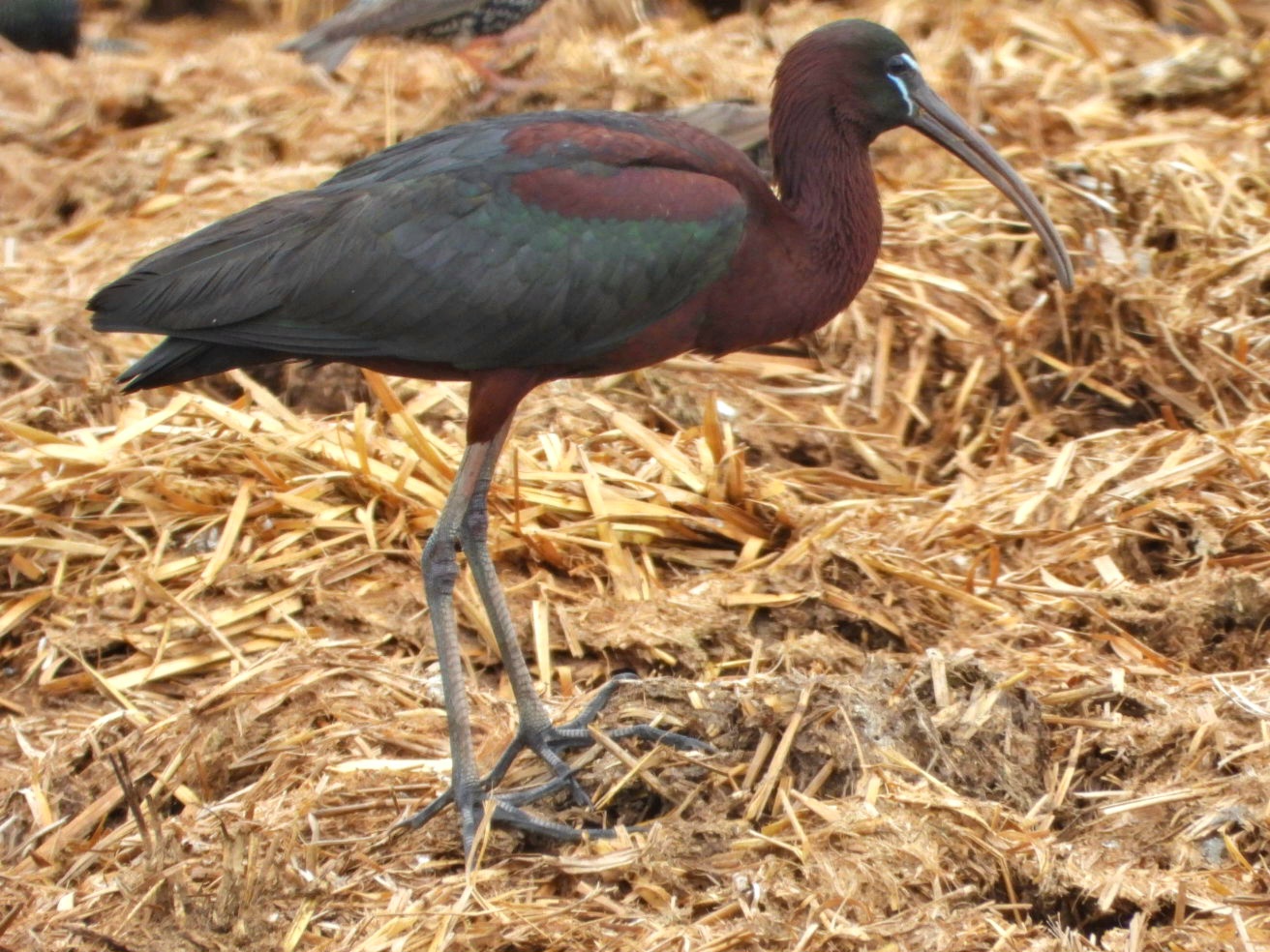


Vagrants 2 species
Birds blown in from other continents. They have no range here, and so no distribution map.
-
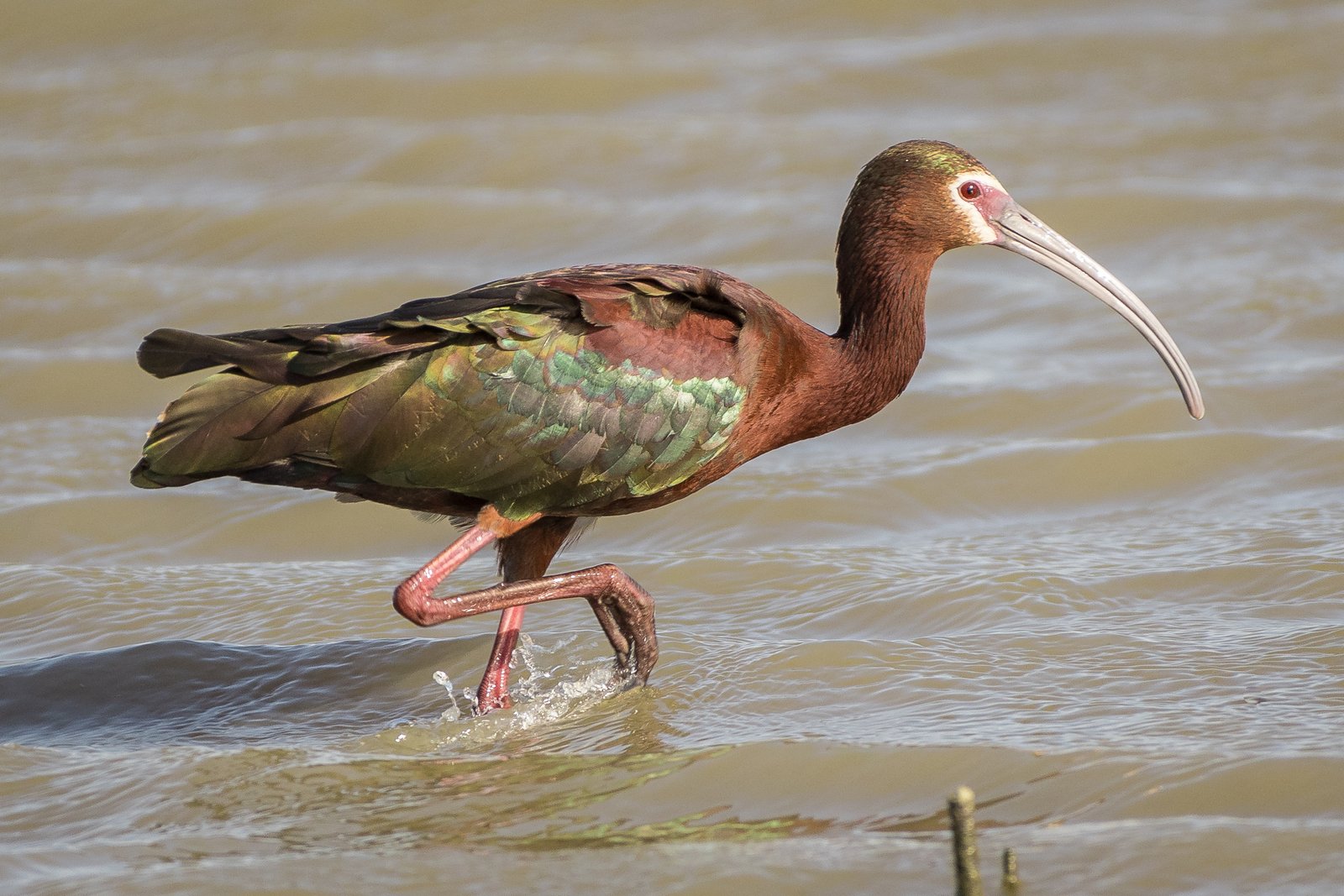
White-faced Ibis
Plegadis chihi- Freshwater marsh with reeds and sedges
- Rice fields and fish ponds
 Pasture and small-scale farm mosaic
 Lakes and ponds
- Saline lagoon and salt pan
-

Eurasian Spoonbill
Platalea leucorodia- Tidal flats and mudbanks
- Saline lagoon and salt pan
- Mangrove
- Freshwater marsh with reeds and sedges