All species › Gannets and cormorants › Frigatebirds
Frigatebirds | Fregatidae
Fregatvogels | Rabihorcados
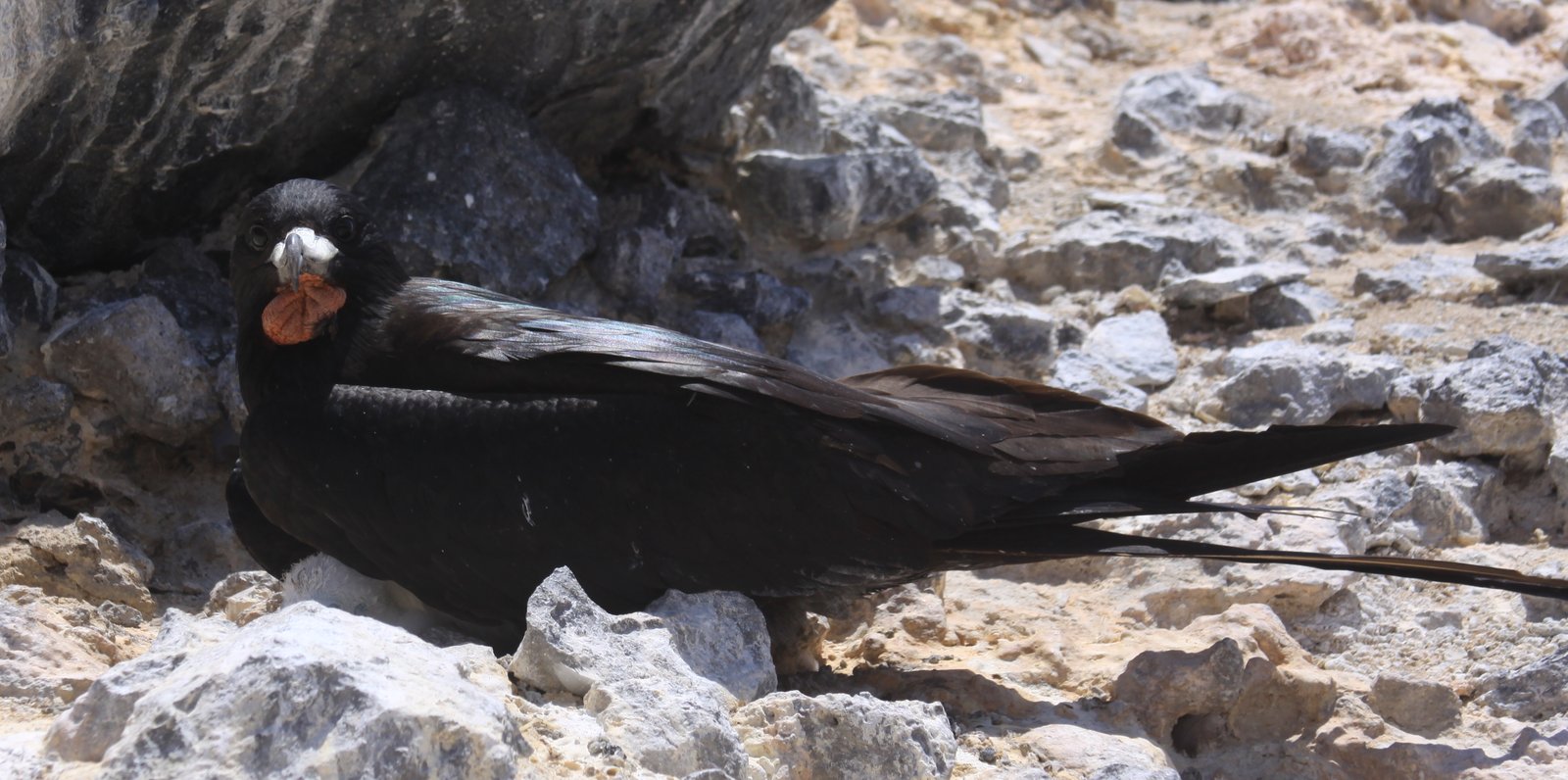
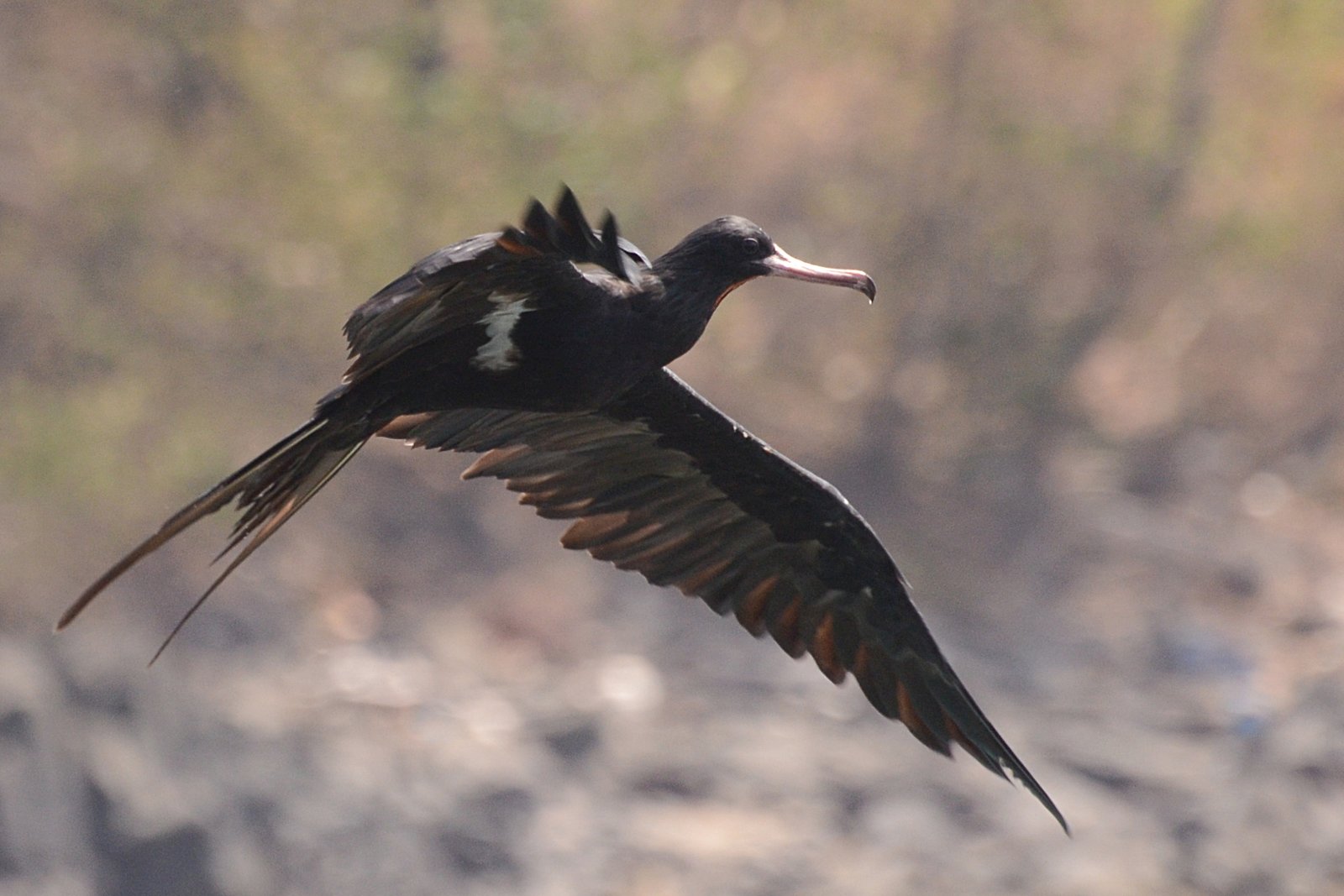
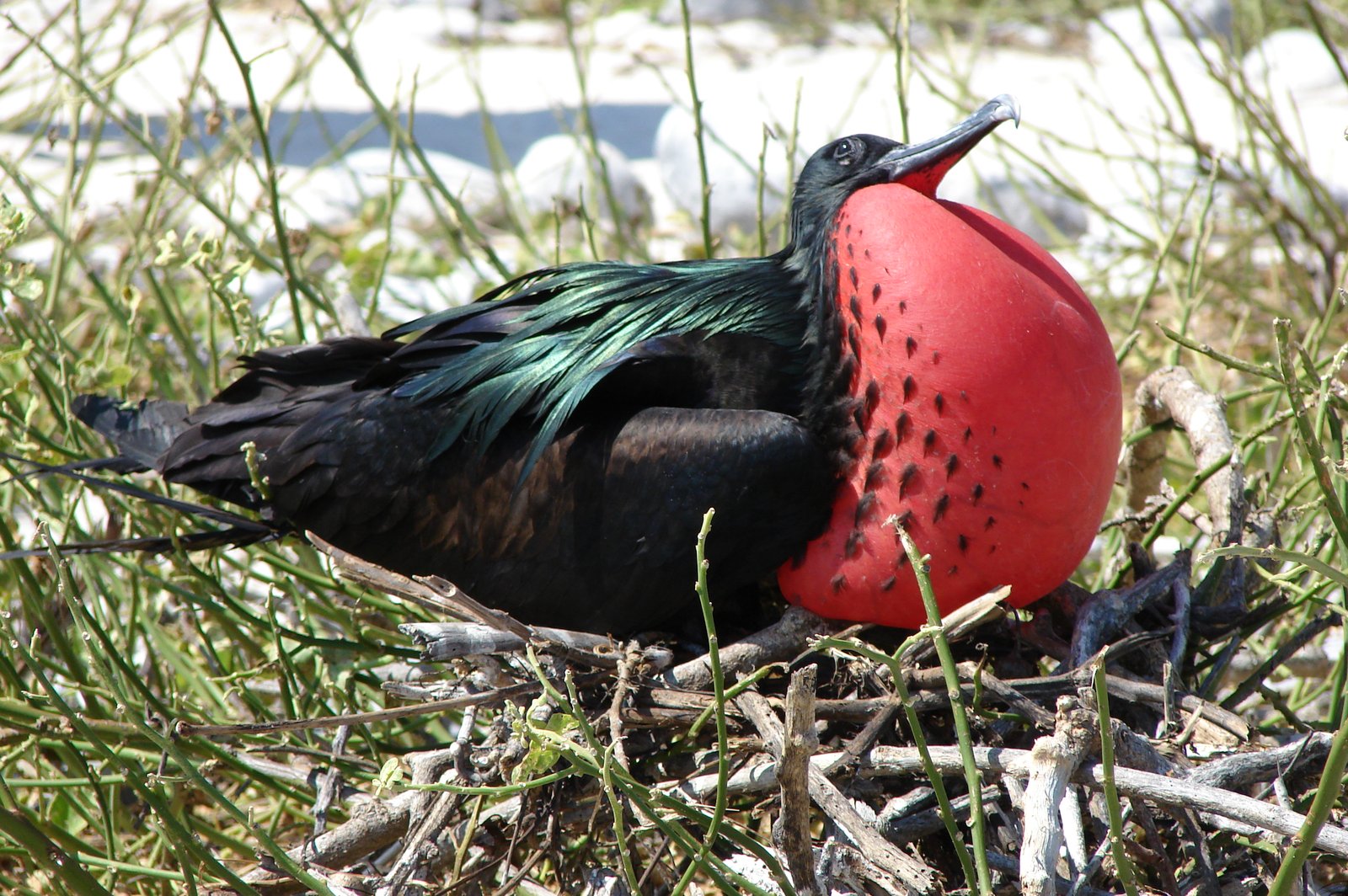
A family of five tropical seabirds. Four have been recorded off southern Africa as vagrants or non-breeding visitors. Frigatebirds have the largest wing area relative to body weight of any bird. A wingspan of up to 2.3 m carries a body weighing barely 1.5 kg. The long, narrow, sharply angled wings and deeply forked tail make them supreme soarers. They ride the updraughts beneath cumulus clouds to heights of several kilometres, then glide great distances. Tracked birds have stayed aloft for up to two months without a break, sleeping in brief bouts on the wing. Their plumage is not waterproof, and the legs are short and weak. As a result, frigatebirds cannot swim or take off from water and alight only on trees, shrubs or rocks. Most food is snatched in flight from the sea surface, especially flying fish and squid. They are also notorious kleptoparasites, harrying boobies, tropicbirds and terns until they disgorge their catch; hence 'man o'war bird'. This piracy, though conspicuous, supplies less of their diet than is often supposed. Frigatebirds breed in colonies on remote tropical islands. There, males inflate a scarlet gular pouch, quiver their spread wings and drum and warble to court passing females. The single egg is incubated for about eight weeks. The chick fledges after five or six months and may be fed for many months more, sometimes over a year. Many pairs therefore breed only every other year.
Native species 2 species
Species that occur here by nature: breeding birds, winter visitors and passage migrants. They are arranged by genus, in the sequence of the list.
Vagrants 2 species
Birds blown in from other continents. They have no range here, and so no distribution map.