All species › Penguins › Penguins
Penguins | Spheniscidae
Pinguïns | Pingüinos
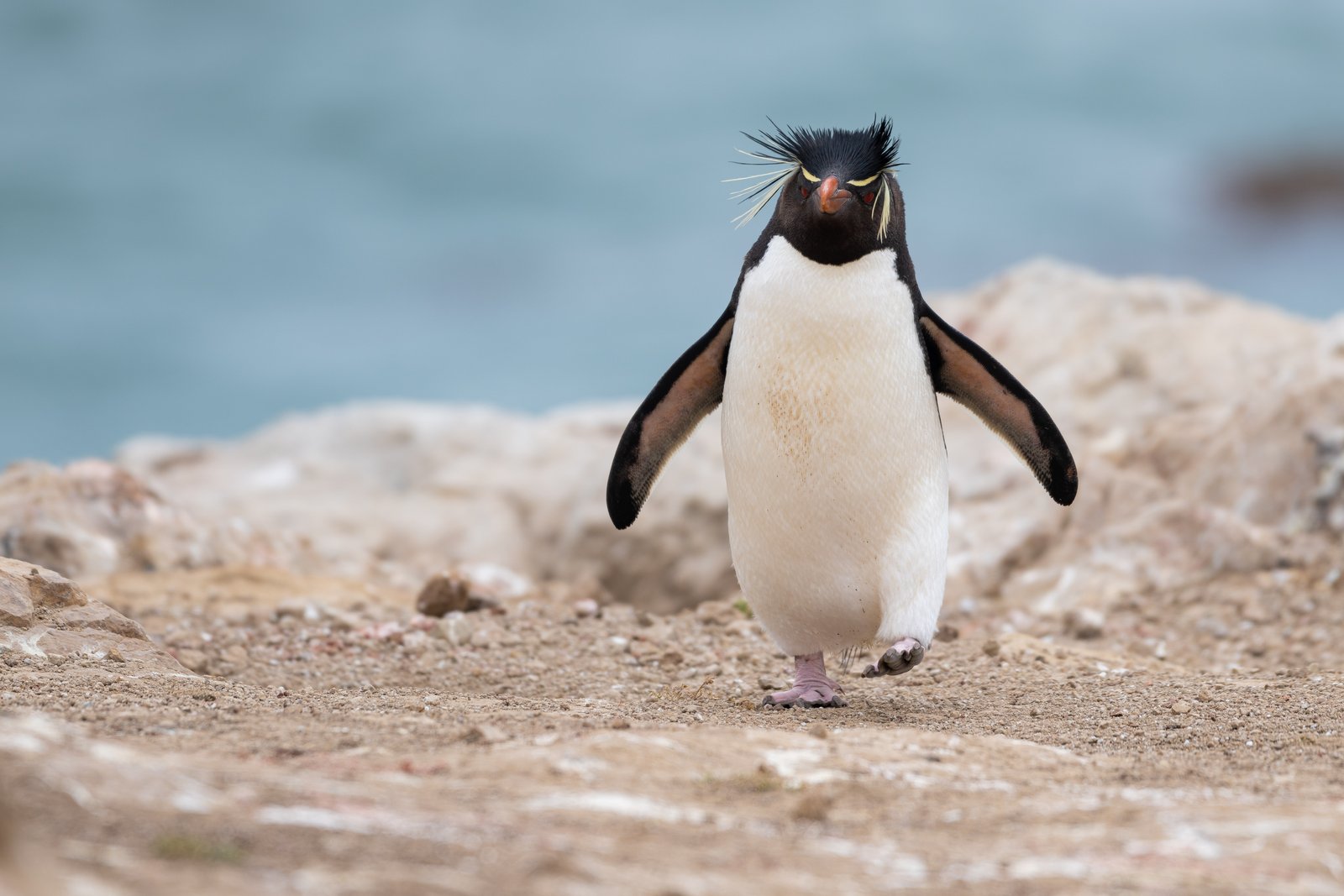
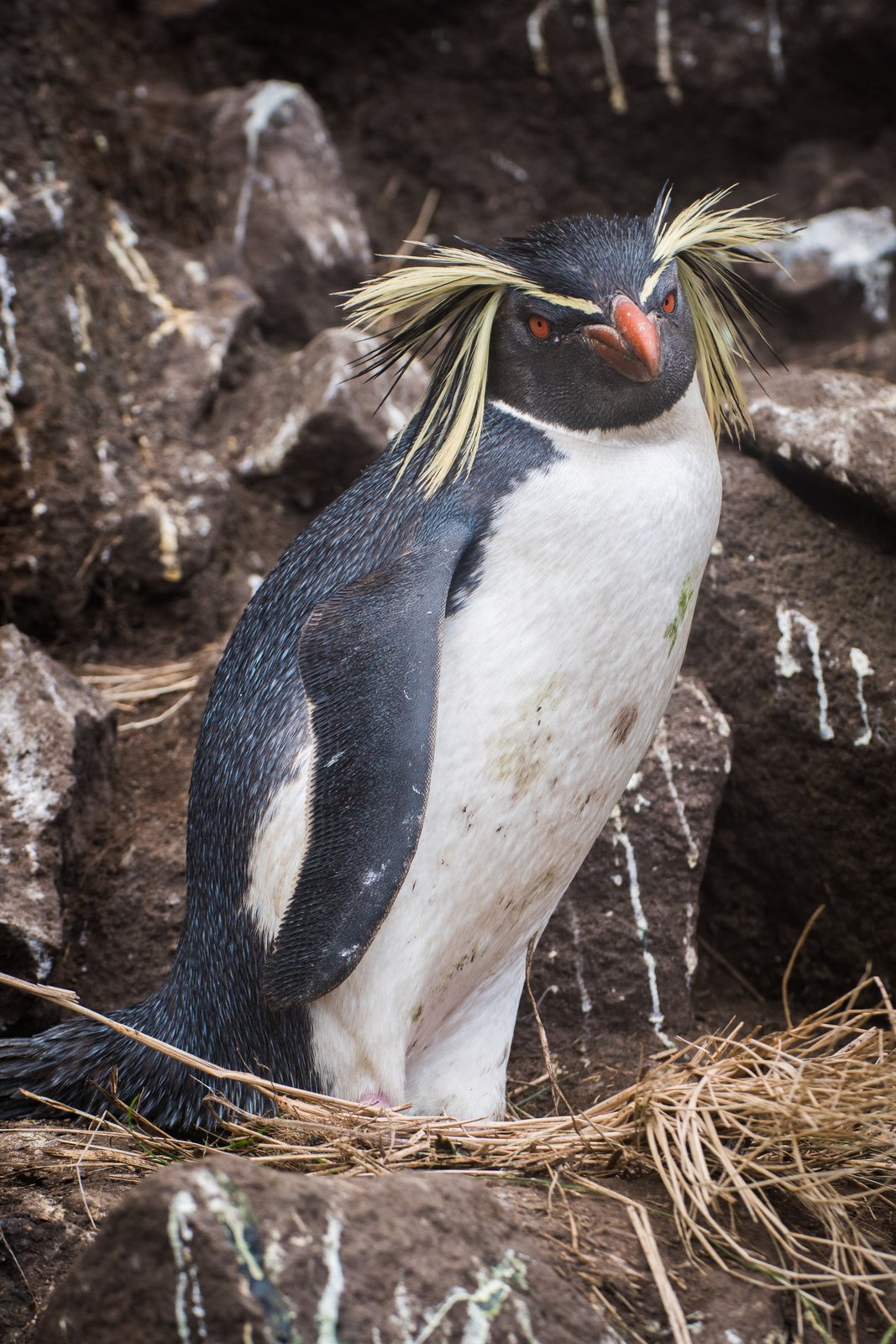
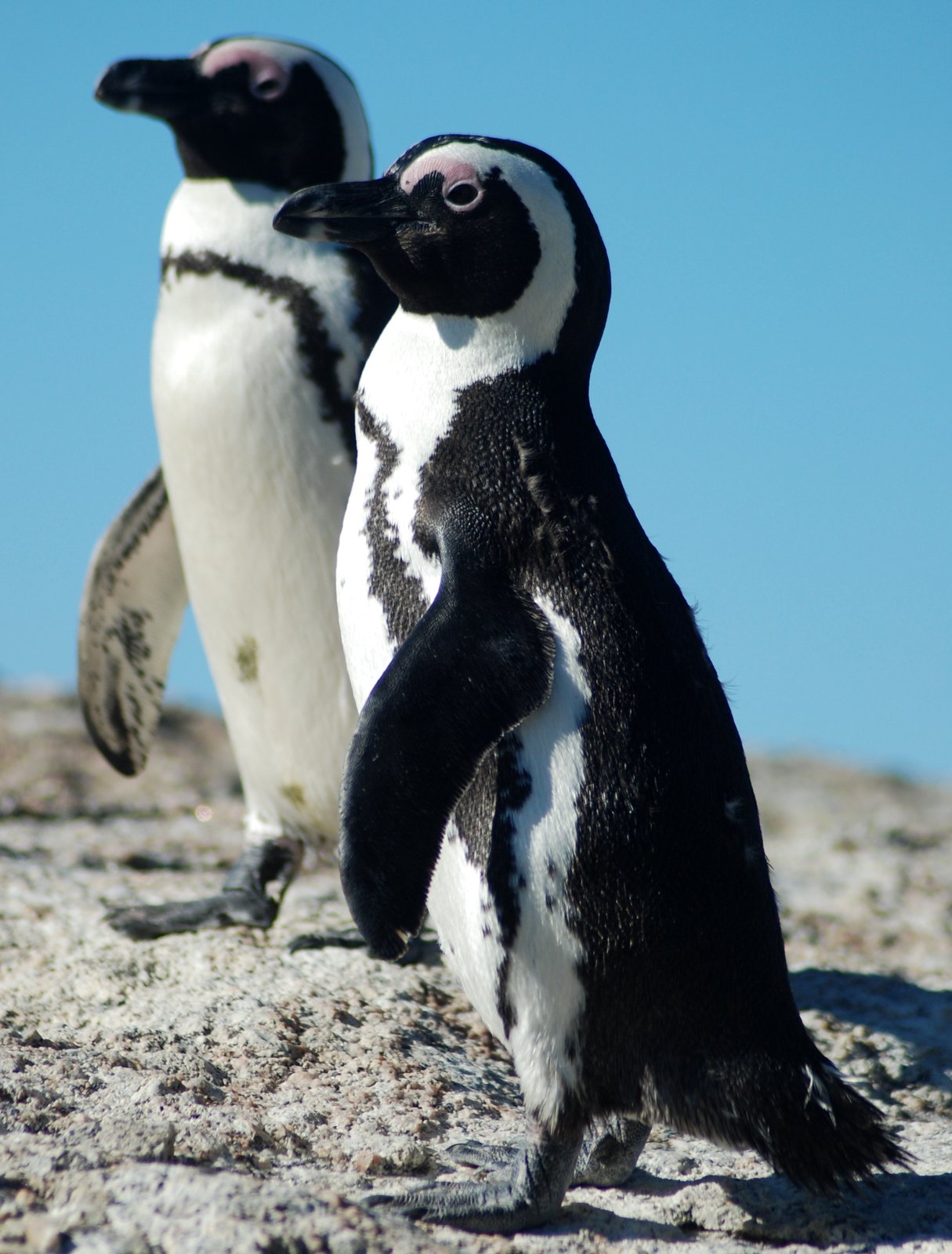
The plumage is sharply two-toned: black or slate grey on the back and upper wing, white below, a countershading that hides the bird from above against dark water and from below against the light. The specific characters lie mainly on the head and breast: in Spheniscus one or two black breast bands, a white horseshoe-shaped line around the head and bare pink skin above the eye that sheds heat; in Eudyptes projecting yellow eyebrow plumes; in Aptenodytes orange ear patches and a long, slightly decurved bill. One species breeds on the mainland coast and inshore islands, in burrows dug into guano or sand or under bushes and boulders, with two eggs and an incubation of about forty days; the pair relieve one another and feed by day within a few tens of kilometres of the colony. Species of the subantarctic islands and the Southern Ocean reach the southern coasts only as vagrants, usually as moulting or weakened birds on beaches. Under water they swim with wingbeats at over ten kilometres an hour and dive routinely to a few tens of metres.
Native species 6 species
Species that occur here by nature: breeding birds, winter visitors and passage migrants. They are arranged by genus, in the sequence of the list.
Aptenodytes 1 species

Pygoscelis 1 species

Eudyptes 3 species


Spheniscus 1 species
Vagrants 2 species
Birds blown in from other continents. They have no range here, and so no distribution map.