All species › Birds of prey › Hawks, eagles and kites › Booted Eagle
Booted Eagle | Hieraaetus pennatus
Dwergarend | Águila Calzada
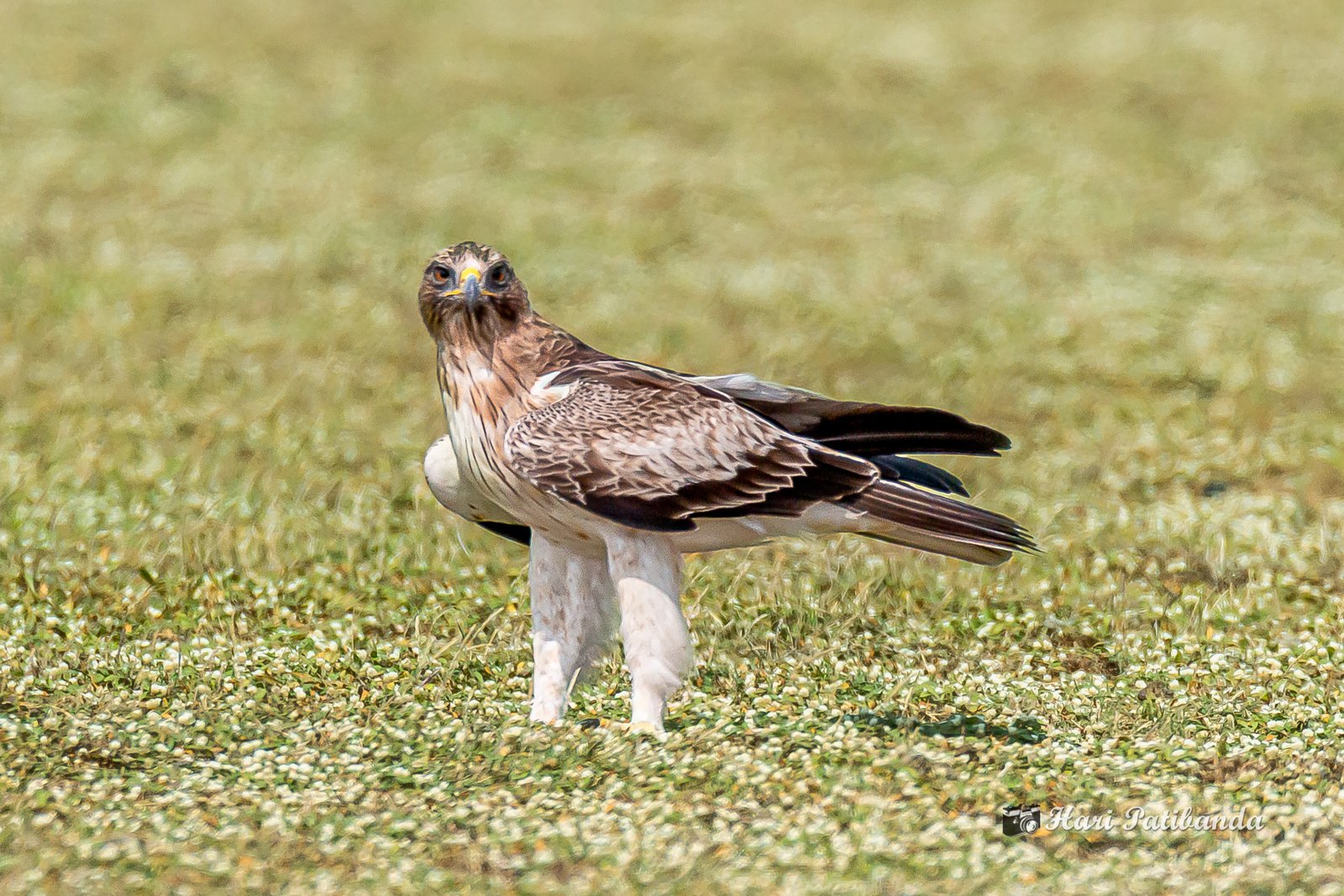
The Booted Eagle is a small, buzzard-like eagle with feathered legs and two clearly different colour morphs. Southern Africa has two populations: non-breeding visitors from Europe and North Africa, and a small breeding population that nests on cliffs in the Western and Northern Cape.
Voice
Rather noisy at the nest: a high, rapid klee-klee-klee-klee or a disyllabic whistled pee-yeh, especially in display flight. Non-breeding visitors are usually silent.
Recording: Stanislas Wroza — CC BY-NC-SA 4.0 · shortened to the first 60 s, mono · xeno-canto
Identification
45–55 cm, wingspan 110–135 cm. Buzzard-sized, but with longer, broader wings with six ‘fingers’ and a longer, square-ended tail. In both morphs a pale band across the median upperwing coverts, a pale patch on the uppertail coverts and two white ‘landing lights’ at the base of the wings are visible from above. The pale morph is creamy white below with black flight feathers that contrast sharply with the white underwing coverts; the inner primaries are paler. The dark morph is uniform brown to rufous-brown below, with a paler window in the inner primaries. The tail is greyish below, without clear bars. Juveniles resemble adults.
Confusion species
Wahlberg's Eagle Hieraaetus wahlbergi has narrower, parallel-edged wings, a longer, narrower tail, a small crest and no landing lights. Ayres's Hawk-Eagle Hieraaetus ayresii has heavily blotched underparts and a barred tail. Black Kite Milvus migrans has a forked tail. Common Buzzard Buteo buteo has bare legs, a barred tail and lacks the landing lights and pale uppertail coverts. African Harrier-Hawk Polyboroides typus is grey and much larger.
Habitat
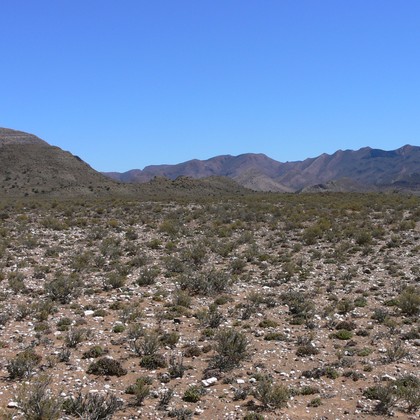
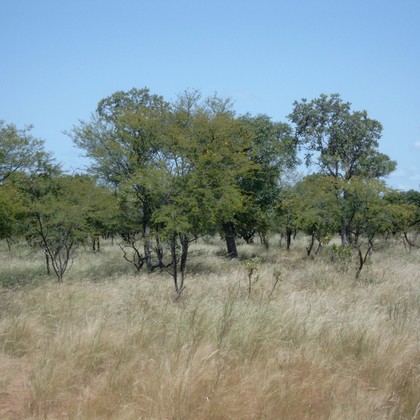
The breeding birds live in mountainous fynbos, renosterveld and the edges of the Karoo, with cliffs or gorges for the nest. Non-breeding visitors occur in open savanna, thornveld, woodland and farmland. It hunts mainly birds, such as doves, starlings and larks, also lizards and rodents, often after a stoop from a great height.
Where the bird is most at home, classified by the vegetation units of southern Africa.

Range and movements
European and North African birds are widespread but scarce in the savannas of the north and centre of the region: Namibia, Botswana, Zimbabwe, Zambia, northern South Africa and the west too. The resident breeding population nests in the Western Cape, the Northern Cape (Namaqualand) and the western Karoo, and possibly in southern Namibia; after breeding it moves north to Namibia and Botswana. Beyond the region the species breeds from North Africa and Spain to central Asia and winters in Africa south of the Sahara and in India.
- Resident
- Summer visitor (c. Oct–Mar)
- Winter visitor (c. Apr–Sep)
- Passage (Mar–Apr, Oct–Nov)
- dark = core range, pale = thinly spread
How and when to look
In the Western Cape breeding Booted Eagles can be seen in spring (September–November) over gorges in the Cederberg, the mountains around Cape Town and the Karoo. A soaring pale morph is unmistakable from the contrast between white coverts and black flight feathers. With a dark morph the landing lights, the pale band on the upperwing and the pale rump are the key.
Conservation status
Not threatened. The South African breeding population is small but appears to have increased since the mid-twentieth century, possibly helped by the planting of trees and the increase of doves in farmland. Poisoning and electrocution are local risks.
Scientific name
Hieraaetus pennatus | (Gmelin, 1788)
Gmelin described the species in 1788 as Falco pennatus; because it was later moved to another genus, the author and year stand in brackets. The genus Hieraaetus was introduced in 1844 by Kaup. Hieraaetus is Greek, from hierax 'hawk' and aetos 'eagle'. pennatus is Latin for 'feathered', after the legs feathered down to the toes. The specimen the first description was based on came from not stated in the original description.