All species › Birds of prey › Hawks, eagles and kites › Cape Vulture
Cape Vulture | Gyps coprotheres
Kaapse gier | Buitre del Cabo
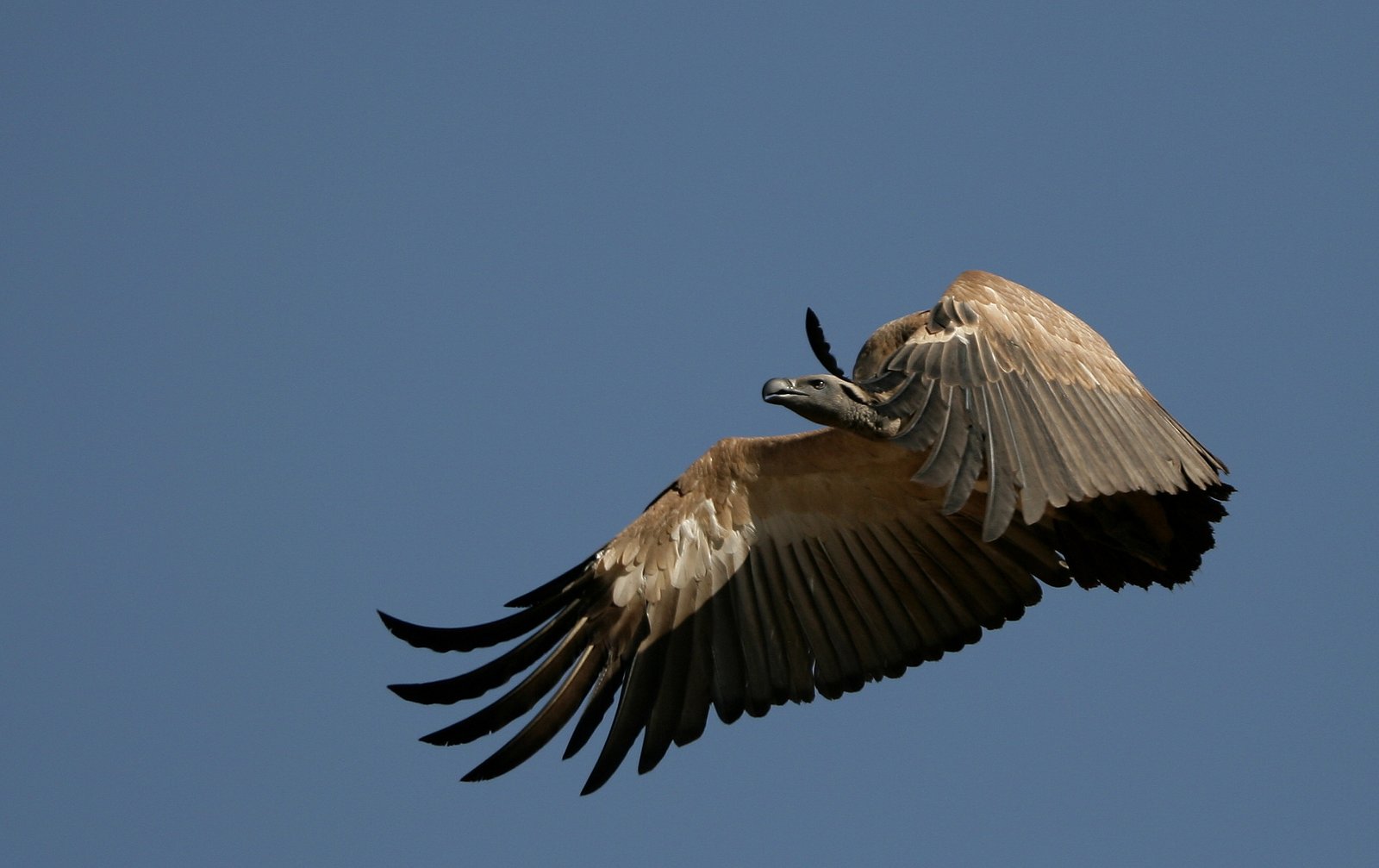
The Cape Vulture is the only vulture endemic to southern Africa and the largest griffon in the region. It breeds in colonies on sheer cliffs and forages over great distances above grassland and savanna, spotting the carcasses of livestock and game with its keen eyesight.
Voice
Noisy at carcasses and roosts: cackling, hissing, growling and high screams. In the colony croaking and cooing between neighbours.
Recording: W.J. Rossouw — CC BY-NC-SA 4.0 · shortened to the first 60 s, mono · xeno-canto
Identification
About 105 cm, wingspan more than two and a half metres. The adult is pale cream to pale sandy, with dark flight feathers and a dark tail; the greater wing coverts show a row of dark spots. The head and long neck are bare and bluish-grey, with two bare blue skin patches at the base of the throat and a ruff of pale feathers. The eye is pale yellow to honey-coloured, the bill black. Juveniles are darker, rufous-brown with pale streaks, have a pink to red neck and a dark eye, and become paler over six to seven years. In flight the underwing is pale with less sharp contrast between coverts and flight feathers than in White-Backed Vulture, with a dark trailing edge.
Confusion species
White-Backed Vulture (Gyps africanus) is smaller and, as an adult, darker, with a dark eye, a white lower back and a more contrasting underwing; young birds of the two are hard to separate, although the young Cape Vulture is more coarsely streaked and larger. Rüppell's Vulture (Gyps rueppelli) is darker with heavily scaled upperparts and a yellowish bill. Bearded Vulture (Gypaetus barbatus) of the high mountains has narrow, pointed wings and a long wedge-shaped tail.
Habitat
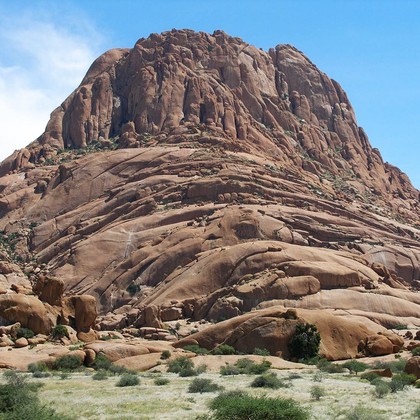
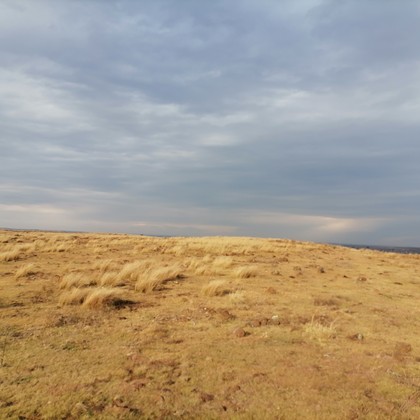
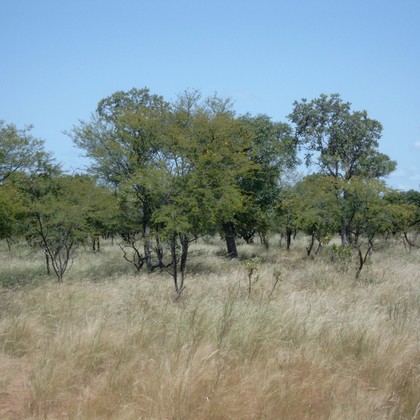
Open grassland, mountainous country, the edges of the Karoo and open savanna, often on livestock farms. It breeds and roosts on ledges of sheer cliffs in mountains and gorges, especially on south- or east-facing faces; outside the breeding season it also roosts on power pylons. It forages up to hundreds of kilometres from the colony and regularly visits vulture restaurants supplied with meat.
Where the bird is most at home, classified by the vegetation units of southern Africa.
Range and movements
Almost endemic to the region. Breeding colonies lie in South Africa in Limpopo (Blouberg, Kransberg), North West (Magaliesberg), Mpumalanga, KwaZulu-Natal and the Drakensberg, the Eastern Cape and at Potberg in the Western Cape, as well as in Lesotho and eastern Botswana (including Mannyelanong). Foraging and wandering birds reach Eswatini, Namibia, Zimbabwe and southern Mozambique; it has disappeared as a breeder from Namibia and Zimbabwe. Beyond the region only as a rare vagrant.
- Resident
- Summer visitor (c. Oct–Mar)
- Winter visitor (c. Apr–Sep)
- Passage (Mar–Apr, Oct–Nov)
- dark = core range, pale = thinly spread
How and when to look
Visit a vulture restaurant, for example in the Drakensberg (Giant's Castle), in the Magaliesberg or at Potberg, or watch the cliffs of a breeding colony in the morning when the birds leave on the first thermals. The pale yellow eye and blue throat patches are easy to see on a resting bird; the pale colour and size make it stand out at once among White-Backed Vultures.
Conservation status
Vulnerable on the Red List, having previously been classed as Endangered; after a long decline the population has stabilised in parts of its range thanks to vulture restaurants, colony protection and the modification of power lines. Collisions and electrocution on pylons, poisoning (incidental and for traditional use), lead poisoning, drowning in reservoirs and disturbance at colonies remain important threats.
Scientific name
Gyps coprotheres | (Forster, 1798)
Forster described the species in 1798 as Vultur Coprotheres; because it was later moved to another genus, the author and year stand in brackets. The genus Gyps was introduced in 1809 by De Savigny. Gyps is Greek gups 'vulture'. coprotheres comes from Greek kopros, 'dung', and thēraō, 'to hunt': 'dung-hunter', for its scavenging on refuse and carrion. The specimen the first description was based on came from South Africa.