All species › Passerines › Chats and flycatchers › Capped Wheatear
Capped Wheatear | Oenanthe pileata
Aardtapuit | Collalba Capirotada
The Capped Wheatear is the upright wheatear of bare, short-grazed or burnt ground, with a black cap and a broad black breast band that encircles the white throat like a collar. It breeds in rodent and springhare burrows and sings in a fluttering song flight. In winter many birds move north from the cold interior.
Voice
A varied, chattering song of harsh and whistled notes, chee-chuk-weet-chirr, rich in imitations of other birds, delivered from a termite mound or in a short fluttering song flight with the tail spread. The call is a sharp chik-chik, also heard at night.
Recording: Ehren Eksteen — CC BY-NC-SA 4.0 · converted to mono · xeno-canto
Identification
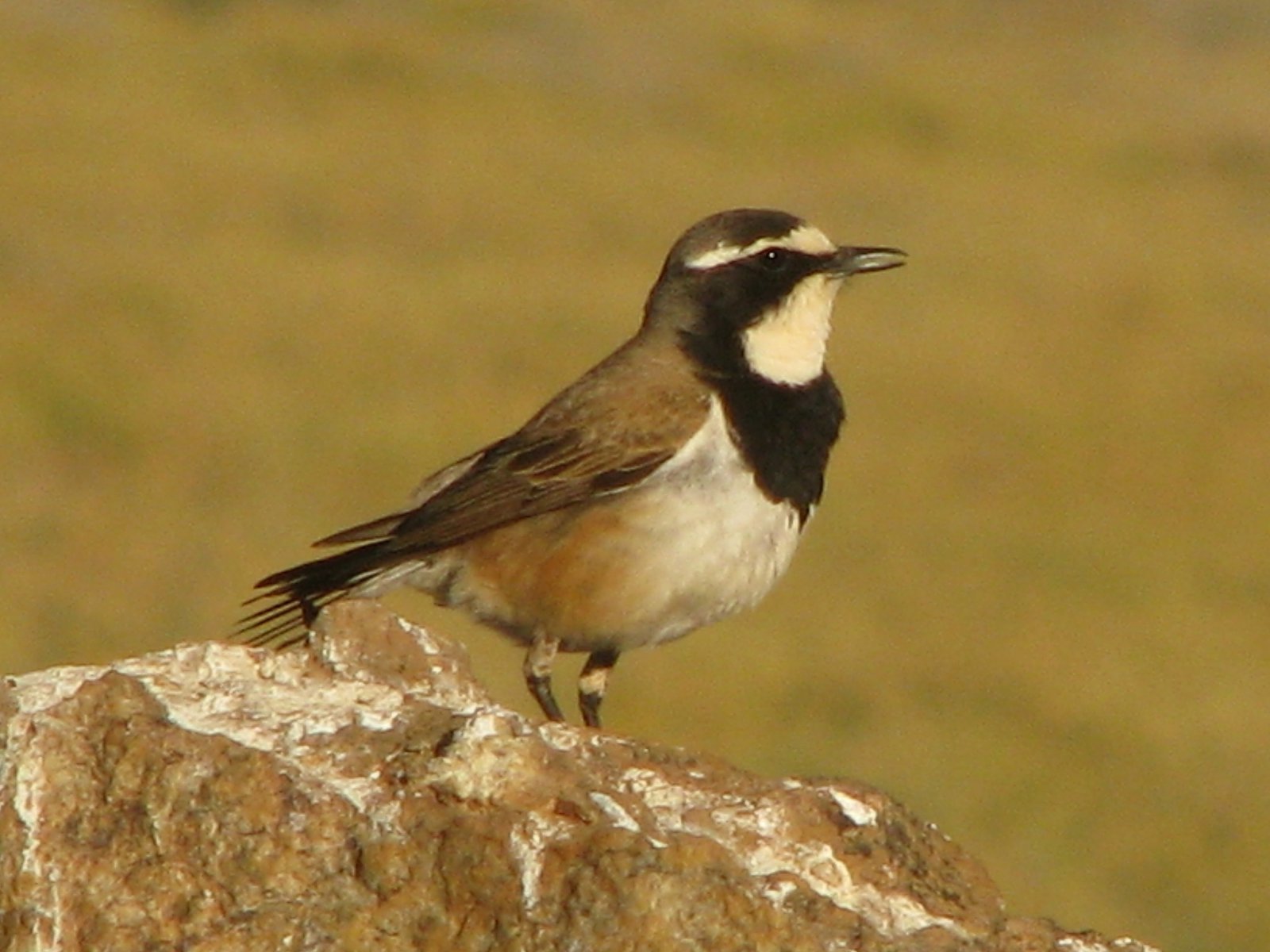
A long-legged wheatear of 17 to 18 cm. Adults have a white forehead and a white supercilium below a black crown, a black mask that continues into a broad black breast band, a white throat and white underparts washed brown on the flanks. The back is warm greyish-brown, the rump white and the tail black with a white base, forming a black inverted T. The sexes are alike. Juveniles lack the black on head and breast: they are brown with fine pale spots on the upperparts and a faint dark breast band. It stands very upright, runs fast and bobs its tail.
Confusion species
Northern Wheatear (Oenanthe oenanthe) is smaller and shorter-legged, with no black cap or breast band and no spotted upperparts; in the region it is a rare visitor. Buff-Streaked Chat (Campicoloides bifasciatus) has a black face and throat but a streaked brown back, a buff rump and no white in the tail. Sickle-Winged Chat (Emarginata sinuata) lacks black on head and breast and has a rufous rather than white tail base.
Habitat
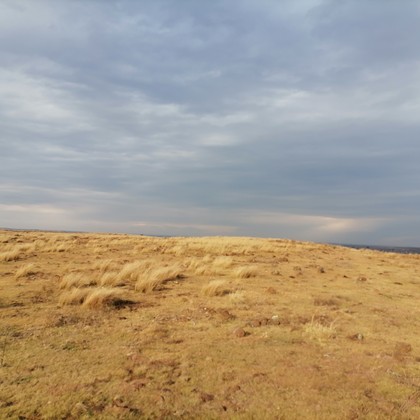
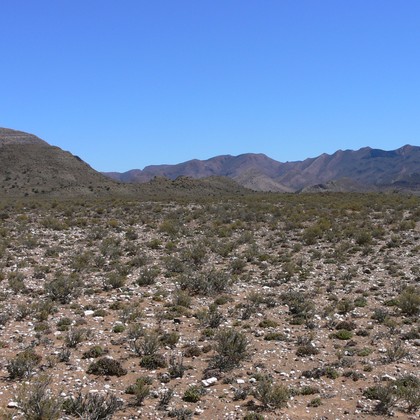
Short-grazed or burnt grassland, bare Karoo plains, dry pan edges, fallow land, fields after harvest and airfields, anywhere the vegetation is low and the ground open. Forages on the ground for beetles, ants and termites. Nests in the burrow of a rodent, springhare or aardvark.
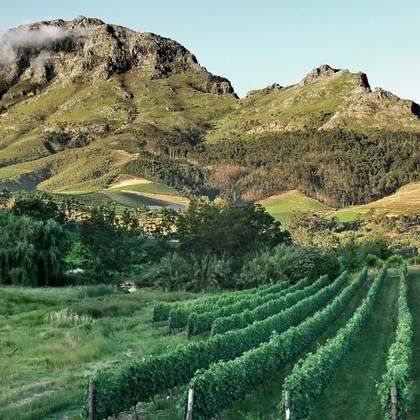
Where the bird is most at home, classified by the vegetation units of southern Africa.
Range and movements
Widespread across the whole region except dense woodland and the humid coastal plain of Mozambique. Breeds commonly in summer on the Highveld, in the Free State, the Karoo, Namibia and Botswana; after breeding many birds move north from April to August to Zimbabwe, Zambia and Mozambique, while further north, in Angola and Zambia, there are also resident birds. Beyond the region north to Kenya, Uganda and southern Ethiopia.
- Resident
- Summer visitor (c. Oct–Mar)
- Winter visitor (c. Apr–Sep)
- Passage (Mar–Apr, Oct–Nov)
- dark = core range, pale = thinly spread
How and when to look
Look for it after a veld fire or on freshly grazed grassland on the Highveld and in the Free State, from September to March. Drive slowly and watch for upright birds on termite mounds and molehills. Juveniles with their spotted backs often cause confusion with Northern Wheatear; note the faint dark breast band and the robust build.
Conservation status
Not threatened. The species benefits from grazing and regular fires that keep the ground open. It disappears locally where grassland is converted to plantations or intensive cropping.
Scientific name
Oenanthe pileata | (Gmelin, 1789)
Gmelin described the species in 1789 as Motacilla pileata; because it was later moved to another genus, the author and year stand in brackets. The genus Oenanthe was introduced in 1816 by Vieillot. Oenanthe was used by Aristotle for a bird that can no longer be identified; the word comes from the Greek oinos, oinoē 'wine, vine' and anthos 'flower, bloom'. pileata is Latin for 'capped', from pileus, 'felt cap' — for the black crown and breast band. The specimen the first description was based on came from Cape of Good Hope.