All species › Cuckoos › Cuckoos › Common Cuckoo
Common Cuckoo | Cuculus canorus
Koekoek | Cuco Común
The cuckoo that heralds spring in Europe spends part of the northern winter in the woodlands of southern Africa. Here it is almost always silent, making it more an identification puzzle than a familiar voice.
Voice
Almost silent in Africa. Occasionally, mainly just before departure in March and April, the familiar cuck-oo may be heard, the second note clearly lower than the first. The female has a bubbling trill.
Recording: Aku Kalliomäki — CC BY-NC-SA 4.0 · converted to mono · xeno-canto
Identification
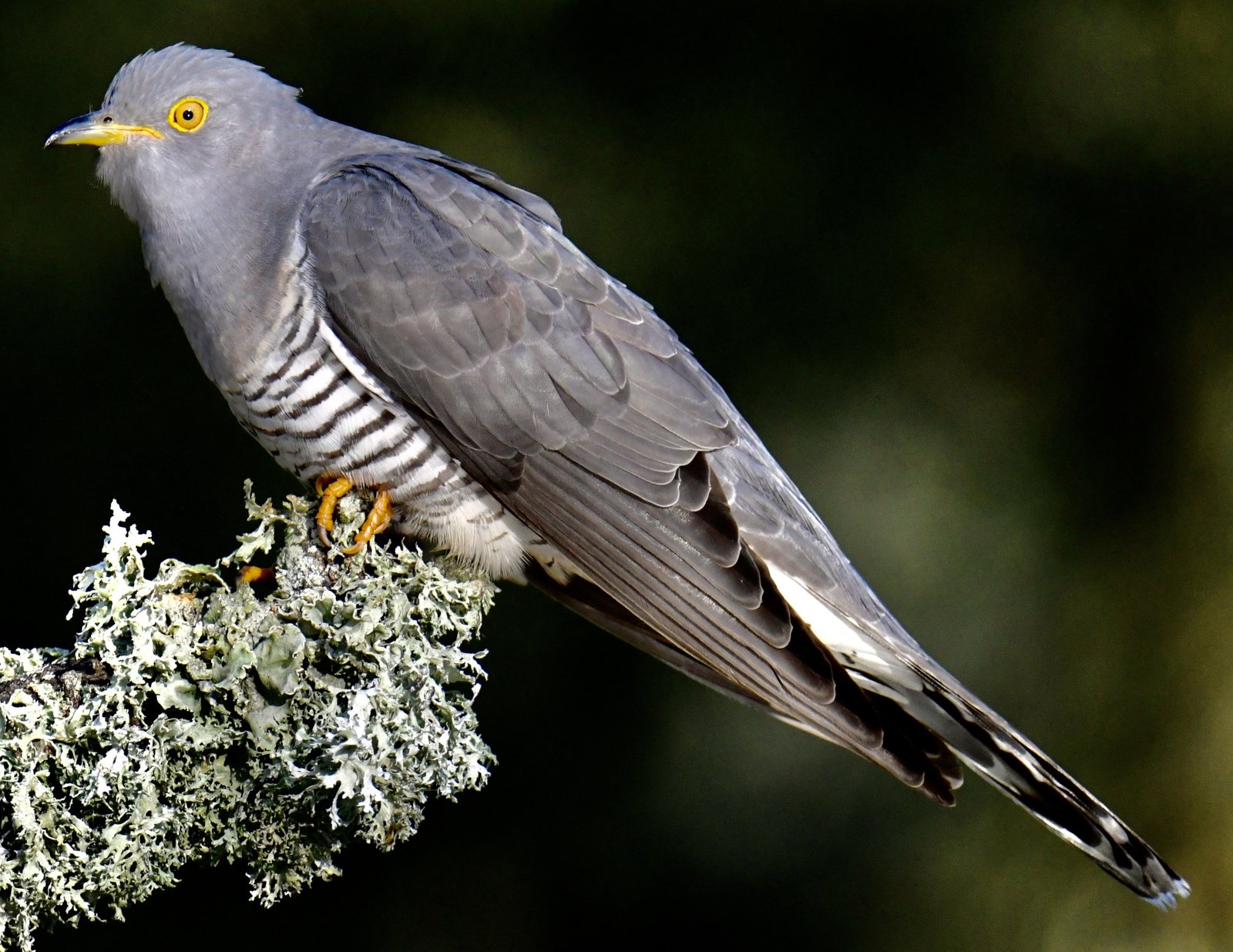
About 32 to 34 cm long and around 110 grams in weight; slim, with a long tail and pointed wings, falcon-like in flight with wingbeats that do not rise above the back. The male and most females are slate-grey above, on the head and breast, with a white, finely dark-barred belly; females often show a rufous wash on the upper breast. A rare rufous (hepatic) female morph is rusty brown throughout with black barring. The bill is dark with only a little yellow at the base; eye-ring and legs yellow. The outer tail feathers show white spots on the underside and a white tip. First-year birds, which are frequent here, are grey-brown with white feather edges and a white nape patch.
Confusion species
African Cuckoo (Cuculus gularis) is almost identical; it has more yellow on the bill (over half, with a dark tip) and complete white bars across the outer tail feathers, and it calls freely in the austral summer. Madagascar Cuckoo (Cuculus rochii) is smaller and occurs here only from April to September. Red-Chested Cuckoo (Cuculus solitarius) is darker grey with a rufous breast, Black Cuckoo (Cuculus clamosus) largely black. Shikra (Tachyspiza badia) has a hooked bill and rounder wings.
Habitat
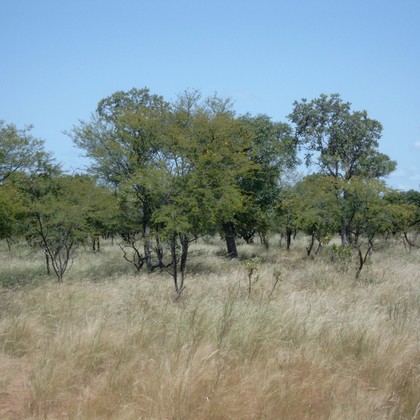
Woodland of all kinds, from miombo and mixed broadleaf woodland to acacia savanna and forest edges, sometimes gardens and plantations. It searches mainly for hairy caterpillars, often low in trees or on the ground. It does not breed in Africa; in Europe and Asia it is a brood parasite of small songbirds among others.
Where the bird is most at home, classified by the vegetation units of southern Africa.


Range and movements
Part of the European and Asian population winters in the north and east of the region: Angola, Zambia, Malawi, Mozambique, Zimbabwe, northern Botswana and Namibia and north-eastern South Africa. It becomes rapidly scarcer to the south and west. Most Common Cuckoos winter further north, in the forests and savannas around the Congo Basin.
- Summer visitor (c. Oct–Mar)
- Passage (Mar–Apr, Oct–Nov)
- dark = core range, pale = thinly spread
How and when to look
Do not assume that every silent grey cuckoo in the austral summer is a Common Cuckoo: check the bill and the underside of the tail, preferably on a photograph. A grey Cuculus that is silent between November and February and has little yellow on the bill is a good candidate. First-year birds, with their brown, scaly plumage, are actually the easiest to identify.
Conservation status
Not threatened. The global population is huge. In parts of western Europe the species has declined sharply in recent decades, probably through loss of large insects, changes among host species and problems on migration. In southern Africa it is a small, inconspicuous winterer whose numbers here are poorly known.
Scientific name
Cuculus canorus | Linnaeus, 1758
Linnaeus described the species in 1758 and placed it straight away in the genus where it still stands. He introduced the genus Cuculus in that same work. Cuculus is the Latin word for the cuckoo. canorus is Latin for 'melodious, tuneful', from canere 'to sing'. The specimen the first description was based on came from Sweden.