All species › Waders, gulls and terns › Buttonquails › Fynbos Buttonquail
Fynbos Buttonquail | Turnix hottentottus
Fynbosvechtkwartel | Torillo Hotentote
The Fynbos Buttonquail is a small, extremely secretive buttonquail found only in the fynbos of the Western and Eastern Cape, making it one of South Africa's endemics. Long treated as a subspecies of Black-Rumped Buttonquail, it is regarded as one of the hardest birds to see in the Cape Floral Kingdom.
Voice
A low, hollow hoot by the female, oooo-oooo, soft and rarely heard; virtually silent outside the breeding season.
Recording: Eastern Cape Birding — CC BY-NC-SA 4.0 · converted to mono · xeno-canto
Identification
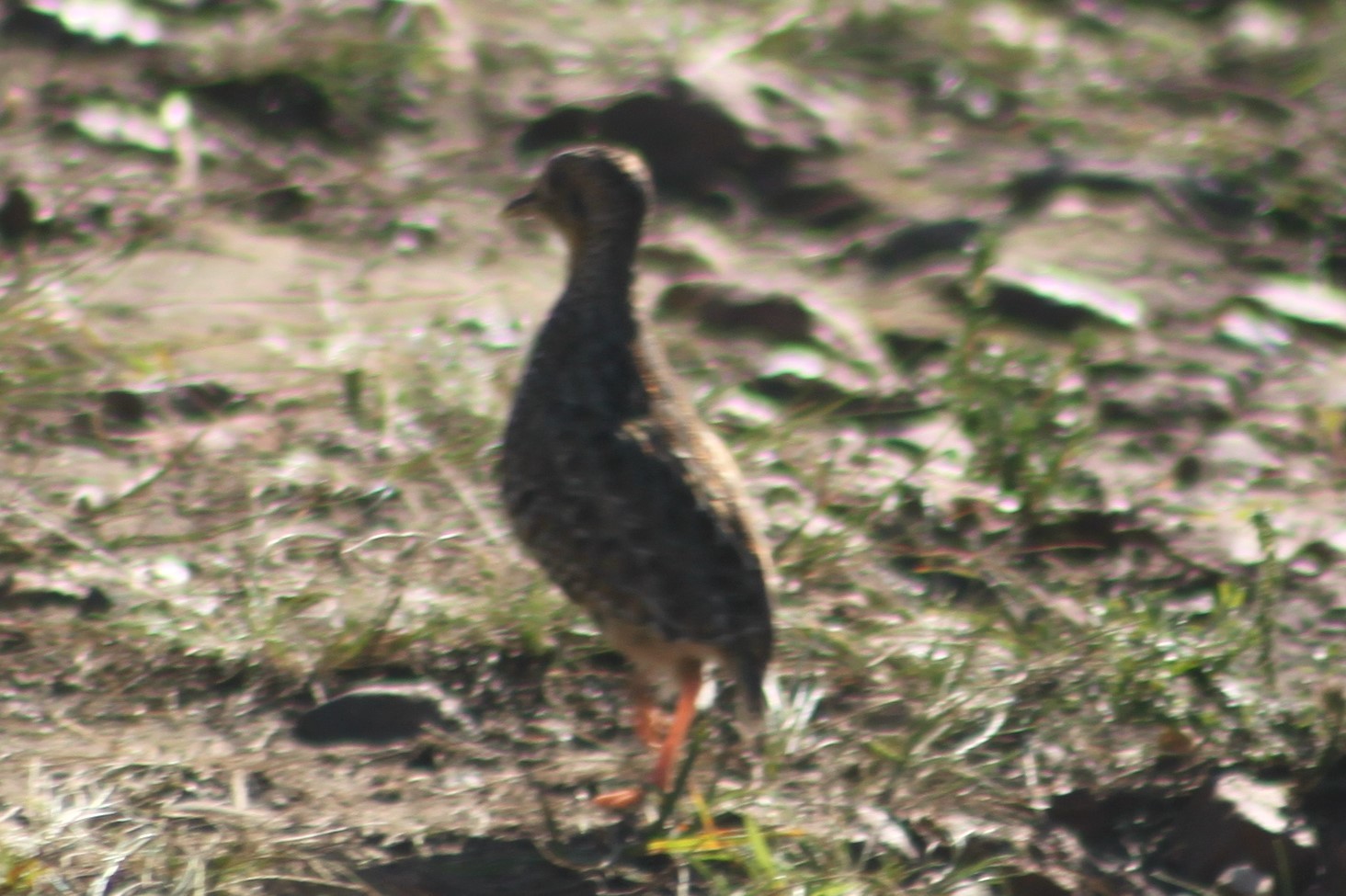
14–15 cm. The upperparts are dark brown with creamy scales and streaks, with a blackish back and rump. The face and throat are light orange-buff, less extensive and less rufous than in Black-Rumped Buttonquail; the breast is pale ochre with many black round and crescent-shaped spots extending onto the flanks, and the belly is white. The eye is dark, the bill bluish grey and the legs flesh-coloured. The female is larger and warmer-coloured than the male. It flies low and briefly, with pale wing coverts against dark flight feathers and a dark back.
Confusion species
Black-Rumped Buttonquail Turnix nanus has a deeper rufous face and breast with fewer spots and lives in grassland further east; contact is possible in the Eastern Cape. Common Buttonquail Turnix sylvaticus has a pale eye and a brown back and is absent from fynbos. Common Quail Coturnix coturnix also occurs in fynbos but is larger and flies further and more strongly.
Habitat
Fynbos and renosterveld with open patches among low shrubs, preferably one to three years after a fire, while the vegetation is still low and open; it becomes scarce in old, dense fynbos. It eats seeds, young shoots and insects that it scratches from the litter with its feet.
Where the bird is most at home, classified by the vegetation units of southern Africa.


Range and movements
Endemic to South Africa: the fynbos of the Western Cape, from the Cape Peninsula and the Cederberg area eastwards into the western Eastern Cape (around Gqeberha). Local and scarce, with the best sites in protected mountain areas and nature reserves. Not known outside South Africa.
- Resident
- Summer visitor (c. Oct–Mar)
- Winter visitor (c. Apr–Sep)
- Passage (Mar–Apr, Oct–Nov)
- dark = core range, pale = thinly spread
How and when to look
The chance is best in fynbos burnt one to three years earlier, for example in reserves on the Cape Peninsula or around the Overberg. Walk in a line with a few people through the low vegetation; a bird often flushes only when you nearly step on it and drops back in after a short distance. Avoid disturbing breeding birds in late winter and spring.
Conservation status
Not globally threatened, but listed as Endangered on the South African regional Red List. The species is declining through loss of fynbos to agriculture and development, invasive alien trees and a disrupted fire regime, with fires that are either too frequent or too rare.
Scientific name
Turnix hottentottus | Temminck, 1815
Temminck described the species in 1815 and placed it straight away in the genus where it still stands. The genus Turnix was introduced in 1791 by Bonnaterre. Turnix is an abbreviation of the genus name Coturnix, the Latin word for 'quail'. hottentottus refers to the Khoikhoi of the Cape, called 'Hottentots' by Europeans in the eighteenth and nineteenth centuries; the term was standard in the scientific naming of the period but is now considered offensive and is not used outside this name. The specimen the first description was based on came from Cape of Good Hope.