All species › Passerines › Swallows and martins › Greater Striped Swallow
Greater Striped Swallow | Cecropis cucullata
Kaapse zwaluw | Golondrina Cabecirrufa
The Greater Striped Swallow is a large, pale striped swallow of the open interior of southern Africa, with a pale orange-brown cap, a pale orange rump and finely streaked white underparts. It breeds almost only in the southern part of the region and moves to central Africa in the southern winter.

Voice
The song is a soft twittering cherp-cherp-chrrr, calmer and lower than that of the Lesser Striped Swallow and without a descending series. The call is a short nasal chissick or cherp.
Recording: Lynette Rudman — CC BY-NC-SA 4.0 · converted to mono · xeno-canto
Identification
18–20 cm, including the long tail streamers; bulkier and longer-winged than the Lesser Striped Swallow. The crown and nape are pale orange-brown, the ear coverts and cheeks dirty white, so that the cap ends above the eye. The back and wings are glossy blue-black, the rump pale orange to creamy orange, paler towards the tail. The underparts are white to pale cream with narrow, sparse dark streaks, mainly on throat and breast. The underwing coverts are pale buff. Juveniles have a duller, browner cap, a shorter tail and vaguer streaks. It flies on floating slow beats with long glides.
Confusion species
The Lesser Striped Swallow Cecropis abyssinica is smaller and more contrasting, with a dark rufous head extending below the eye, heavy black streaks and a deep orange-rufous rump. The Eastern Red-Rumped Swallow Cecropis daurica has a blue-black crown. The Red-Breasted Swallow Cecropis semirufa has unstreaked rufous underparts. The South African Cliff Swallow Petrochelidon spilodera also has a pale rump, but an almost square tail, a dark crown and a mottled breast. The combination of pale cap, white cheek and fine streaks is the best feature.
Habitat
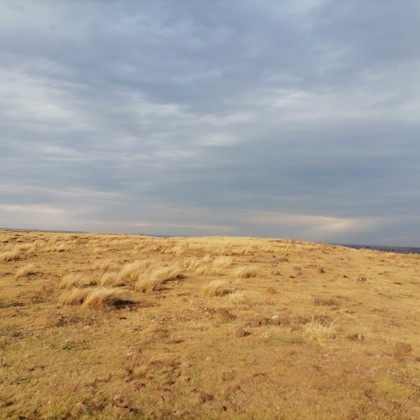
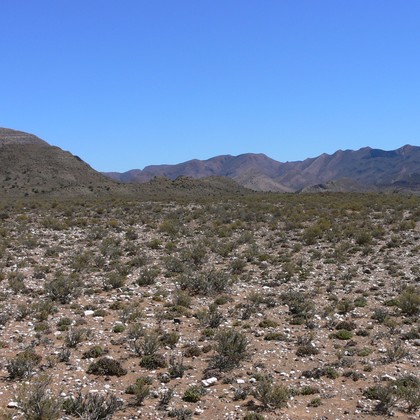
Open grassland, Karoo, fynbos and renosterveld and open savanna, from sea level high into the mountains; often near farms, bridges and cliffs. It builds a retort-shaped mud nest with an entrance tube under rock overhangs, eaves, bridges and culverts. It hunts flying insects, often fairly high over open country.
Where the bird is most at home, classified by the vegetation units of southern Africa.

Range and movements
Breeds in South Africa (almost throughout except the north-eastern lowveld), Lesotho, the highlands of Eswatini, central and southern Namibia, south-eastern Botswana and locally south-western Zimbabwe. From May to July it moves north to Angola, Zambia, southern DR Congo and south-western Tanzania; a few birds remain in the Western Cape in winter. It breeds only in southern Africa.
- Resident
- Summer visitor (c. Oct–Mar)
- Winter visitor (c. Apr–Sep)
- Passage (Mar–Apr, Oct–Nov)
- dark = core range, pale = thinly spread
How and when to look
From August to April in the open interior, such as the Highveld, the eastern Free State, Lesotho and the Karoo; look for the retort-shaped nests at bridges, farm buildings and rock overhangs. With a striped swallow always compare the head: in the Greater Striped Swallow the cheek is white and the cap pale, in the Lesser Striped Swallow the dark rufous extends below the eye.
Conservation status
Not threatened. The species is common in its breeding range and benefits from bridges, buildings and culverts as nest sites.
Scientific name
Cecropis cucullata | (Boddaert, 1783)
Boddaert described the species in 1783 as Hirundo cucullata; because it was later moved to another genus, the author and year stand in brackets. The genus Cecropis was introduced in 1826 by Boie. Cecropis is from Ancient Greek Kekropis, 'Athenian woman'. cucullata is Latin for 'hooded' — for the rufous crown that sits like a cap on the head. The specimen the first description was based on came from Cape of Good Hope.