All species › Tubenoses › Petrels and shearwaters › Kerguelen Petrel
Kerguelen Petrel | Aphrodroma brevirostris
Kerguelenstormvogel | Petrel de las Kerguelen
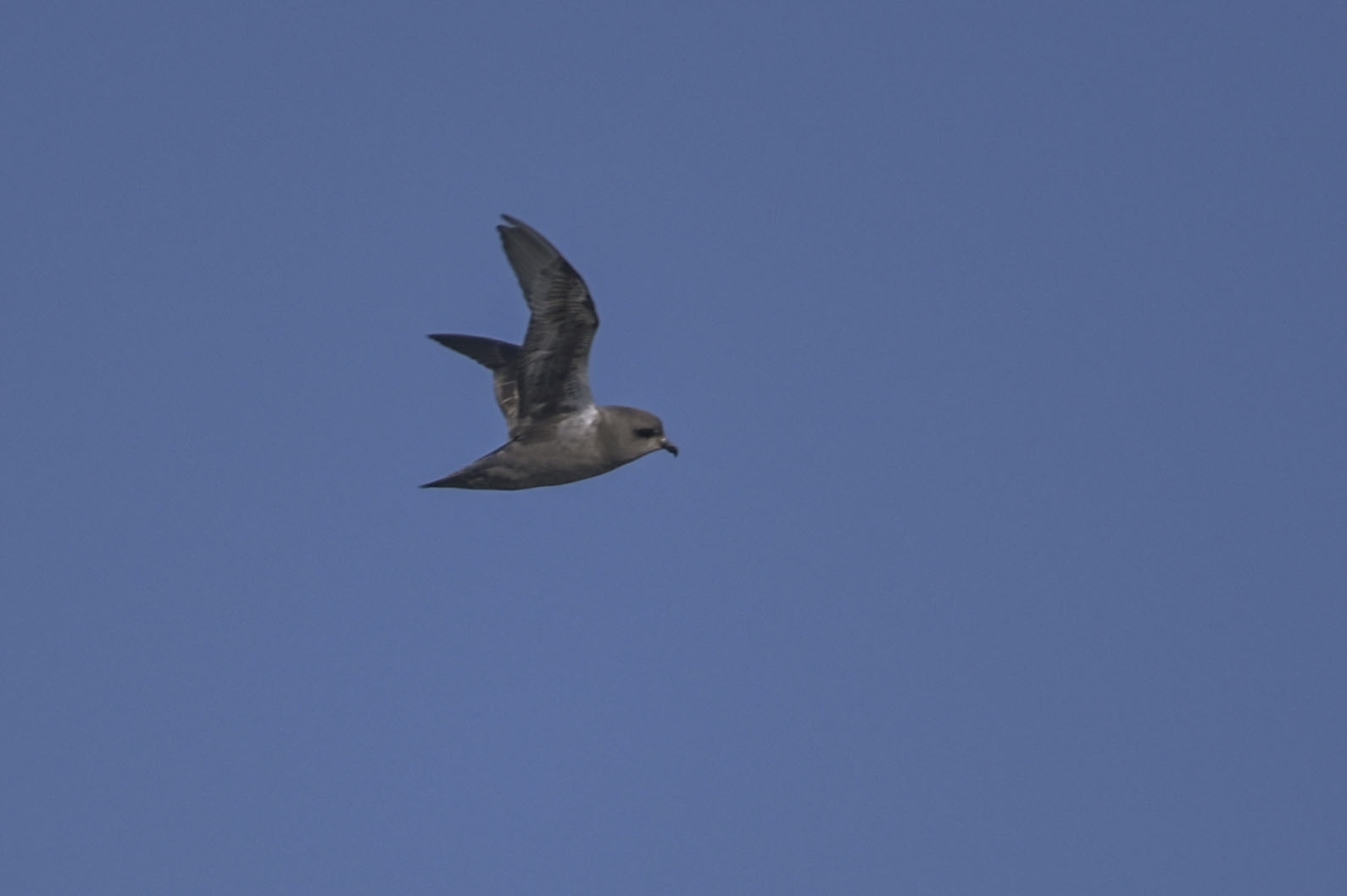
The Kerguelen Petrel is a compact, uniformly slate-grey petrel with a large head and a short bill, placed in a genus of its own. It breeds on the Prince Edward Islands and stands out for its high, hanging flight in steep arcs, even in light winds.
Voice
Silent at sea. At the breeding sites at night, in flight and from the burrows, a high, whistling and cooing tee-woo-oo, often repeated.
Recording: Hichem MACHOUK — CC BY-NC-SA 4.0 · converted to mono · xeno-canto
Identification
About 35 cm, stocky, with a strikingly large, rounded head, a short black bill and rather narrow, pointed wings. The plumage is wholly dark slate-grey with a silvery sheen, the head slightly darker and the face often with a dark patch in front of the eye. In good light pale scaly fringes show on the upperparts. The underwing is dark with a silvery patch at the base of the primaries and a pale line along the leading underwing coverts. The tail is fairly short and wedge-shaped; the legs are flesh-coloured with dark webs. The sexes and ages are alike. It flies with fast wingbeats and high, steep arcs, often seeming to hang motionless for a moment, and readily settles on the water.
Confusion species
Great-Winged Petrel (Pterodroma macroptera) is larger and blackish-brown, with longer wings, a heavier bill and a pale bill base, and lacks the silvery sheen. The dark morph of Soft-Plumaged Petrel (Pterodroma mollis) has a paler throat and a faint breast band. Sooty Shearwater (Ardenna grisea) has a longer, slender bill, a bright silvery-white underwing and a very different, low shearing flight.
Habitat
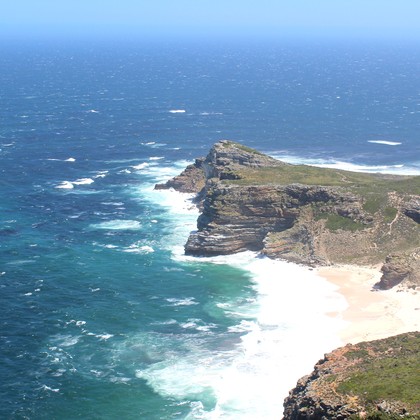
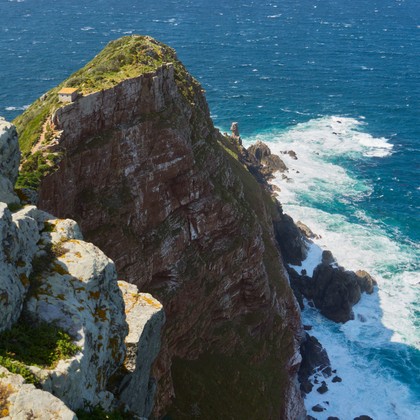
Cold open ocean around and south of the Subtropical Convergence, in winter north over the cool Benguela Current. It feeds mainly on squid, crustaceans and small fish, picked from the surface or taken in short dives, partly at night. It breeds in burrows in peaty, waterlogged soil on subantarctic islands.
Where the bird is most at home, classified by the vegetation units of southern Africa.
Range and movements
In the region a breeder on Marion and Prince Edward, where birds attend the colonies from the austral spring. Outside the breeding season a scarce and irregular winter visitor far off the Western and Southern Cape; after severe storms sometimes washed ashore in numbers, rarely off Namibia and KwaZulu-Natal. Beyond the region it breeds on Gough, Tristan da Cunha and the Crozet and Kerguelen islands, and wanders throughout the Southern Ocean.
How and when to look
The best chance is a pelagic trip out of Cape Town in July or August, straight after a strong cold front from the south-west. Watch for a grey petrel that shoots high above the horizon and briefly holds its wings still; that flight is distinctive even at long range. After winter storms the tideline along the west coast can also be worth checking.
Conservation status
Not threatened, with a large world population. On Marion the colonies long suffered from predation by cats; since their eradication things have improved. Introduced mice and rats on other breeding islands and the warming of the Southern Ocean remain concerns.
Scientific name
Aphrodroma brevirostris | (Lesson, 1831)
Lesson described the species in 1831 as Procellaria brevirostris; because it was later moved to another genus, the author and year stand in brackets. The genus Aphrodroma was introduced in 2000 by Olson. Aphrodroma comes from the Greek aphros, 'sea foam', and -dromos, 'racer' — 'foam-racer', for its fast flight low over the waves. brevirostris comes from the Latin brevis, 'short', and -rostris, 'billed' — for the short, stout bill. The specimen the first description was based on came from Not given.