All species › Passerines › Batises and wattle-eyes › Pale Batis
Pale Batis | Batis soror
Acaciavliegenvanger | Batis Pálido
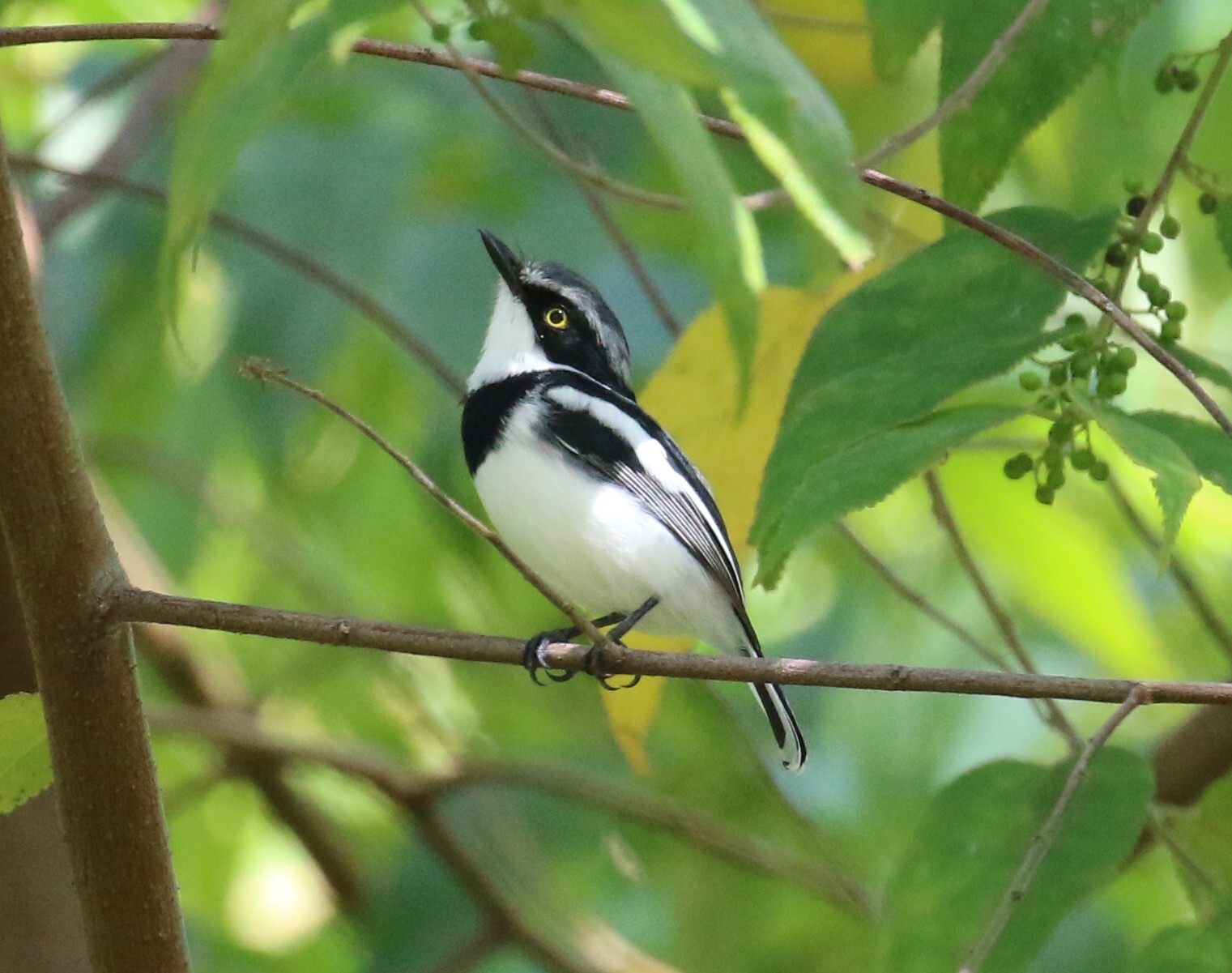
Pale Batis is a small, pale batis of the eastern lowlands. It closely resembles Chinspot Batis but is smaller and paler in tone and has a different voice. In the region it occurs mainly in Mozambique and southern Malawi.
Voice
A rapid series of high, whistled notes on one pitch, chee-chee-chee-chee, or a two-note too-tee, faster and higher than the descending three-note whistle of Chinspot Batis. Also dry chrr rattles and wing-fripping.
Recording: David C. Moyer — CC BY-NC-SA 4.0 · converted to mono · xeno-canto
Identification
10–11 cm. The male is pale blue-grey above, with a narrow white eyebrow, a black mask and a white wing stripe; white below with a narrow black breast band. The female has a pale, poorly defined cinnamon chin spot and a pale cinnamon-brown breast band. The eye is yellow. Smaller and more finely built than Chinspot Batis, with a shorter tail. It often forages high in the canopy.
Confusion species
Chinspot Batis Batis molitor is larger and darker grey, with a broader breast band and, in the female, a sharply defined, dark chestnut chin spot; where they meet, voice is the best feature. Woodwards' Batis Batis fratrum lacks a breast band and has an orange-washed breast. Cape Batis Batis capensis has rufous flanks and lives in montane forest.
Habitat
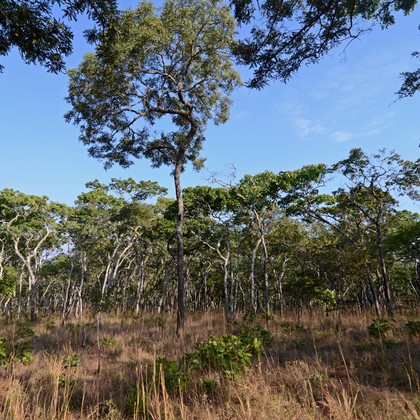
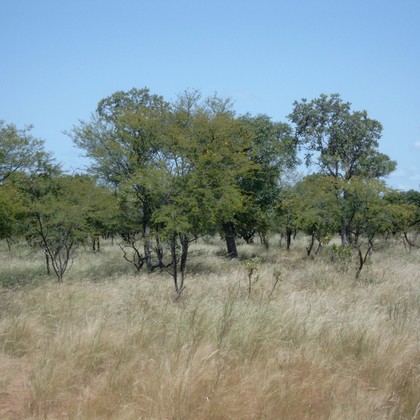
Miombo and other open lowland woodland, dry coastal forest, acacia thicket and riverine woodland, from sea level to about 1000 m. It often forages high in the canopy, alone, in pairs or in mixed flocks.
Where the bird is most at home, classified by the vegetation units of southern Africa.

Range and movements
In the region in northern and central Mozambique, south to about the Save River, and in southern Malawi and along Lake Malawi. Beyond the region in the lowlands and along the coast of eastern Tanzania to south-eastern Kenya.
- Resident
- Winter visitor (c. Apr–Sep)
- Passage (Mar–Apr, Oct–Nov)
- dark = core range, pale = thinly spread
How and when to look
Year-round. Gorongosa and the miombo woodlands of inland central Mozambique are good sites. Listen for the rapid, high whistled series to separate it from Chinspot Batis; only the voice and the female give certainty.
Conservation status
Not threatened; fairly common in suitable woodland. The miombo and coastal forest of Mozambique is increasingly cleared for farmland and charcoal, but the species tolerates some disturbance.
Scientific name
Batis soror | Reichenow, 1903
Reichenow described the species in 1903 and placed it straight away in the genus where it still stands. The genus Batis was introduced in 1833 by Boie. Batis is a Greek word for an unidentified worm-eating bird mentioned by Aristotle; Boie applied the name to these small African flycatchers in 1833. soror is Latin for 'sister', as the species closely resembles and is closely related to Chinspot Batis (Batis molitor). The specimen the first description was based on came from Songea, southern Tanzania.