All species › Waders, gulls and terns › Skuas › Parasitic Jaeger
Parasitic Jaeger | Stercorarius parasiticus
Kleine jager | Págalo Parásito
The Parasitic Jaeger is a slim, falcon-like seabird that gets much of its food by stealing, forcing terns and gulls in a wild chase to drop their catch. It is the most frequently seen jaeger along the coasts of southern Africa, and the only one regularly seen from land.
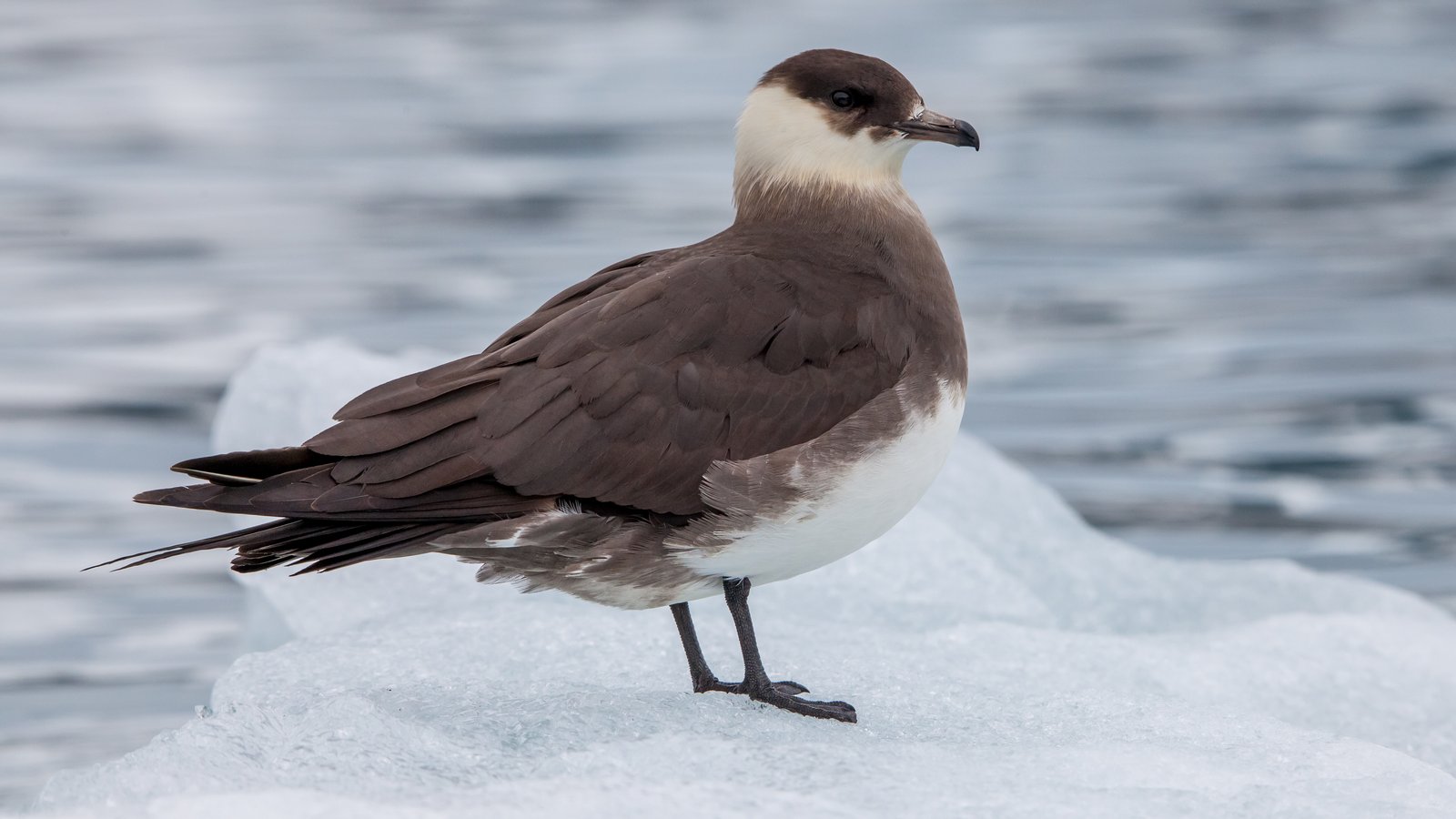
Colour forms

Voice
Almost silent at sea; occasionally a nasal, mewing ee-ah during chases.
Recording: Stanislas Wroza — CC BY-NC-SA 4.0 · converted to mono · xeno-canto
Identification
41–46 cm, including the short, pointed central tail projections. There are pale and dark morphs, with intermediates. Pale adults have a dark grey-brown cap, pale yellow cheeks, white underparts and often a faint grey breast band; dark adults are wholly dark grey-brown. In flight it shows a white patch at the base of the primaries, limited above to the shafts of three to five feathers. Juveniles are variable, usually warm rusty brown with barred under- and uppertail coverts and short, pointed tail tips. During the northern winter adults are often in moult and lack the tail projections. The flight is fast and agile.
Confusion species
Pomarine Jaeger Stercorarius pomarinus is bulkier and deeper-chested, with a broad wing base, a heavy two-toned bill, spoon-shaped tail projections in adults and slower wingbeats. Long-Tailed Jaeger Stercorarius longicaudus is slimmer and greyer above, without a breast band, with a smaller white wing flash and very long tail streamers; juveniles are cold grey-brown with sharply barred undertail. Brown Skua Stercorarius antarcticus is much larger and heavier, with broad wings and large white wing patches.
Habitat
Mainly close to the coast: bays, harbours, lagoons and estuaries, and out to some tens of kilometres offshore, wherever terns and gulls feed. It follows flocks of terns to their roosts and chases them from there until they drop their fish. It rests on the water or on sandbanks.
Where the bird is most at home, classified by the vegetation units of southern Africa.


Range and movements
Along the whole coast of the region, from Angola via Namibia and South Africa to Mozambique; most numerous along the west coast and around the Cape (including Walvis Bay, Saldanha Bay and False Bay), scarcer along the east coast. Exceptional inland. It breeds right around the Arctic on tundra and coasts and winters in the seas of the southern hemisphere.
- Summer visitor (c. Oct–Mar)
- Passage (Mar–Apr, Oct–Nov)
- dark = core range, pale = thinly spread
How and when to look
Watch large tern roosts, such as the lagoons at Walvis Bay and Langebaan, or seawatch from headlands. A tern flock suddenly taking flight is often the first sign; the jaeger follows every twist of its victim. Between October and April it can be seen from the beach on a good day.
Conservation status
Not threatened, with a very large world population. In the breeding areas some populations, as in Scotland, are declining sharply because of food shortages among the seabirds it steals from.
Scientific name
Stercorarius parasiticus | (Linnaeus, 1758)
Linnaeus described the species in 1758 as Larus parasiticus; because it was later moved to another genus, the author and year stand in brackets. The genus Stercorarius was introduced in 1760 by Brisson. Stercorarius is Latin for 'of dung', from stercus 'dung': the food disgorged by seabirds when pursued by skuas was once taken for excrement. parasiticus is Latin for 'parasitic', after the habit of robbing other seabirds of their catch. The specimen the first description was based on came from the coast of Sweden.