All species › Passerines › Swallows and martins › Pearl-Breasted Swallow
Pearl-Breasted Swallow | Hirundo dimidiata
Parelborstzwaluw | Golondrina Perlada
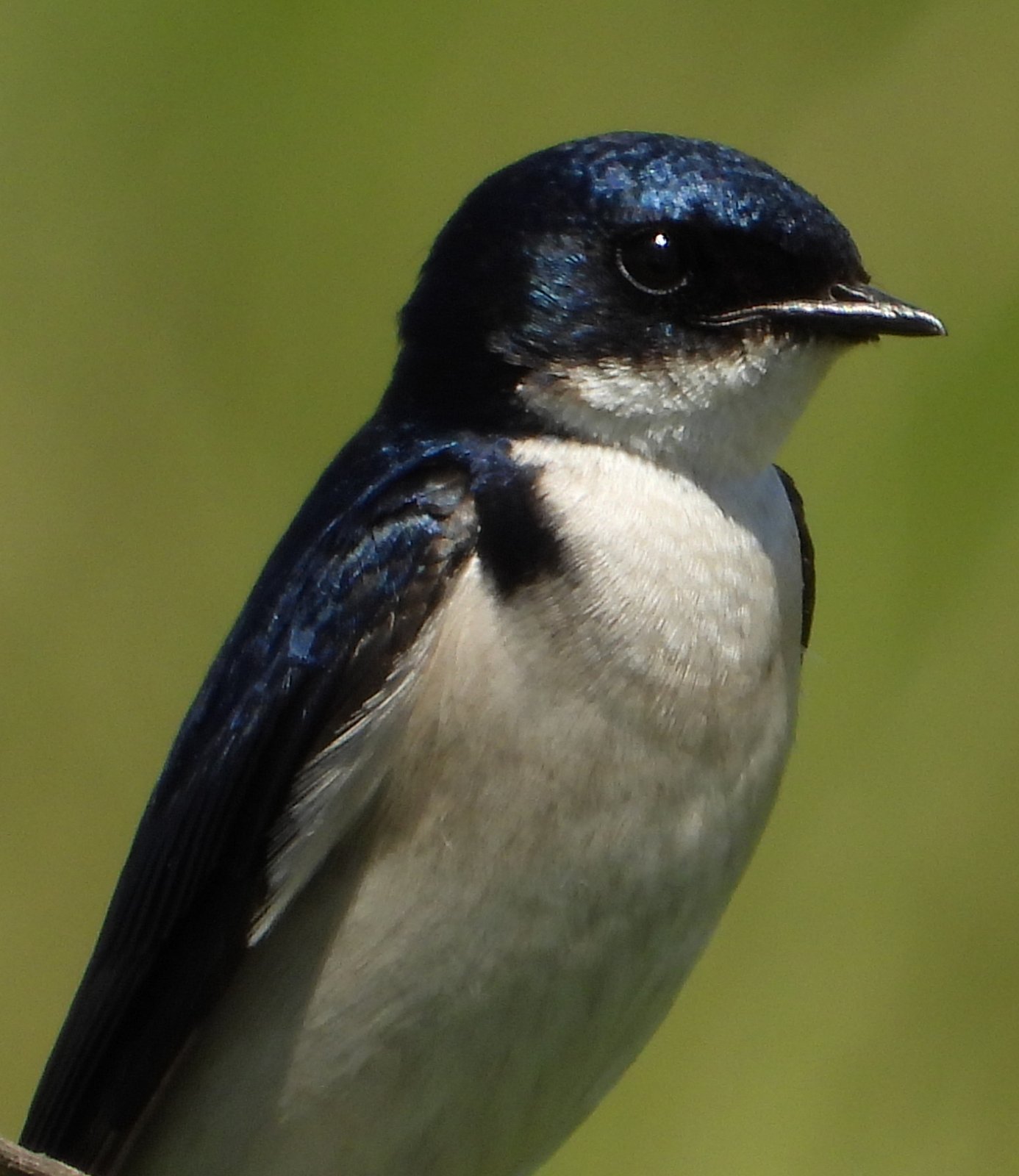
The Pearl-Breasted Swallow is a small, plain swallow, glossy blue-black above and entirely white below, with no breast band, rufous patches or long streamers. It is fairly scarce everywhere and, because of its simplicity, easily overlooked.
Voice
Not very vocal; a soft, high chip or cheep and a fine, dry twitter in flight.
Recording: Tim Cockcroft — CC BY-NC-SA 4.0 · shortened to the first 60 s, mono · xeno-canto
Identification
14 cm, small and slim, with a moderately forked tail without streamers and without white tail spots. Crown, back, rump and cheeks are glossy steel-blue; the blue cap extends below the eye. The throat and entire underside are pure white, sometimes with a grey wash on the breast sides; the underwing coverts are white to pale grey. The sexes are alike; juveniles are duller brownish black above. The flight is light and fast, with many short turns, often low.
Confusion species
White-Throated Swallow Hirundo albigularis has a rufous forehead, a black breast band and white tail spots. Wire-Tailed Swallow Hirundo smithii has a rufous crown, thin wire-like streamers and white tail spots. Grey-Rumped Swallow Pseudhirundo griseopyga has a grey-brown crown, a pale grey rump and a deeper tail fork. Western House Martin Delichon urbicum has a white rump. Juvenile Barn Swallows Hirundo rustica have a dark breast band and a buff throat.
Habitat
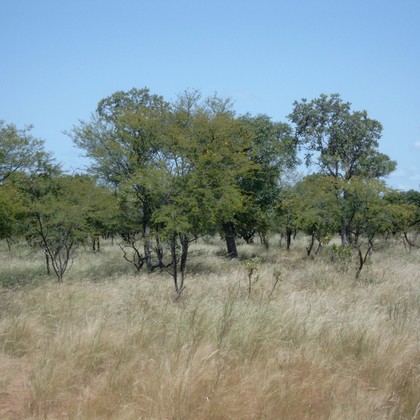
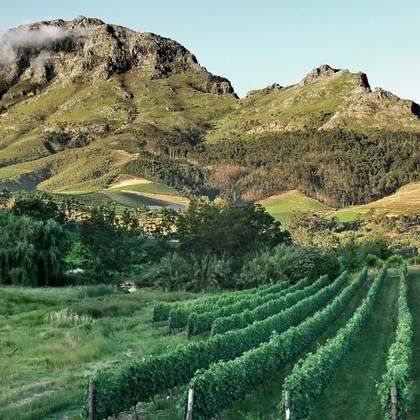
Open woodland, savanna, grassland with scattered trees and farmland, often around farmsteads, dry riverbeds and dams; in the west also in semi-desert. It breeds in sheds, under eaves, in wells, mine shafts, culverts and under bridges, and in aardvark burrows, where it builds an open mud nest bowl. It often hunts low over open ground.
Where the bird is most at home, classified by the vegetation units of southern Africa.

Range and movements
Widespread but patchy across the region: South Africa (mainly the interior, from the Western Cape to Limpopo), Lesotho, Eswatini, Namibia (mainly the centre and north), Botswana, Zimbabwe, Zambia, Malawi, Angola and western Mozambique. Birds from the south and south-west largely move north in winter (May–August). Beyond the region in southern DR Congo and south-western Tanzania.
- Resident
- Summer visitor (c. Oct–Mar)
- Winter visitor (c. Apr–Sep)
- Passage (Mar–Apr, Oct–Nov)
- dark = core range, pale = thinly spread
How and when to look
Look around farmsteads, wells and bridges in open woodland; the bird likes to perch on wires and twigs, where the entirely white underside without a breast band and the plain tail without streamers are easy to see. In the Western Cape mainly from September to April.
Conservation status
Not threatened, but fairly scarce everywhere. It has benefited locally from buildings and culverts as nest sites; a decline in insects due to agricultural chemicals may play a role.
Scientific name
Hirundo dimidiata | Sundevall, 1850
Sundevall described the species in 1850 and placed it straight away in the genus where it still stands. The genus Hirundo was introduced in 1758 by Linnaeus. Hirundo is the ordinary Latin word for 'swallow'. dimidiata is Latin for 'halved, divided in two' — probably for the sharp division between dark upperparts and white underparts. The specimen the first description was based on came from Leroma, former Transvaal, South Africa.