All species › Passerines › Waxbills › Red-Billed Firefinch
Red-Billed Firefinch | Lagonosticta senegala
Vuurvinkje | Amaranta Senegalesa
The Red-Billed Firefinch is the smallest and most common firefinch of the region, a pinkish-red finch that potters about on the ground in villages, camps and dry savanna. It is the host of the Village Indigobird.
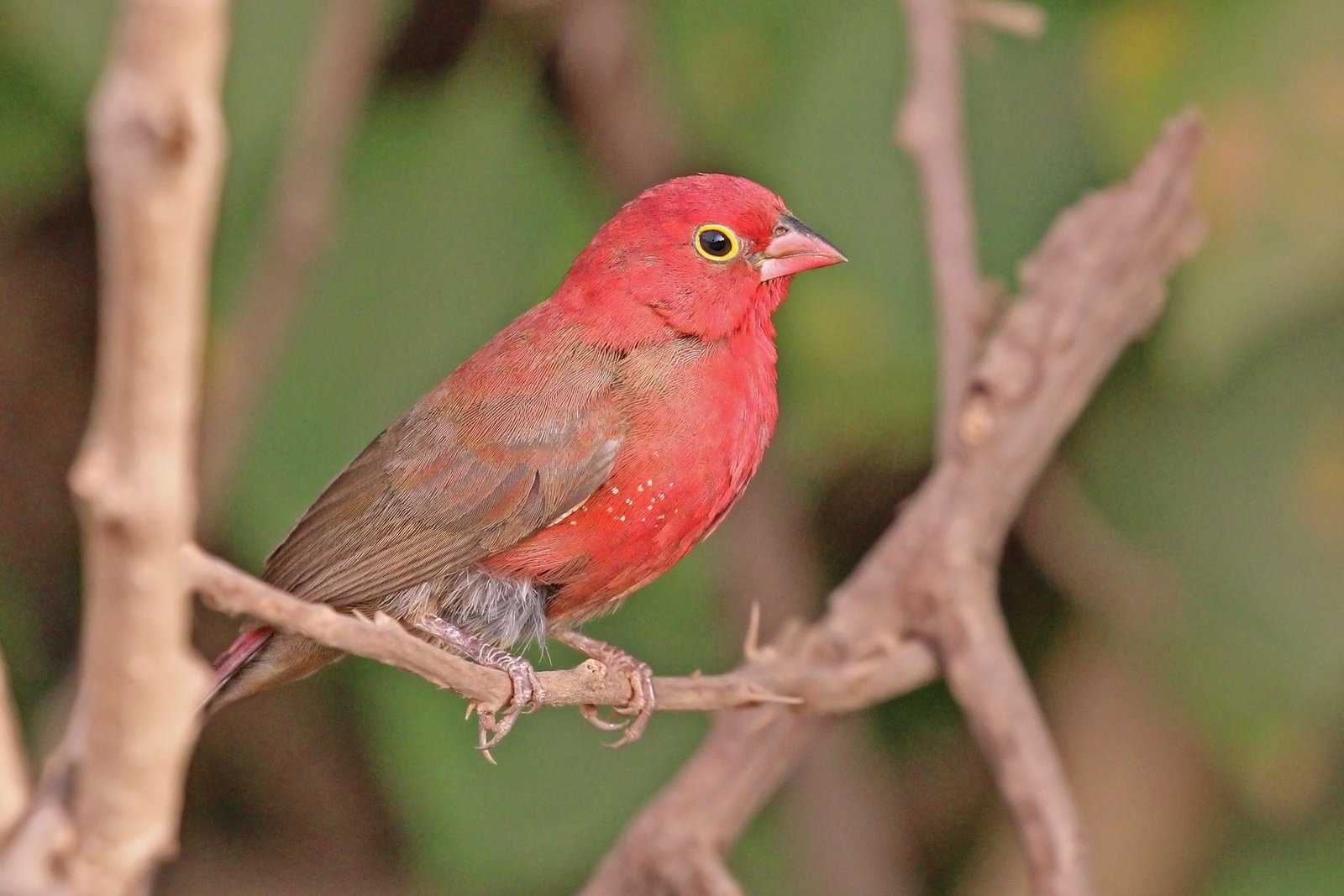
Click a thumbnail to switch the photo above.
Voice
A short, rising whistle, fweet, and a sharp chik-chik in flight. The song is a simple series of soft whistles, choo-weet-choo-weet, interspersed with a soft trill. Males of the Village Indigobird mimic these calls and song.
Recording: Bernard BOUSQUET — CC BY-NC-SA 4.0 · converted to mono · xeno-canto
Identification
9–10 cm, with a red bill with a dark culmen and a narrow yellow eye-ring. The male is largely pinkish-red on the head and underparts, with a few small white spots on the breast sides, brown back and wings, a red rump and a dark tail; the lower belly and undertail coverts are pale brownish, not black. The female is plain brown with a red loral spot, a red rump, white speckles on the breast sides and a pink bill. Juveniles resemble the female but lack the red lores and have a dark bill. It walks in small groups over bare ground and flies low to the nearest bush when disturbed.
Confusion species
Jameson's Firefinch (Lagonosticta rhodopareia) has a blue-grey bill, no yellow eye-ring and a black lower belly and undertail coverts. African Firefinch (Lagonosticta rubricata) also has a blue-grey bill and a black lower belly, as well as a grey crown and nape. Brown Firefinch (Lagonosticta nitidula) is brown with red only on the face and breast and has a brown rump; it lives in reeds and riverine scrub in north-eastern Namibia, northern Botswana and Zambia. Red bill and yellow eye-ring separate Red-billed from all other firefinches.
Habitat
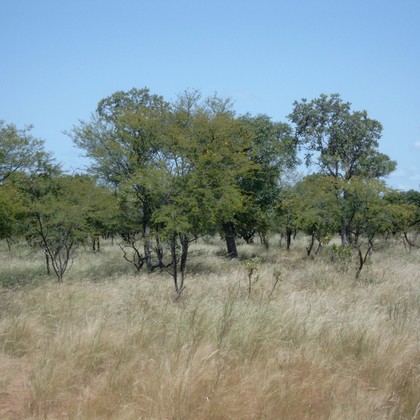
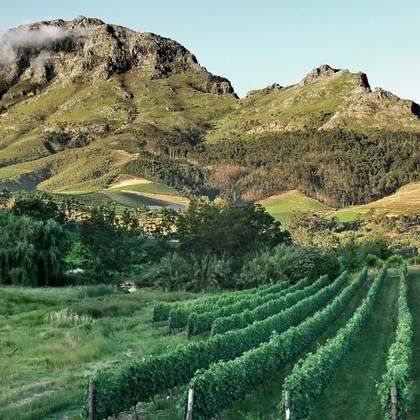
Dry savanna, thornveld, riverine scrub, field edges and above all the surroundings of people: villages, kraals, camps and gardens, usually near water. It forages on the ground for small grass seeds and sometimes insects, often with other waxbills.
Where the bird is most at home, classified by the vegetation units of southern Africa.

Range and movements
Widespread in the northern and eastern half of the region: Angola, Zambia, Malawi, Mozambique, Zimbabwe, Botswana, northern and central Namibia, Eswatini and in South Africa Limpopo, Mpumalanga, Gauteng, North West, KwaZulu-Natal and the Northern Cape along the Orange River. It is absent from the Western Cape, Lesotho and most of the Karoo. Beyond the region across almost all of sub-Saharan Africa, from Senegal to Ethiopia, with small isolated populations in the Sahara and in south-western Arabia.
- Resident
- Summer visitor (c. Oct–Mar)
- Winter visitor (c. Apr–Sep)
- Passage (Mar–Apr, Oct–Nov)
- dark = core range, pale = thinly spread
How and when to look
In the camps of Kruger, Etosha, Chobe and around the Okavango Delta the Red-Billed Firefinch feeds between the tents and around taps. In the breeding season, in the second half of summer, it pays to watch for Village Indigobirds nearby: the steel-blue male sings from a lookout with the calls of its host. With any firefinch, check the colour of the bill and lower belly first.
Conservation status
Not threatened; common, and if anything increased through its liking for villages and farmyards. It is parasitised by the Village Indigobird, which lays its eggs in the nest without removing those of the host.
Scientific name
Lagonosticta senegala | (Linnaeus, 1766)
Linnaeus described the species in 1766 as Fringilla Senegala; because it was later moved to another genus, the author and year stand in brackets. The genus Lagonosticta was introduced in 1851 by Cabanis. Lagonosticta comes from the Greek lagōn, 'flank', and stiktos, 'spotted' — for the white spots on the flanks of firefinches. senegala refers to Senegal, where the described specimen came from. The specimen the first description was based on came from Senegal.